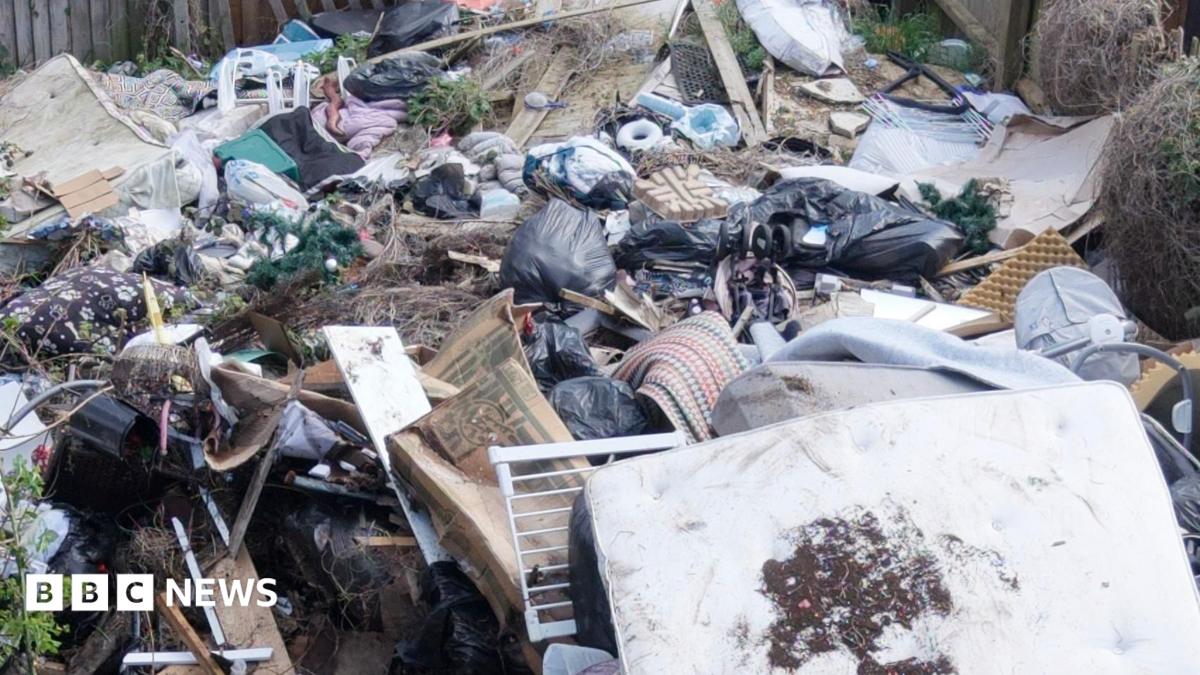
A large pile of household waste, weighing 20 tonnes, was discovered hidden behind garden fences on land owned by a business in South Wigston, Leicestershire. Source: bbc.co.uk.
What Happened
The rubbish was dumped over several months without detection by the business’s employees.
Local authorities say the location of the waste made it invisible to staff, allowing two individuals to operate undetected for months.
The waste was eventually spotted earlier in the year, prompting an investigation by Oadby and Wigston Borough Council.
Investigation and Response
Environmental health officers worked with the business to collect evidence to identify the individuals responsible.
Two people were each issued with a £600 fixed penalty notice after being interviewed under caution.
A third person received a caution for their involvement in the incident.
The council has not named the business affected or the origin of the waste.
Another Case in the Area
Earlier this year, the council also found waste in a lay-by off Gartree Road in Oadby.
Residents there did not dump the waste themselves but had paid a rogue operator to take it away in good faith.
The council says such actions still breach waste disposal rules.
Residents’ Responsibility
Councillor Samina Haq said there is no excuse for fly-tipping.
She stated that fly-tipping damages the environment, increases cleanup costs, and harms responsible residents and businesses.
She urged the public to report any fly-tipping they see and to verify that waste removal services are licensed.
Why It Matters
Even small actions—like hiring an unlicensed waste service—can lead to large-scale environmental harm.
When waste is not properly disposed of, it can pollute soil, water, and air, and create long-term cleanup burdens.
Local councils must act quickly to prevent such incidents from recurring.
Limitations and Open Questions
The source does not specify how the waste was transported or where it originated.
It does not confirm whether the fly-tipping was part of a wider pattern or isolated to one location.
The identity of the business and the full chain of waste handling remains unconfirmed.
There is no public record of how many such incidents have occurred in the area recently.
Residents are advised to ensure any waste removal service is licensed, but enforcement of this rule remains inconsistent.
The council has not provided data on how many fly-tipping cases it has investigated in the past year.
What to Watch Next
Further reports from the area may reveal if similar incidents have occurred elsewhere.
Increased public awareness and reporting could help identify more cases.
Local authorities may introduce new monitoring or enforcement measures in response.
Residents are encouraged to report fly-tipping through the BBC or via the council’s contact channels.
For more on waste management and environmental safety, see our original report.
Sources & further reading
Featured image: Image shows a close up of the large pile of household waste on the site which backs onto houses in South Wigston. Amongst the pile we can see a white mattress with mud over it, black bin bags, another dirty mattress in the top left, various fabrics, foam, wood a metal gate and more.. Via original publisher. Image source