Advertisement
You have a preview view of this article while we are checking your access. When we have confirmed access, the full article content will load.
European Union nations have a little-known obligation to protect one another. Experts caution it is no replacement for NATO.

By Steven Erlanger and Jeanna Smialek
Steven Erlanger covers European security and diplomacy and reported from Berlin. Jeanna Smialek covers the European Union from Brussels.
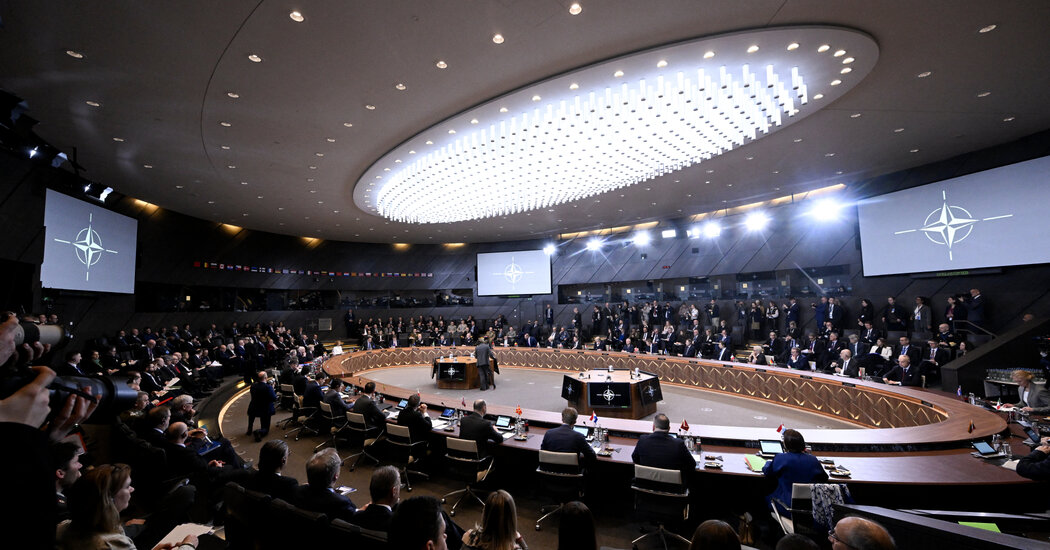
Europeans have increasing doubts that President Trump remains committed to the NATO alliance and the mutual defense it ensures. And so they are talking more seriously about their own little-known guarantee for collective defense, an article buried in the European Union’s governing documents.
Long dismissed by many as unworkable and even unnecessary given the well-established NATO alliance, Article 42.7 of the E.U.’s Treaty of Lisbon obliges member states to provide military, humanitarian and financial aid to other members in case of attack. Meant to complement NATO, it has been used only once, when France invoked it after the November 2015 terrorist attacks in and around Paris.
But with Mr. Trump intermittently threatening to leave NATO over member countries’ refusal to support the war in Iran, this moment is profoundly reshaping both the alliance and the European Union, said Camille Grand, a former NATO official who is the secretary general of ASD Europe, a trade association for defense industries.
He said the Trump administration’s evolving position “creates the need to defend Europe with less America.”
E.U. leaders in Cyprus, where they have been holding informal discussions this week, discussed the treaty provision on Thursday night. They plan to conduct an exercise next month, as senior diplomats who deal with security matters think through how Article 42.7 might work in practice.
“We agreed last night that the commission will prepare a blueprint on how we will respond, in case a member state triggers” the provision, President Nikos Christodoulides of Cyprus told reporters on Friday morning, referring to the European Commission.
Related Content
Advertisement