By Natalia Katona – Aug 06, 2026, 12:00 PM CDT
- Bumerangue could become the project that keeps BP’s oil production – and Brazil’s offshore boom – running deep into the 2030s.
- The discovery comes with daunting costs and technical risks, but favourable fiscal terms could make the economics work.
- Success would give BP a new core growth region in Brazil just as the country’s current generation of pre-salt giants begins to fade.

BP’s Bumerangue discovery is more than another giant Brazilian oil find: it could become the project that keeps both BP’s upstream portfolio and Brazil’s production boom alive well into the 2030s. With an estimated 2.5 billion barrels potentially recoverable and peak output that could reach 600,000 b/d, the ultra-deepwater development is large enough to offset declining production from BP’s existing assets and arrive just as Brazil’s current pre-salt giants begin moving off plateau. Yet its promise comes with a formidable price tag. Development costs could reach $32 billion, while potentially high CO2 concentrations in the reservoir gas may require costly subsea separation and re-injection technology. Bumerangue’s favourable fiscal terms could make those risks manageable, but success will depend on BP controlling costs, finding the right development partner and proving that it can turn its largest discovery in decades into a commercially competitive project.
BP is targeting its total upstream production to be within the 2.3-2.5 million b/d range by 2030, but sustaining that level will require new projects capable of offsetting the natural decline of previous projects – and here is where the importance of Bumerangue turns out to be crucial. Bumerangue is BP’s largest discovery since Shah Deniz in 1999 and the 6th largest deepwater oil discovery ever made. Final investment approval of Bumerangue is expected around 2028, first oil around 2032. If development proceeds successfully, Bumerangue could postpone a material decline in BP’s production portfolio by 4-6 years, shifting it from around 2032 toward 2038.
The main uncertainty in Bumerangue stems from concerns about carbon dioxide in the project’s associated gas output. If concentrations exceed 45%, as some experts suggest, BP may need advanced subsea separation and re-injection technology. That will require around $3 billion in costs and a lot of yet-untapped technological expertise. BP currently owns 100% of Bumerangue but, due to the above complications, is likely to sell part of its interest before final investment approval, while retaining a significant operating stake. Besides, the project is expected to require around $32 billion of development capital, making it the most capital-intensive offshore project in the Santos Basin so far. That exceeds multiple times BP’s Gulf of Mexico projects Kaskida and Tiber, at around $4.7 billion and $3.7 billion, respectively. Bringing in a partner would ease the financial burden and would also help to manage the technical risk connected to associated gas composition
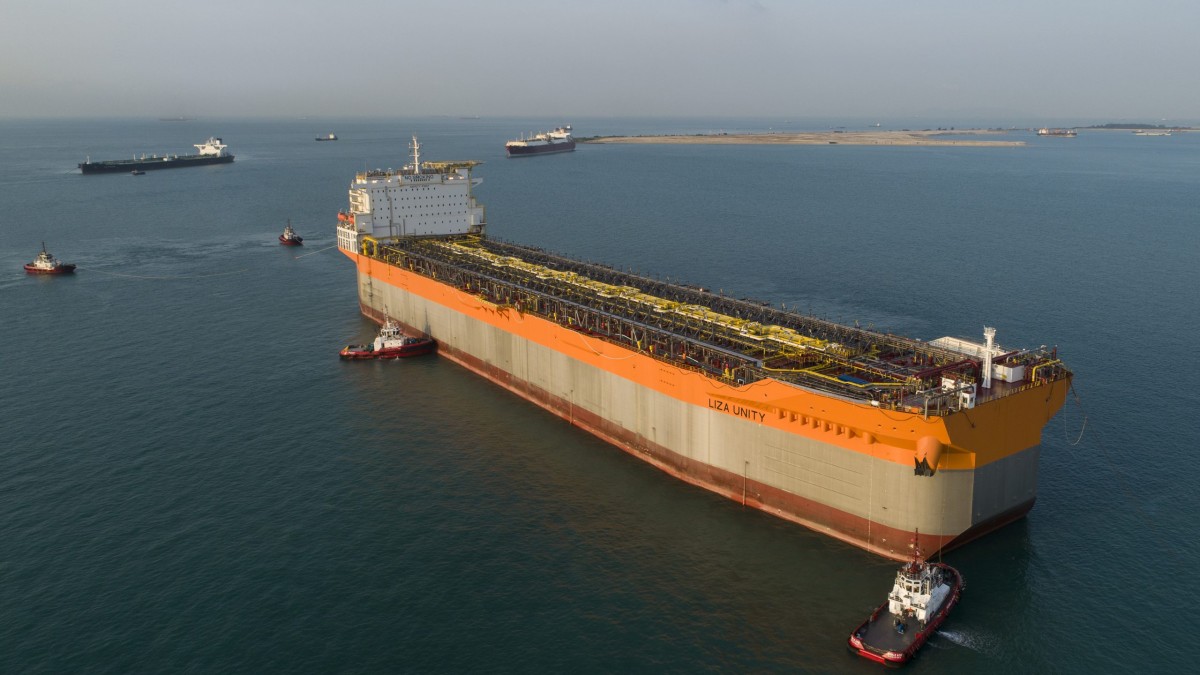
Petrobras, therefore, should be a likely candidate because of its Santos Basin experience and expertise in reservoirs with high carbon-dioxide content. At the ultra-deepwater Mero oil field (discovered and operated by Petrobras since 2010), carbon-dioxide concentration is also around 45%. Petrobras uses its subsea HiSep technology to separate and reinject carbon-rich gas, reducing the processing burden aboard the FPSO. Mero’s experience could therefore be directly relevant to Bumerangue and strengthens the case for Petrobras joining the project.
The fiscal terms of the Bumerangue operation make the burden easier to carry. The block was awarded to BP in 2022 under a PSA that allows up to 80% of production to be used as cost oil to recover approved expenses before the remaining profit oil is divided with the Brazilian government. The government profit share is only 5.9%, well below comparable projects. Mero, for example, carries a 41.6% profit share and cost-recovery limits of 30% to 50%. These terms improve BP’s chances of recovering Bumerangue’s upfront investment.
Given the complexity of the project balanced by the PSA’s favourable terms, an estimated breakeven of around $50/bbl would make the project commercially viable, although it would not rank among Brazil’s cheapest deepwater developments. Equinor’s Bacalhau Phase 1 was sanctioned with a breakeven below $35/bbl, while Shell has placed the average breakeven of its latest upstream growth projects (including Gato do Mato) at around $35/bbl. Although the breakeven costs before the development drilling began in earnest may be rough estimations, it would probably remain below the $60/bbl threshold associated with more marginal frontier developments. Its favourable fiscal terms, enormous resource potential and scope for high well productivity could compensate for higher technical costs.
The economics will remain sensitive to recoverable volumes, FPSO requirements and the cost of managing carbon dioxide. For comparison, Shell’s neighbouring Gato do Mato field (expected online in 2029) suffered repeated delays after its discovery in the late 2010s. Post-pandemic offshore inflation made Shell’s original FPSO concept too expensive. Bumerangue is considerably larger and more complex, making cost control critical, especially given the current volatility of the markets.
The project would also transform BP’s heretofore limited position in Brazil. The company briefly operated the Polvo field, while its other Brazilian interests have mainly involved minority stakes. Bumerangue is therefore BP’s first attempt to lead a major Brazilian pre-salt project from discovery through construction and production. Success could establish Brazil as a new core operating region for the company and create the local base needed for further Santos Basin exploration.
The timing is equally important for Brazil. National oil production is expected to peak around 2029 or 2030 as the largest pre-salt developments mature. Tupi peaked in 2020 at around 1.1 million b/d and now already faces declining production, currently at 840,000 b/d in July. Mero currently produces around 760,000 b/d and is approaching peak very soon, while Buzios is expected to reach the peak production of around 1.8 million b/d already in 2030.
Once these giants move beyond plateau, Brazil will need another large project to soften the decline. Bumerangue could provide that bridge. First oil around 2032 would arrive just as Tupi, Mero and eventually Buzios begin to decline. Peak production of around 600,000 b/d would not fully replace their decline, but it could slow the fall, extend Brazil’s period of elevated production and preserve export capacity.
That matters because Brazilian crude is increasingly valuable to buyers seeking politically stable supply and routes that avoid vulnerable chokepoints. Brazil exported around 2.7 million b/d in July, including 1.5 million b/d to Asia (around 1 million b/d of which went to China), as well as 690,000 b/d to Europe and 360,000 b/d to the Americas. The country is geographically distant from the main consuming regions, but its exports are not dependent on the Strait of Hormuz, Bab el-Mandeb or other high-risk corridors.
For both BP and Brazil, Bumerangue is therefore less about creating a brief production surge than extending an existing production plateau. For BP, it could underpin output and cash generation through the 2030s, validate the company’s upstream strategy and establish Brazil as a new core region. For Brazil, it could arrive precisely when the current generation of pre-salt giants begins to decline. The costs and technical risks are substantial, but the project’s scale, fiscal terms and timing give it the potential to help both the company and the country sustain production for considerably longer.
By Natalia Katona for Oilprice.com
More Top Reads From Oilprice.com
- Venezuela’s Oil Exports Fall Even as U.S. Shipments Hit Seven-Year High
- Ukraine’s Drone Campaign Drives Russian Oil Refining to 24-Year Low
- Dark Tanker Transits Surge at Bab el-Mandeb as Houthi Threat Persists
Download The Free Oilprice App Today



Natalia Katona
Natalia Katona is a freelance commodity analyst, based in the United Arab Emirates.