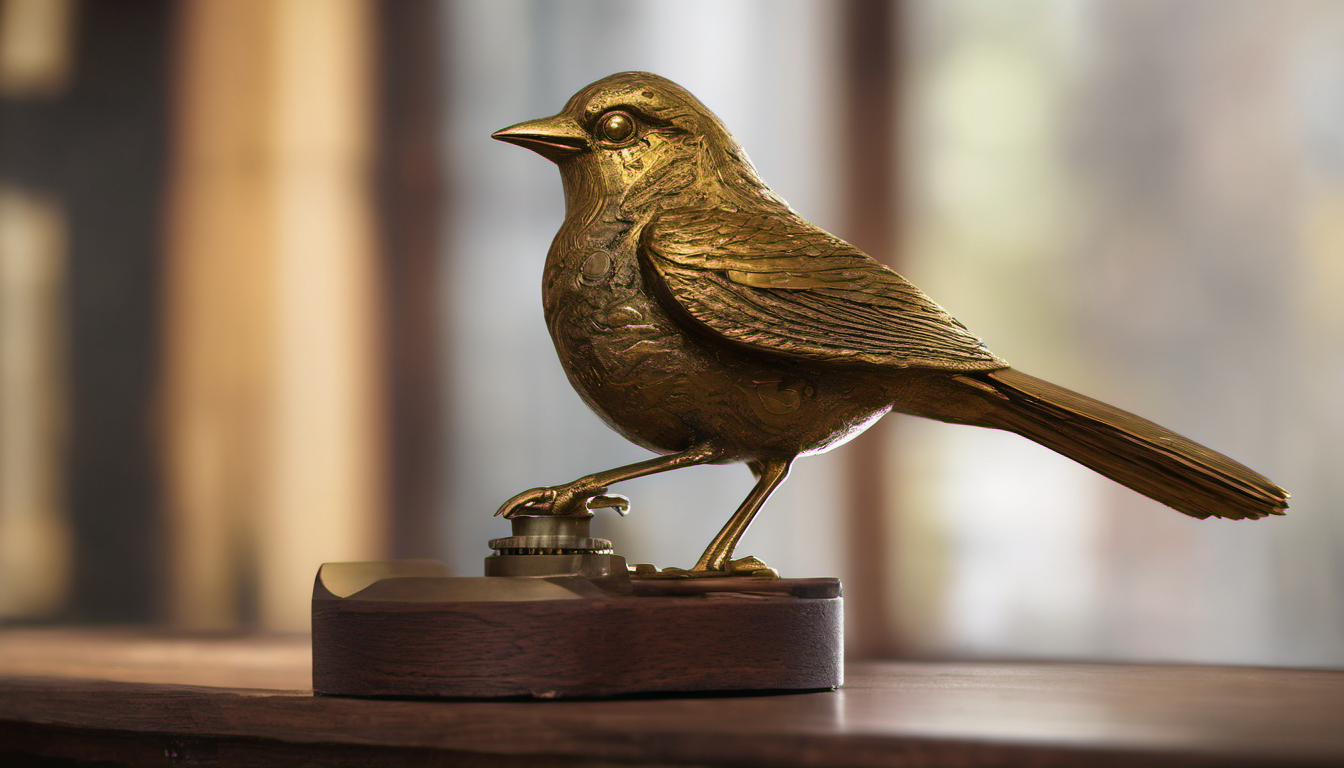
Featured image: A golden bird sculpture, likely a thrush, is the main subject. AI-generated image; not a photograph of the reported event.
At Art of Play on Atlantic Avenue in Brooklyn, a small mechanical bird named Molly has become a cultural anomaly. She sings, dances, and performs for visitors in the shop’s 26-seat theater. Created by Seattle artist Bliss Kolb, Molly is a handcrafted automaton modeled after an American goldfinch. Turning a crank brings her to life—her movements and sounds mimic those of a living bird.
What Happened in October 2026
On October 13, 2026, singer Kelly Clarkson posted on her X account, describing a negative interaction at Art of Play. In her post, she wrote that a store employee treated her condescendingly when she expressed interest in purchasing Molly. The post included a photo of the bird and a brief description of the encounter, emphasizing her disappointment with the staff’s tone and behavior.
The post quickly gained traction. Within hours, the incident sparked a public debate about the nature of ownership, pricing, and customer service in small specialty shops. Social media users began to speculate about the bird’s value, with some suggesting it was a symbol of artistic integrity, while others questioned whether such a piece could ever be legitimately sold.
Art of Play’s Official Response
Art of Play responded on its Instagram feed. The post stated that Molly was a permanent fixture of the store and not for sale. It added that a similar piece could be purchased from the artist, Bliss Kolb. The response was concise and firm, reflecting the shop’s commitment to preserving Molly as a non-commercial exhibit.
However, a photograph circulated online showing a price tag labeled $15,000 for Molly. The image had no official source, but it spread rapidly across social media, adding fuel to the dispute. The lack of attribution raised questions about its authenticity, yet it was widely shared and interpreted as evidence of a hidden commercial valuation.
The Price Tag Escalation
As the controversy grew, Art of Play replaced the bird’s price tag with one reading $15 million. This move was widely interpreted as a theatrical gesture—possibly a protest against the perceived overvaluation or a form of public commentary. The new tag was visible in the shop’s display area and was accompanied by no explanation from the owners, leading to widespread speculation.
Co-owner Adam Rubin told reporters that he would consider selling Molly for that amount. The statement was made in a casual interview, suggesting a blend of irony and openness to public discourse.
Background: How Molly Works
Molly is not a digital device. She is a mechanical automaton, built from metal, gears, and springs. Her movements are powered by a manual crank. When turned, she sings a short melody and performs a dance sequence. The craftsmanship reflects a deep understanding of mechanical engineering and artistic design, combining precision with aesthetic appeal.
Her design draws from the American goldfinch, a bird known for its bright yellow plumage and cheerful demeanor. The artist, Bliss Kolb, created her as part of a broader vision to inspire curiosity and joy in adults. Kolb has long been interested in the intersection of art and mechanical movement, producing a range of automata that evoke wonder and playfulness.
Art of Play is not just a store. It is a space designed to evoke childhood wonder. The shop features puzzles, playing cards, and close-up magic performances. Molly is often part of these shows, serving as both a performer and a symbol of the shop’s mission to reconnect adults with the joy of play.
Why This Feud Matters
The incident highlights tensions between commercial value and artistic intent. Molly is not a product to be bought and used. She is a piece of art meant to be experienced, not consumed. The controversy underscores how digital platforms can transform personal experiences into public events, where every interaction is scrutinized and amplified.
When Clarkson criticized the staff, she emphasized a concern about customer treatment. Art of Play’s response focused on the bird’s status as a permanent exhibit. The pricing controversy raised questions about how small businesses handle public expectations and digital scrutiny. The incident reveals how even non-commercial objects can become subjects of intense public debate when they are associated with high-profile individuals.
For many, the story reflects a broader cultural shift: how digital platforms amplify every interaction, turning personal experiences into public events. A post by Kelly Clarkson on X reached millions. The response from Art of Play was amplified by digital platforms, illustrating the power of public visibility in modern commerce.
Limitations and Open Questions
Bliss Kolb, the creator, has not commented on the incident. Molly herself has no public voice. The shop has not released a formal statement on whether the bird is for sale or whether any future sale would occur. The owners have not detailed the nature or volume of threats and harassment they received, though they have acknowledged the incident has created a significant online presence.
Art of Play reported receiving threats and harassment as the controversy escalated. While the exact nature of these messages remains unverified, the incident underscores the risks of public digital exposure for small businesses, especially those that feature unique, experiential art pieces.
What to Watch Next
Observers will be watching for any official statements from Bliss Kolb or Art of Play. The situation may also influence how small art-based businesses handle digital interactions and customer expectations. The incident may prompt broader conversations about the role of automation in public spaces and how value is assigned to non-commercial, experiential objects.
For those interested in the intersection of art, technology, and public culture, the Art of Play website offers a deeper look into the shop’s collection and mission. Explore the full story at Atlas Obscura.
For more on automata and mechanical art, see the dedicated section at Atlas Obscura’s automata page.
The incident also reflects how social media can transform a simple customer interaction into a global event. A post by Kelly Clarkson on X reached millions. The response from Art of Play was amplified by digital platforms, illustrating the power of public visibility in modern commerce.
Ultimately, Molly remains a symbol—not of commercial value, but of the human desire to feel wonder. Her presence in a Brooklyn shop reminds us that curiosity, even in adulthood, is still possible.