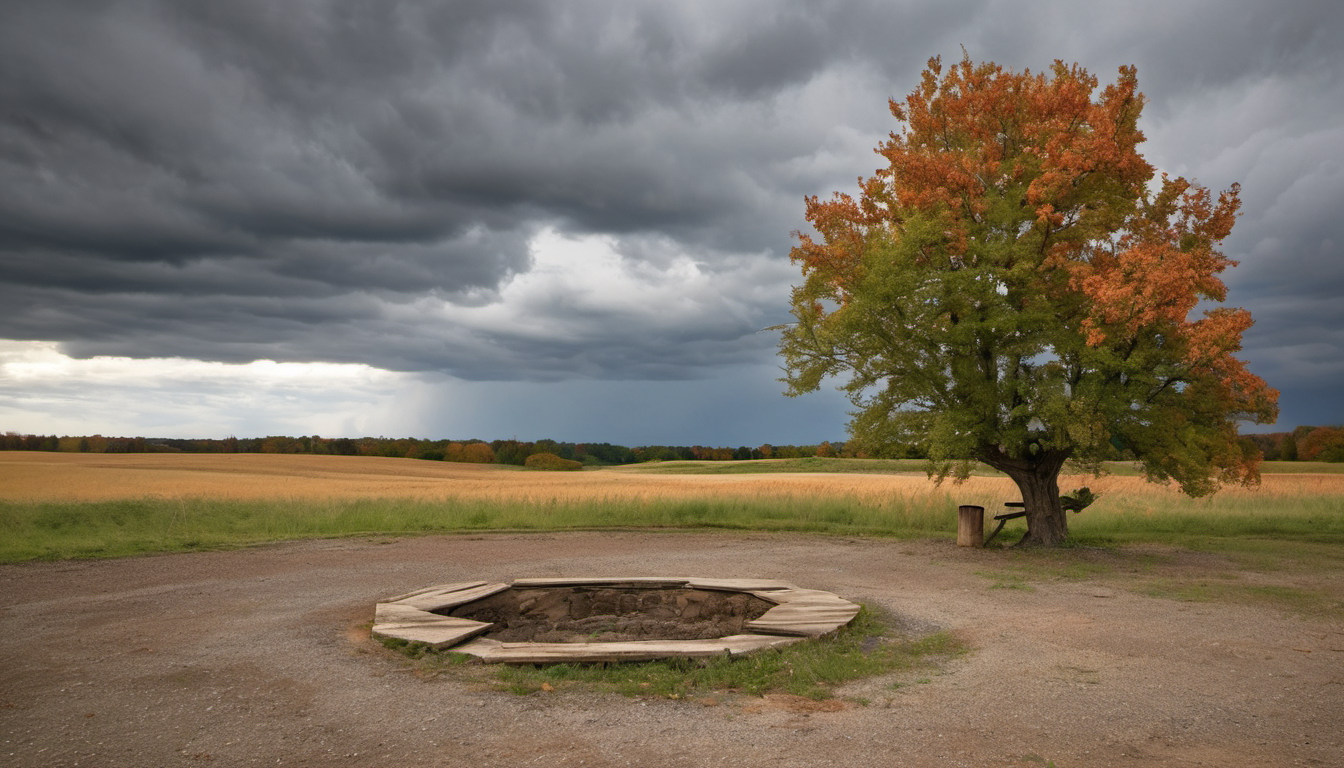
Featured image: The image shows a weathered, stone-edged circular pit in the foreground, surrounded by a gravel path. AI-generated image; not a photograph of the reported event.
Ohio claims a place in history as the birthplace of American oil exploration. The Thorla-McKee Well, located on the edge of Caldwell, Ohio, stands as a testament to that origin.
What Happened: A Salt Well That Found Oil
In 1814, Silas Thorla and Robert McKee dug a salt well near Caldwell, Ohio. Their goal was to collect briny water for evaporating salt—a vital need before refrigeration.
During digging, they saw a black, sticky substance floating on top. This was petroleum. The discovery was accidental, not part of any oil exploration plan.
How They Responded: A Nuisance, Not a Resource
Thorla and McKee saw the oil as a problem. It blocked their access to brine water and contaminated their salt process. They used wool blankets to soak it up.
They knew the oil could burn, but the smoke was thick and smoky. It was unsuitable for lamps or home lighting. They rejected it as fuel.
Instead, they bottled it and sold it as ‘Seneca Oil.’ They claimed it could treat rheumatism, measles, and other illnesses—common beliefs of the time.
They produced about one barrel per day. That’s small by today’s standards. But it marks the first known human contact with crude oil in the U.S.
Key Facts: The Well and Its Legacy
- The well was dug in 1814 and operated through at least 1816.
- The original 1814 well was covered over. Public interest at the time was likely low.
- The 1816 well still stands, with a sycamore casing preserved.
- Ohio calls this the first oil well in the country—even though oil was not the goal.
- At the time, oil had no value. Salt was the priority.
The well also released natural gas. Brine and oil would shoot 40 feet into the air once a week. This was a known byproduct of deep drilling.
Since salt wells were manned 24 hours, at least one account says a night shift worker lit a lantern or coal near the well. The heat sparked a fire, launching a fireball into the sky.
Background: Why Salt Was Central to Early American Life
Before refrigeration, salt was essential for food preservation. Without it, meat, fruit, vegetables, and dairy would spoil quickly.
Frontiersmen moving inland often struggled to find salt. In the Ohio River Valley, digging for briny water was common. Evaporating the water left salt behind.
The Thorla-McKee well fits this pattern. It shows how survival needs shaped early American resource use.
Why It Matters: A Historical Milestone
The well did not produce oil for business or industry. But it marks the first known human encounter with crude oil in the U.S.
Ohio’s claim rests on this discovery. It shows early exploration was driven by daily needs, not industrial goals.
The eruptions of brine and oil also show early drilling had safety risks. These issues would later become central to energy regulation.
Limitations and Open Questions
There’s no clear record of how much oil was made or how widely it was sold. Sales were likely limited to local users, if at all.
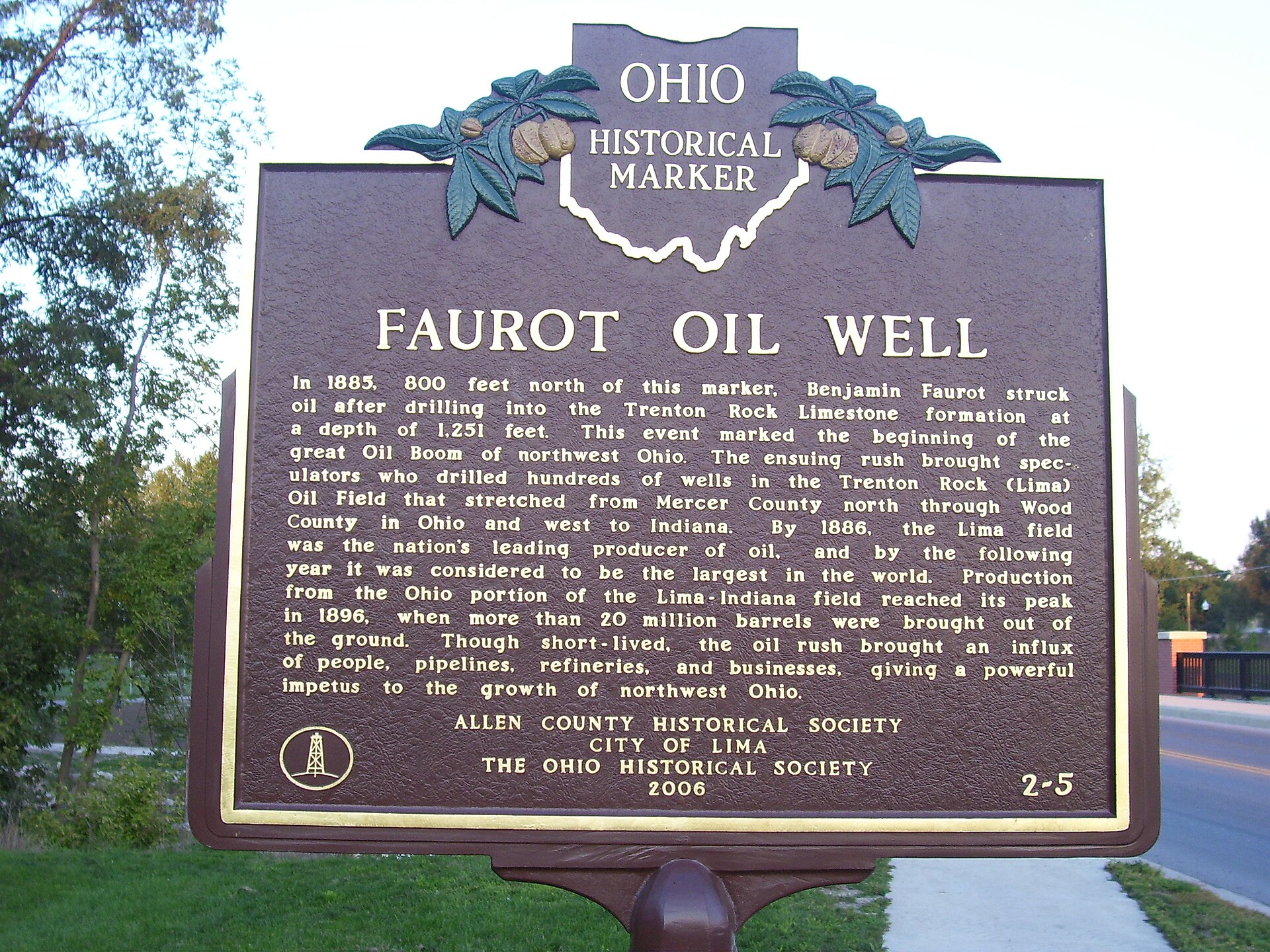
Historians debate whether this well should be called the first oil well in the U.S. The Drake Well in Pennsylvania was the first commercial oil well. It began a real oil industry.
The Thorla-McKee well came before the Drake Well. But it wasn’t commercial. Its value is in being the first known encounter with crude oil in America.
The original well was covered. The 1816 well remains—a physical link to this early moment.
What to Watch Next: The Evolution of Oil in America
Today, the U.S. is both the largest oil producer and consumer. It extracts 23 billion barrels daily and uses 20 billion.
While the Thorla-McKee well didn’t start an oil industry, it began a story that reshaped transportation, industry, and global politics.
For those interested in energy’s roots, this site offers a quiet look at how a simple act of digging changed history.
Learn more about early American energy exploration at the original source.
For a deeper look at the first commercial oil well, see the Drake Well Museum.
Explore the mystery behind the Pacific Black Hole at Chochilino.
Early American life was shaped by practical needs. Salt wasn’t just a commodity—it was a lifeline. In rural areas like the Ohio River Valley, where storage was limited, salt was essential.
Digging for briny water and evaporating it to get salt was a daily task. The Thorla-McKee well shows this reality: it was built for salt, not oil. The oil was a byproduct of a long-standing practice.
At the time, science didn’t understand petroleum. There was no idea that oil could be used for fuel or machinery. The oil was treated as a contaminant—something to remove, not study.
Thorla and McKee didn’t experiment. They solved problems with practical actions. Using wool to absorb oil was a direct fix. Marketing it as medicine reflected common 19th-century beliefs about natural healing.
The production volume was tiny. In modern terms, it’s negligible. Yet, historically, it marks a key moment: the first time crude oil was physically encountered in the U.S.
The eruptions of brine and oil were visible and dramatic. The fireball story shows the well wasn’t just a source—it was a hazard. This reveals early safety gaps and the lack of rules in frontier operations.
Today, the Thorla-McKee Well stands as a symbol of how human activity and natural resources meet. It didns’t start an oil industry. But it laid the foundation for future exploration. It reminds us that innovation often begins with necessity—digging for salt, not oil.