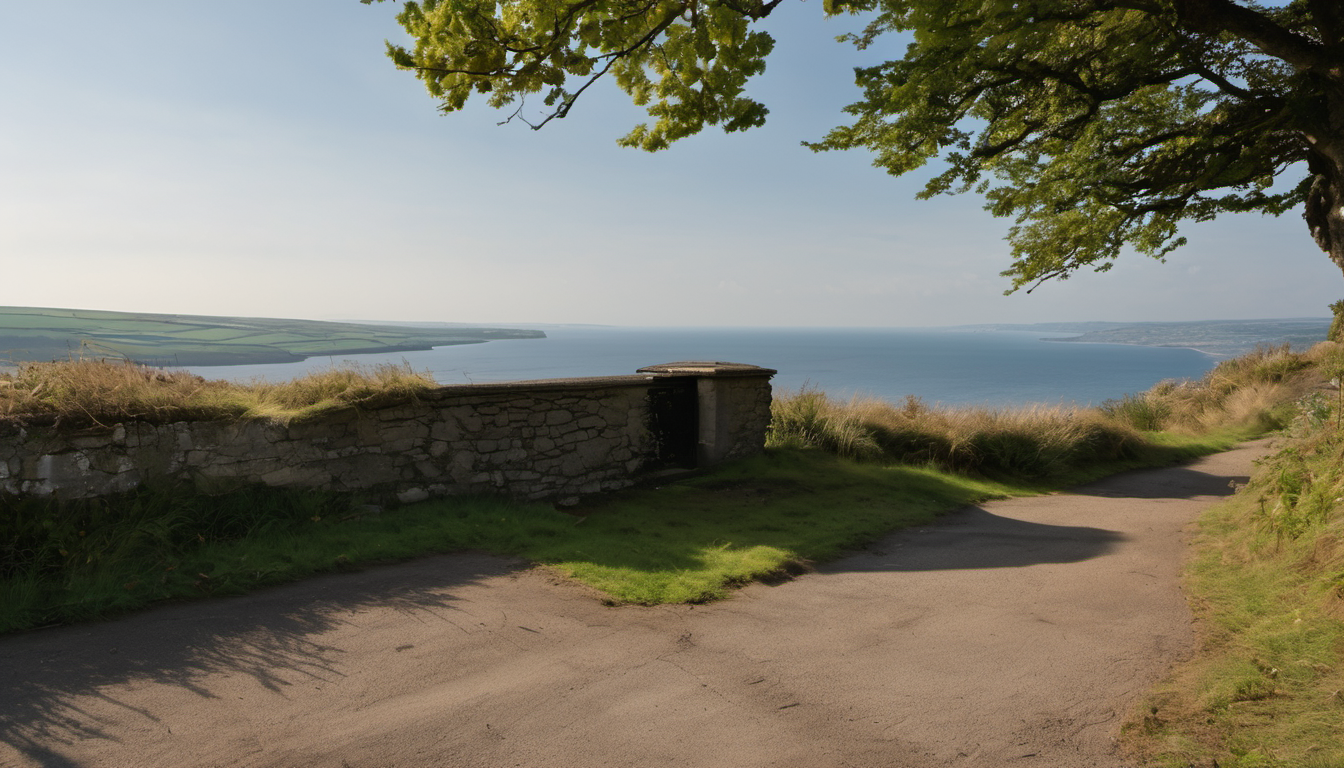
Featured image: A stone structure with a dark doorway and a small, flat roof sits on a grassy hill overlooking the ocean. AI-generated image; not a photograph of the reported event.
The Rhossili Down radar station sits atop the northern end of Rhossili Downs in Wales. It was constructed in 1942 as part of the Chain Home Low radar network.
World War II Defense Infrastructure
Chain Home Low was a system of radar stations designed to detect low-flying aircraft at around 500 feet (150 meters). This height was critical because enemy bombers often flew at low altitudes to avoid detection by higher-altitude radar systems.
The Rhossili Down station was operated jointly by the British Army and the Royal Air Force. Its primary function was to send early warning signals to Swansea when incoming German bombers were detected.
Operational Timeline and Decommissioning
The station began operations in 1942 and was fully operational during the later years of World War II. It was decommissioned at the war’s conclusion.
After the war, the entire structure was demolished. Only the southern access road and the concrete foundation remain today.
Why This Location Was Chosen
The site was selected for its strategic position overlooking the Bristol Channel. It provided a clear line of sight across the Gower Peninsula and the southern coast of Wales.
From the ridge, the view extends to Worm’s Head headland. The terrain offered both visibility and protection from interference, making it ideal for radar operations.
What Remains Today
Visitors today see only the remnants of the original structure. The harsh concrete base and access road are the only physical traces of the radar station.
Despite the absence of the full structure, the site continues to face the Bristol Channel. This enduring presence underscores its original military significance.
Context and Public Perception
There is no public record of personal accounts from operators or personnel at the site. The source does not include interviews or first-hand experiences.
While the site is no longer functional, it remains a historical landmark. It illustrates how Britain’s coastal defense was managed during wartime.
The Rhossili Down radar station is a quiet example of how infrastructure was built for immediate wartime needs and then erased after the conflict ended.
For those interested in World War II military history, the site offers a tangible connection to the defense networks that protected the UK’s coastline.
Learn more about the Chain Home Low system at Atlas Obscura.