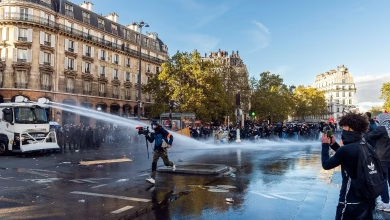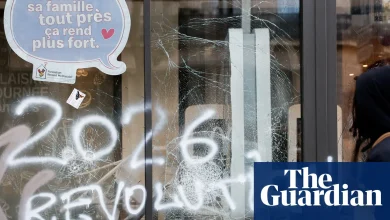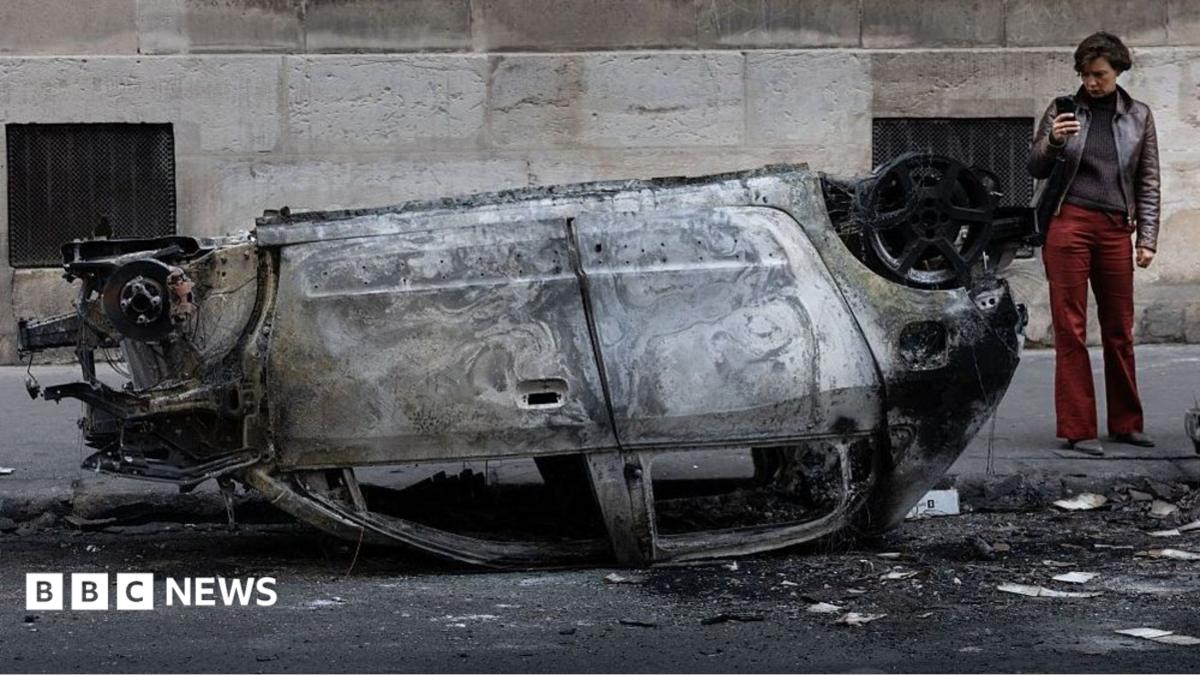
France is deeply divided over the origins of recent riots in Paris and its suburbs. Security footage shows groups of men in black, with kerchiefs over their faces, attacking police vans with hammers or machetes. Source: bbc.co.uk.
Many looted items—like designer trainers and electronics—were quickly sold online. Some participants didn’t cover their faces. This suggests a sense of impunity. The rapid resale shows how youth now see property and authority in a digital context.
Key Theories and Claims
French intelligence reported in September that left-wing anarchist groups were involved in student protests. A capital ‘A’ in a circle—a known anarchist symbol—appeared on buildings across France.
Le Figaro published a report saying student unions and radical-left groups may have manipulated protests to build momentum ahead of the 2027 presidential election. The report suggests political movements like La France Insoumise (LFI) used violence as a strategy.
LFI denies any role in planning or inciting violence. Its leader, Jean-Luc Mélenchon, participated in Saturday’s protest and says student anger comes from real grievances—like education and housing—not political manipulation.
Student union members, such as Lisa Cordat from Saint-Denis, say protests were organized by youth groups. They describe the anger as ‘ground-up.’ ‘We didn’t get instructions,’ she said. ‘We just want better education and a fairer future.’
Public Frustration and Political Blame
Many young people say politicians are using the chaos to blame others. Lina, a 25-year-old teacher, said: ‘They hunt for scapegoats. They ignore rising rent, crumbling transport, and job insecurity. We feel scared and abandoned.’
Prime Minister Sébastien Lecornu and Interior Minister Laurent Nuñez accused far-left groups of planning the violence. Nuñez called it ‘pouring oil onto the fire.’ Lecornu called it ‘insurrections’ by small, radical groups.
Mélenchon accused Lecornu of letting chaos grow to appear as a ‘party of order’ after failing on public finances. He said: ‘This isn’t a street crisis. It’s a leadership failure.’
Political Gains and Rhetoric
Marine Le Pen of the National Rally launched a formal, presidential-style video on social media. Dressed formally, she blamed Mélenchon’s allies for ‘throwing the country into chaos.’
She said the Macron government had ‘run out of steam’ and that France was ‘taken hostage between violence and powerlessness.’ Her party promotes law and order, closed borders, and blames migrants for the unrest.
French authorities have not linked any violence to migrants. Still, her message has gained traction among voters fearing economic instability and social change.
Root Causes and Broader Trends
Protests stem from rising living costs, poor public services, and a growing sense of powerlessness. Students and young people are frustrated by housing prices, climate change, and job insecurity from automation.
These issues are not unique to France. Youth-led protests have erupted in Italy, Portugal, Albania, and Belgium this weekend.
Belgium’s interior minister, Bernard Quintin, warned of the ‘TikTokisation’ of violence. He said viral videos of riots reach impressionable youth and may inspire more unrest. ‘When violence goes viral, it becomes entertainment,’ he said.
A teacher named Mar said the chaos ‘suits politicians’ purpose.’ It distracts from weeks of real student demands for better services. ‘They don’t listen,’ she said. ‘They use the chaos to campaign and make opponents look bad.’
Public trust in democracy is falling. A Pew poll shows 69% of French people are dissatisfied with democracy—same in Spain and the U.S. This reflects growing belief that institutions don’t listen to citizens.
What This Means for France and Europe
The riots are not just about violence. They show a deeper crisis of trust in political institutions. Many young people now question whether traditional parties will listen to their concerns.
Some see the unrest as a call for reform. Others fear it may lead to more instability if ignored. The line between peaceful protest and violent chaos remains unclear.
France’s future response will depend on how well it addresses youth concerns—like housing, jobs, and climate. Without real engagement, the cycle of protest and backlash may continue.
For now, France remains divided—on what caused the riots, who is responsible, and what comes next.
- French intelligence reported links between student protests and radical left groups.
- La France Insoumise denies involvement in violence and claims student protests are grassroots.
- Marine Le Pen has used the unrest to boost her political profile.
- Public trust in democracy has declined across several European nations.
- Similar youth-led protests have occurred in Italy, Portugal, Albania, and Belgium.
Original source
Paris and French cities torn by riots amid protests over cost of living
Sources & further reading
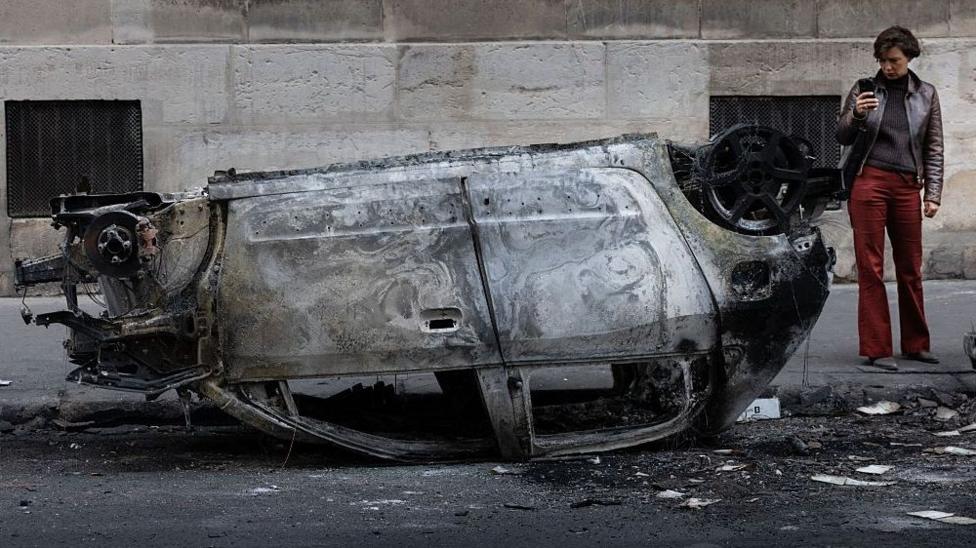
Featured image: A woman takes a photo of the wreckage of a burnt-out car in central Paris. Via original publisher. Image source