“Relatability breeds success, and success kills relatability.”
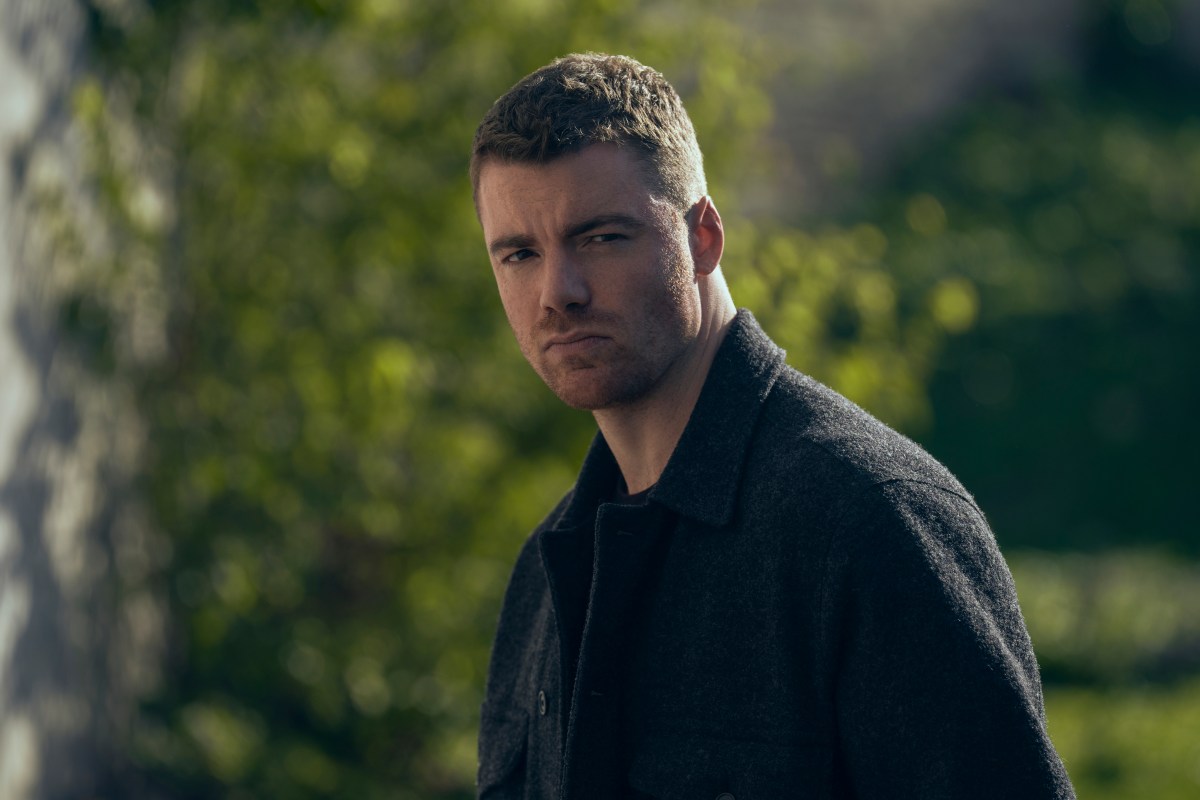
Gabriel Basso is back as Peter Sutherland in season three of Netflix’s The Night Agent, and he’s thinking big. “Relatability breeds success and success kills relatability.” It’s a juxtaposition that shapes both his character and his outlook on his career.
PARTING SHOT PODCAST WITH H. ALAN SCOTT:
SUBSCRIBE ON APPLE PODCASTS, SPOTIFY, OR WHEREVER YOU GET PODCASTS.
Editor’s Note: This conversation has been edited and condensed for publication.
It’s a pleasure to see you. I think we may have met at the House of Dynamite premiere. Speaking of House of Dynamite, as I was watching the new season of The Night Agent, I was thinking about how you really are stuck in and around the White House these days in terms of the projects you’re doing. Are you in love with the White House or something?
The opposite. I hate it. And that’s the conundrum I’m in. Everything I’m doing seems to be leading me back there. Maybe I’ll run for…
For president, yeah. What do you think that says about you as an actor, that we look at you and think, “Yep, he’s a government worker”? Or you look at someone and think, “Go get those guys.”
Exactly. You look like someone capable enough to hold these people accountable.
One day. So, what can we expect from season three?
I think each season has had its own thing that makes it unique. This is the first season where Peter is obviously without Rose [played by Luciane Buchanan], but it’s also the first season where he’s really able to be a night agent. In season two, I think the writers were still figuring out what the job actually was, so they were hesitant to cut Peter loose. There was a lot of explaining how things work, and it was his first time we really saw him in the field. But this season, he’s more mature. He knows how things work.
For sure. And also, to get a third season of a show in this industry right now, that’s massive. The first season pickup is huge, the second is also huge, but to have a show live on in any capacity the way this one has is remarkable. How do you feel about the support the show has gotten?
I feel great about it. I think in this business, especially recently, there’s a sense of entitlement toward audiences’ time. Studios and big companies buy an IP and then get mad at the fan base for not supporting what they do with it. But that’s an inversion of how it’s supposed to work. You work for the audience. You’re there to entertain them. So in my head, at least, I think of it as: if I work for the audience and they want to see it, then that’s what I’m required to do. It doesn’t feel like we’re treating people like a slot machine, give us your time, give us your money. It feels more like, okay, if you’re tuning in, I’ll do my best to entertain you.
Definitely. That’s exactly why I think people enjoy the show so much. When I’m watching it, I categorize certain shows by who I’m going to watch them with in my family, and this is definitely the one I’d watch with my dad. It’s the one thing we can bond over besides the weather. What kind of response have you gotten from the fan base? People seem very vocal about the show.
I deleted Instagram, so I’m pretty insulated from it all now.
You don’t travel with a laptop, and no Instagram either? You’re really going rogue.
I know, I’m off the grid. Not really. But I do hear things tangentially through people, and I like knowing what people respond to, especially when I have some creative influence on a project, so I can lean into what’s working. People seem to like the action, but they also really loved the emotional stuff between Rose and me. I think she’ll be back, for sure. They did mention pitching a new love interest for me at one point, and I was like, “No. I love her. Peter loved Rose.” He’s not James Bond, running around with different women. He’s consistent, at least in that way.

For sure. And when a show goes on for multiple seasons, you want to see that relationship grow in unexpected directions. For a character who’s very good at blowing things up, it’s also cool to see him actually be human.
And have those feelings. It makes him not a superhero. He has to balance things in his life. Everyone has work-life balance problems, lawyers who don’t spend enough time with their kids, for example. But with being a night agent specifically, the stakes are different: the people he cares about are in danger, and he’s lying to them about everything. At what point is it not even a relationship? That’s the conundrum he’s in. “I’m lying to you, I’m putting you in danger. What are we doing here?” I don’t think he wants to get her hurt, so…
Maybe that’s a twist coming up, we never know. How do you think the character has changed from season one to season three? What stands out to you about how Peter has grown?
I think he’s become more steadfast and stubborn in his convictions. When you work in intelligence or counterintelligence, everything is obfuscated. You never know what the truth is, who’s lying to you, or who’s working for whom. And in that confusion, he’s landed on this: “I’m operating on the information I have, filtered through the principles I live by. If you don’t like it, get out of my way.” In season one, he was looking up a lot, [like] “tell me what to do, what am I doing?” In season two, the writers were still figuring out who this guy was, so there were still a lot of questions being asked. Season three is the first season where I’ve really been able to just be this character and say, “I know who I am, and you deserve to be held accountable.”
Yeah. And it’s interesting to watch, because I’ve seen a lot of your work. Where do you end and Peter begins? How much of you is actually in the character?
I think a lot, actually. I don’t have the real-world application of what Peter does, though there are some things I’ve gotten away with doing on set that are pretty cool. But I think I share his conviction, and also this willingness to give yourself over entirely to something. I know it might sound strange as an actor, but I think what you’re doing when you act is weaving yourself into a story to the point where you don’t matter anymore. I shouldn’t be publicly aware of myself, because I shouldn’t matter. The story should. And that’s what Peter wants too: to serve justice, to serve truth. He’s willing to die to be part of something bigger. As an artist, whether it’s writing, directing or whatever I’m doing, I’m constantly trying to not matter. The goal is to take an eternal truth, a thematic element that runs through human history, and make it into a story. I don’t belong in that. I shouldn’t.

I was honestly trying to think if there’s anything I would die for at my job, and I genuinely could not come up with an answer.
It’s not necessarily dying for the job. It’s dying for the principle the job allows you to pursue. If someone told me I’d die if I didn’t portray something accurately, I might not do it for acting, but if it was something I was writing or directing, something from my own head, I would. Because you have to be willing to tell the truth of a story, even if you’re wrong. It has to be true. And if I’m asking you to sit down and spend two hours of your life on something, I owe you that. Time is the most valuable resource we have as human beings, and I feel like this business forgets that sometimes. They make content, and you walk away thinking, that was my life I just spent on that. I still have images from Gladiator, Master and Commander and Pirates of the Caribbean in my head from when I was a kid. Those films changed my life, and all they needed was an hour-and-a-half. There should be more responsibility and thought put into things.
That’s so true. And even the commitment to a series like this, this is your first major adult series as the lead. To be the star of something that could run for seasons and seasons, while you’re also off filming movies and doing other things, says a lot about your commitment to the story and the creative team.
I think about it like the Sword of Damocles. You might want to sit in the number one spot on the call sheet, but it comes with the weight of knowing you could be the thing that brings it all down. You have hundreds of crew members relying on you. Millions of people expecting you to deliver. Directors coming in, writers like Shawn [Ryan] who have built something and are counting on you. There’s so much responsibility attached to that position, and if you think about it too much, how many people you’re beholden to, it’s not intimidating exactly, but it’s overwhelming. If I don’t know my lines, production shuts down. You call in sick one day, and that’s hundreds of people affected.
There’s actually a scene in season three where I limp into the final stretch of a scene, escorting this woman, and I was in real pain that day. It was the worst injury I’ve had on set, and it didn’t even happen on set. I’d been writing all day, hunched over, and then I went to move a 220-pound sandbag. I travel with lifting sandbags.
That’s what you’re taking instead of a laptop.
I was there for six months, so I needed my stuff. I was looking around, the van was about to pick me up, and I went to move the sandbag, and my back just went out. I felt this pop, and then this sensation like cold liquid spreading across my lower back. I couldn’t sit, couldn’t move, just stuck in this position thinking, “what is happening?” I got in the van and just laid down. Chris, the driver, asked if I was okay. I said, “No, dude, I just ruined my back.” And then we got there, and that was the scene. I limp in, sit up against the wall, and in one of the takes I just kind of slumped over and went down to the ground. They said, “What are you doing?” And I said, “I genuinely cannot sit down right now.”
You just described me getting off the couch. But I can respect the commitment. And speaking of commitment, you’ve been acting for a while now, since you were a kid, and you’ve worked alongside some really big number ones on the call sheet. Is there anyone in your career who’s been an example to you of how to do that job well?
Laura Linney [on The Big C]. She was amazing. I learned so much from her, and from Oliver Platt and John [Benjamin] Hickey too, just being a kid and absorbing it all. I got to work with them a lot, so I had a ton of time to watch them work. As an adult, watching Amy Adams and Glenn Close on Hillbilly Elegy was incredible. And Ron [Howard, director], even though he wasn’t number one on the call sheet, he had this presence where I just…I’ve been very fortunate. Nick Hoult on Juror No. 2. I’ve been able to sit and watch Clint [Eastwood], Ron and Kathryn [Bigelow], watch these people function on set. You take away leadership lessons, but also artistic integrity lessons. Watching them pilot a ship is pretty phenomenal.
I have to ask about The Strangers: Chapter Three. The way people have responded to this franchise over just the past couple of years is wild. And the juxtaposition between that and Night Agent, two very different things. How does it feel to have two completely different projects coming out within the span of about a month?
It’s pretty cool. The Strangers was just fun. I used to chop a lot of wood, so when I got to go to Slovakia and swing an ax around, I thought, that sounds sick. And they were actually very collaborative with me. There’s a scene in the second film where in the script I was just walking down a hallway toward someone, and I said, “No. If I’m trying to kill someone, there’s no way I’m walking.” So I started sprinting, and they ended up using it. They loved it. It was just a good time. I got to run around chasing a redhead with an ax. That’s a Hollywood bucket list item right there.

It really shows. I think the choices you’re making and the way you’re curating your career, intentional or not, says a lot. I recently spoke with Daniel Radcliffe about that transition from child acting to adult acting, and you’ve done it in such a seamless way. I think a lot of people don’t even realize you’re the kid they watched on The Big C. That disconnect, I think, is a testament to the work you’ve been doing.
I did take a long time off, seven or eight years, and I think people just sort of forgot about me, which was good. Daniel did something similar after Harry Potter. He dipped out for a while and focused on Broadway. That’s sort of the secret. There’s a “strike while the iron’s hot” mentality in this business, and that works if what you’re selling has no longevity. But he knew he could act, so he went and continued to hone his craft in theater, out of the public eye. Coming back as an adult and applying what I learned as a kid to new work is pretty different, but I think the biggest thing is restraint. If you’re ever overexposed, this business will naturally try to turn you into a commodity. And the minute that happens, you lose your humanity, and then you can’t relate to people anymore.
There’s this thing people say online, YouTubers say it: “Relatability breeds success, and success kills relatability.” Eventually you hit a point where you’re a product being sold by studios, and people lose that human connection. At some point, I think it’s important to step back and say, “I know why I’m successful right now, but if I let this business push me into being something I’m not, it’ll stop the momentum in a weird way, an artistic way.” Because it is an art business. The business side wants to turn you into this thing, but the art side wants to pull you somewhere else entirely. It’s a balance.