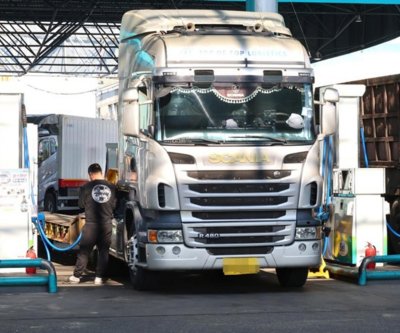
Drivers pump gas into their cargo trucks at a gas station in Incheon, South Korea, 13 March 2026. The government implemented a temporary fuel price cap system the same day to ease cost burdens amid supply concerns linked to the Middle East crisis. YONHAP / EPA
March 18 (Asia Today) — South Korea’s four major oil refiners are ramping up production and delaying maintenance to stabilize domestic fuel supply amid rising global energy risks, industry officials said Tuesday.
The move comes as refining margins approach $30 per barrel, far above the industry break-even level of about $4 to $5, signaling what analysts describe as a “super cycle.”
Despite strong profitability, refiners said the decision reflects a priority on supply stability as concerns grow over potential fuel shortages linked to Middle East tensions and disruptions in the Strait of Hormuz.
GS Caltex has postponed major maintenance at its Yeosu refinery by about two months to May, opting to keep production running during the current high-margin period. Such maintenance typically lasts about 40 days and costs hundreds of billions of won.
Industry officials said the delay was driven not only by profitability but also by the need to ensure stable supply, including naphtha, a key feedstock for petrochemical production.
Naphtha prices have surged to about $1,009 per ton, roughly double the level seen a year earlier.
Refiners said maintaining high operating rates will also support petrochemical companies by ensuring a steady supply of raw materials.
SK Energy said it will continue operating at full capacity while complying with the government’s oil price cap policy. Authorities are monitoring refinery inventories and shipments in real time through a joint task force.
S-Oil and HD Hyundai Oilbank are also prioritizing domestic supply in line with government measures limiting exports of gasoline and diesel.
Industry sources said other refiners may follow GS Caltex in adjusting maintenance schedules, as shutting down facilities during a period of elevated margins would reduce efficiency.
Analysts said refiners are seeking to balance strong earnings with their role in preventing a domestic fuel crisis as geopolitical tensions persist.
— Reported by Asia Today; translated by UPI
© Asia Today. Unauthorized reproduction or redistribution prohibited.
Original Korean report: https://www.asiatoday.co.kr/kn/view.php?key=20260317010005107