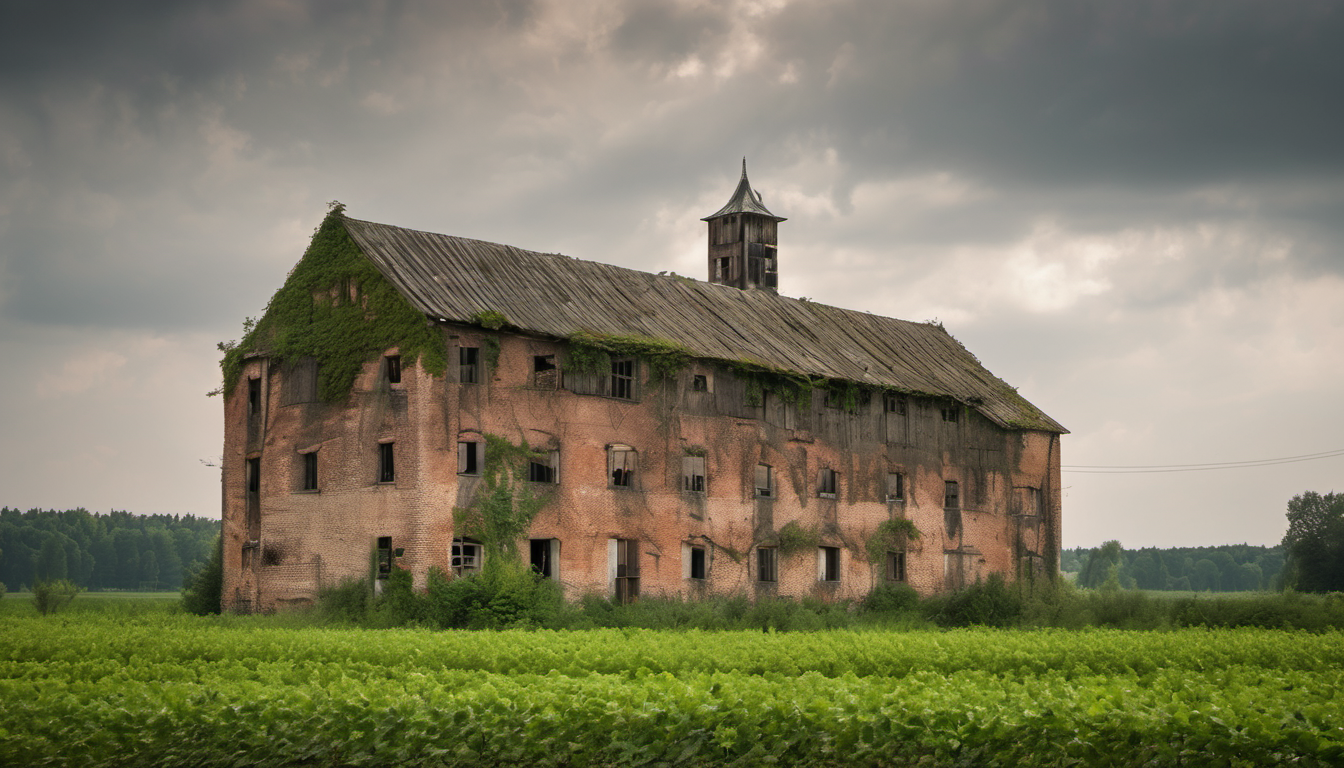
Featured image: A large, dilapidated brick building with a steeply pitched roof covered in green vegetation. AI-generated image; not a photograph of the reported event.
Located in the Polish countryside, the abandoned agricultural mill in Śmiałowice stands as a striking example of early 20th-century industrial design.
Architectural Significance
The mill is dominated by a multi-story central tower with a decorative roof, a feature uncommon in heavy industrial buildings of its time.
Its design reflects a period when industrial architecture prioritized visual appeal, blending functionality with artistic ambition.
Unlike utilitarian mills, this structure appears more like a grand estate than a factory, suggesting a broader cultural value for rural infrastructure.
Interior Features and Atmosphere
Inside, a grand wooden and iron spiral staircase winds through the main tower, leading to upper levels still housing vintage machinery.
Original equipment such as grain chutes and wooden sifting devices remains in place, offering a tangible connection to daily operations.
Arched windows and ivy-covered sashes allow sunlight to filter through, illuminating rooms with original wooden doors, lace curtains, and scattered remnants of past use.
Historical Context
Poland’s rural economy in the early 20th century relied heavily on small-scale agricultural processing.
Mills like this one served local communities, processing grain for household consumption and local trade.
As industrialization shifted toward centralized, mechanized systems, such rural facilities declined in use and number.
Preservation and Current Status
The site has not been restored or repurposed. Decay has set in, and the building is now largely abandoned.
Despite its state of disrepair, the complex remains a valuable physical record of rural industrial life in Poland.
It serves as a capsule of a bygone era, preserving both architectural style and operational details.
Why It Matters
The mill illustrates how rural infrastructure was once designed with both practical and aesthetic considerations.
Its preservation offers insight into the social and economic fabric of early 20th-century Polish villages.
Such sites are rare, especially in Central Europe, where industrial heritage is often overshadowed by urban development.
Limitations and Open Questions
There is limited public documentation on the mill’s original construction date or ownership history.
Its exact role in local agriculture and community life is not fully known.
There is no official record of whether it was ever used for commercial grain processing or primarily for household needs.
The site is not currently managed by a preservation authority. Its future remains uncertain.
For visitors, the mill offers a quiet, contemplative experience—proof that industrial facilities once shaped rural life with both function and beauty.
It stands as a silent monument to a time when agriculture and industry were deeply intertwined in everyday life.
More research is needed to fully understand its historical role and to assess its potential for cultural preservation.