Aglio e Olio is a classic Italian pasta dish made with just three ingredients: spaghetti, garlic, and olive oil. It is a staple of Italian home cooking, valued for its simplicity and rich flavor. Originating in the regions of Emilia-Romagna and Tuscany, this dish has been passed down through generations as a symbol of home-cooked meals that prioritize quality over complexity.
The Core Ingredients and Their Roles
The recipe relies on a small set of ingredients. Spaghetti is the base, typically 500g for four to five servings. This amount allows for a balanced portion without excess. The choice of spaghetti no. 5 is standard because of its ideal thickness—long, uniform strands that hold sauce well without breaking or becoming too stiff.
Garlic is used in six large cloves, finely sliced to ensure even cooking. The garlic is sautéed slowly in extra virgin olive oil, which is essential for flavor. The oil is not just a carrier—it is a key component of the sauce. The quality of the olive oil directly affects the final taste; a low-quality oil will result in a flat, uninspiring dish, while a high-quality extra virgin olive oil delivers a bright, fruity, and aromatic profile that enhances the garlic’s natural sweetness.
Salting is critical. The recipe specifies two teaspoons of kosher salt for the pasta water. This is half the amount for table salt, and a 50% increase is recommended for salt flakes. Proper salting ensures the dish does not taste bland. The salt is used in two stages: one in the cooking water to season the pasta from the inside, and another in the sauce to elevate the flavor of the garlic and oil emulsion. Without sufficient salt, even a well-executed recipe will feel flat and unremarkable.
How the Sauce Forms: A Step-by-Step Process
The dish begins with boiling the pasta. Water is brought to a boil, salted, and the spaghetti is added. Cooking is reduced by one minute from the packet instructions to achieve al dente texture—firm to bite, not soft. This texture is crucial because overcooked pasta becomes mushy and loses its structure, making it difficult for the sauce to cling properly.
Before draining, one cup of the cooking water is reserved. This water contains starch from the pasta and is vital for creating a sauce that clings to the strands. The starch acts as a binding agent, allowing the oil and garlic to emulsify and form a cohesive, glossy sauce that coats every strand of pasta rather than pooling in the pan.
While the pasta cooks, the garlic is sautéed in a large, deep pan over medium heat. The garlic is cooked for two to three minutes until it turns to a light golden hue. This slow process allows the oil to absorb garlic flavor without burning. The garlic must not be rushed—impatience leads to a bitter, acrid taste. When garlic turns dark golden or brown, it releases compounds like allicin, which are responsible for the sharp, unpleasant bitterness that permeates the entire dish.

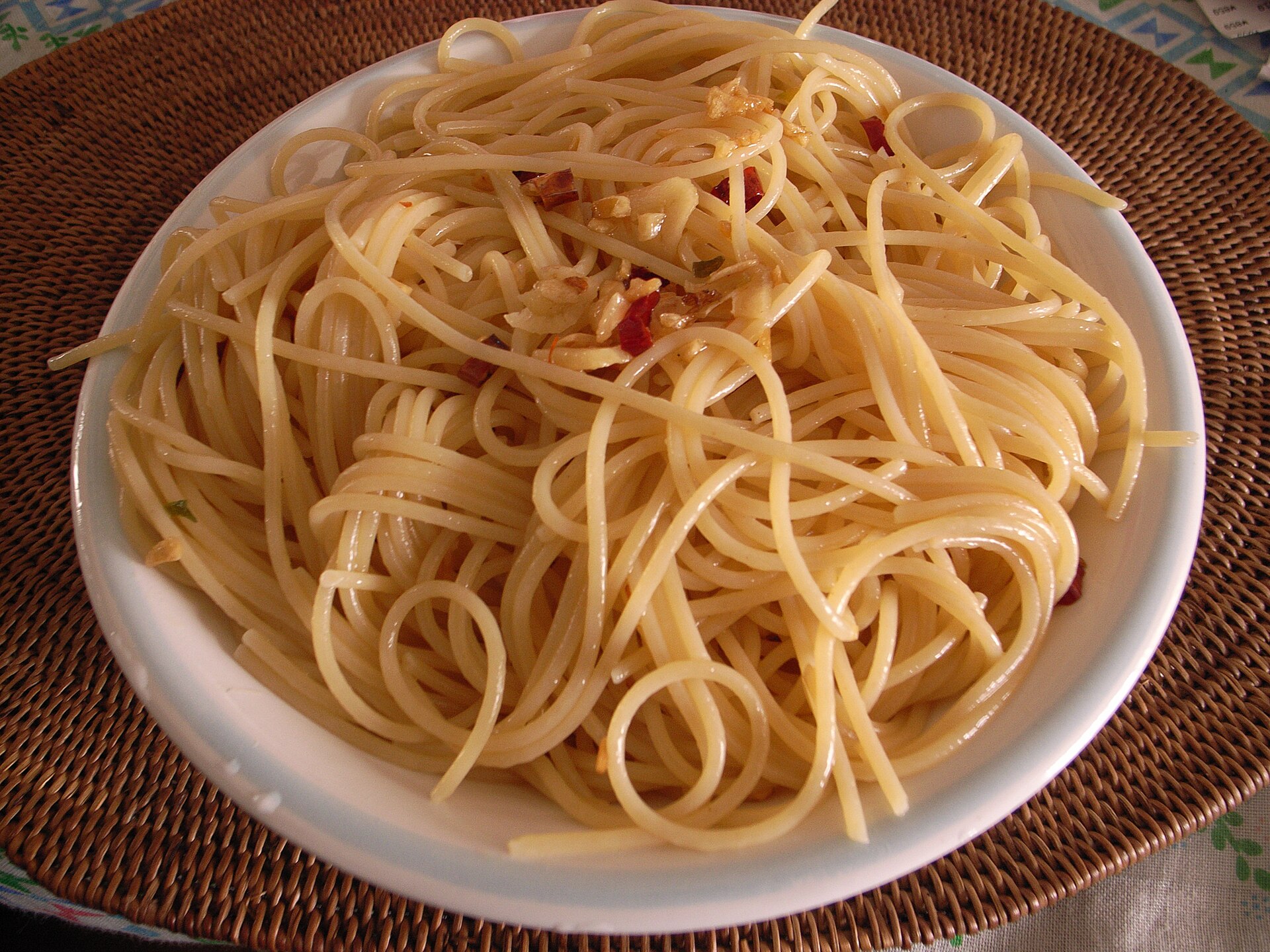
Red chili flakes are added for a subtle heat and visual appeal. They are cooked for 20 to 30 seconds, not longer. Overcooking results in bitter garlic, which would ruin the dish. The chili flakes are optional, but their presence adds a sensory dimension—both in flavor and in presentation—without overpowering the dish. For those who prefer a more robust heat, a small grinding of black pepper can be used instead, offering a more earthy, peppery note.
Once the pasta is drained, it is added to the pan with half a cup of reserved cooking water and a pinch of salt. The mixture is tossed over medium-high heat for one to one and a half minutes. The starch in the pasta and water emulsifies with the oil, forming a sauce that coats each strand. This process is not merely mechanical—it is a culinary technique rooted in Italian tradition. The goal is not to create a thick, heavy sauce, but to achieve a balanced, cohesive texture where every strand is uniformly coated and the dish feels rich and satisfying.
Why This Method Matters
The technique of tossing pasta with its own cooking water is traditional in Italian cooking. It creates a sauce that adheres to the pasta rather than pooling in the pan. This method ensures every strand is evenly coated. It is not about making a thick sauce, but about achieving a balanced, cohesive texture. The dish is served immediately, as pasta cools quickly and loses its texture.
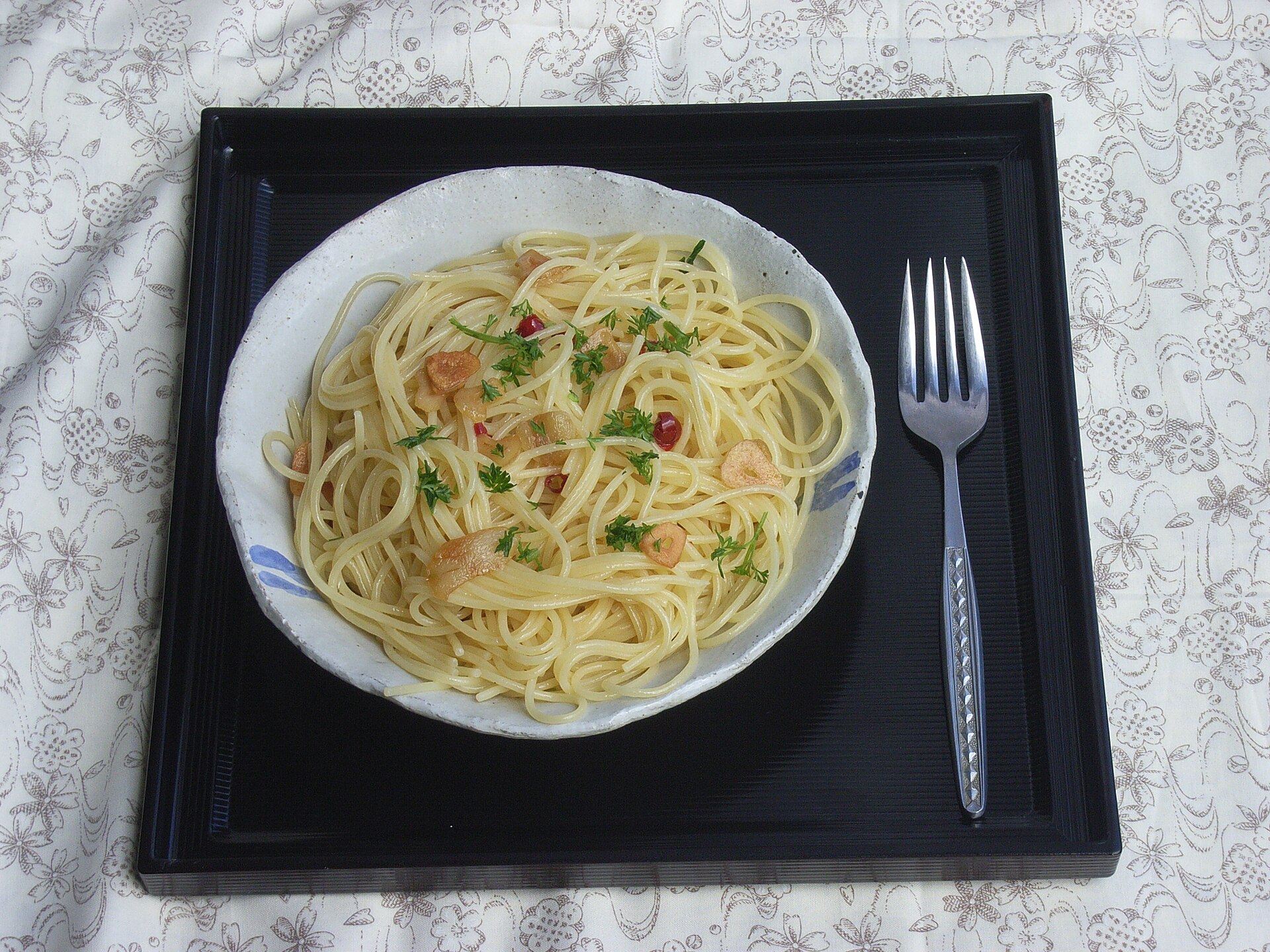
Adding parsley at the end provides freshness and color. If fresh parsley is unavailable, chives or dried parsley can be used. The substitution is noted in the original source as a practical option. The parsley is not just decorative—it contributes a bright, herbaceous note that cuts through the richness of the garlic and oil, balancing the dish without overwhelming it.
Personal Experience and Common Misconceptions
The author, Nagi, shares a personal anecdote about a friend who found Aglio e Olio to be bland. This feedback sparked a passionate defense of the dish’s flavor. The friend’s reaction reflects a common misconception: that simplicity equates to lack of flavor. Nagi explains that the issue lies in two key elements: oil quantity and salt balance. Using low-quality oil or skipping salt results in a flavorless dish. The author emphasizes that the oil is the sauce, and less oil means less flavor.
Many people assume that simple recipes must be unremarkable. Nagi counters that simplicity does not equate to blandness. With proper execution, the dish becomes deeply satisfying. The flavor comes not from complexity, but from attention to detail—such as the quality of ingredients, the precision of timing, and the balance of seasoning. A well-prepared Aglio e Olio is not just a meal; it is a demonstration of how minimalism can yield maximum satisfaction when executed with care.
Adding Vegetables Without Compromising the Recipe
The author notes that vegetables can be incorporated in two ways. First, vegetables like asparagus, broccolini, or green beans can be added to the boiling water with the pasta. They are cooked at the end of the boil so they drain together. These vegetables are chosen for their ability to cook quickly and retain texture. Asparagus, for example, becomes tender and slightly crisp, while green beans maintain a pleasant bite. Broccolini is ideal due to its firm structure and mild flavor.
Second, baby spinach can be added directly to the pan when the pasta is tossed. It wilts in seconds and adds minimal effort. The author notes that broccoli is not recommended because its florets absorb too much water and become waterlogged. This is a critical point: the dish has limited sauce, and any ingredient that absorbs excess water will compromise the texture and consistency of the final product.
Leftovers and Creative Reuse
Leftover spaghetti can be transformed into crispy fritters. The author describes a method: chop leftover spaghetti into 2cm pieces, mix with one egg and three-quarters of a cup of shredded cheese, and pan-fry until golden and crisp. From two cups of spaghetti, this method yields 13 to 14 fritters. These can be served with dipping sauces such as aioli, pink taco sauce, or ketchup. The fritters are a practical way to use up leftovers and extend the meal’s value.
The author notes that leftovers dry out overnight due to the lack of sauce. Reviving them with a splash of pasta water and a quick toss on the stove is effective. This method not only preserves the texture but also reactivates the starch in the pasta, allowing the oil to re-emulsify and create a light, airy coating. The fritters are especially delicious when served warm, with a crisp exterior and a soft, slightly chewy interior.
Why Aglio e Olio Stands Out Among Pasta Recipes
Unlike many pasta dishes that rely on meat or complex sauces, Aglio e Olio is minimalist. It depends on the quality of ingredients and technique rather than added components. Its appeal lies in its accessibility. It requires no special equipment or advanced skills. A deep pan, a pot of water, and a few basic tools are all that are needed.
It is also a flexible dish. The recipe can be adapted to include vegetables or adjusted for different pasta types. The author notes that any long-strand pasta works, though spaghetti no. 5 is standard. For instance, penne or rigati could be used, though the texture would differ slightly. The dish remains fundamentally the same—garlic, oil, and pasta—making it a versatile foundation for home cooks.
Limitations and Considerations
One limitation is that the dish does not contain meat or dairy beyond parmesan. This may not suit all dietary preferences. For vegetarians or those avoiding dairy, the dish remains a valid option, though the absence of protein may be a consideration for balanced meals.
It is also sensitive to timing. Overcooking the pasta or rushing the garlic sauté can result in bitter or mushy results. The author stresses that the garlic must not turn dark golden. A common mistake is to skip the reserved pasta water, which results in a sauce that fails to emulsify properly and lacks cohesion.
Another consideration is the oil. The recipe specifies extra virgin olive oil, which is more flavorful than regular olive oil. Using a lower-quality oil will reduce the dish’s taste. The oil should be fresh and unrefined to preserve its natural aroma and health benefits.

What to Watch for in Future Variations
As interest in simple, home-cooked meals grows, Aglio e Olio may inspire more minimalist pasta recipes. Its success lies in its balance of simplicity and depth. Future iterations could explore variations with different garlic types or regional oils. For example, using shallots or leeks could introduce new flavor profiles, though the core principles—slow sautéing, proper salting, and emulsified sauce—remain essential.
For those seeking more complex pastas, RecipeTin Eats offers additional options such as Spaghetti alla Puttanesca or Penne all’Arrabbiata. These recipes provide contrast in flavor and texture. Spaghetti alla Puttanesca, for instance, combines garlic, tomatoes, capers, and olives, offering a briny, tangy profile. Penne all’Arrabbiata features a spicy tomato sauce with chili, providing a bold, robust alternative.
For a similar dish with a different base, see Spaghetti Bolognese or Baked Spaghetti.
The original recipe is available at RecipeTin Eats.
Aglio e Olio is pronounced ‘alio olio’—with silent ‘e’ and ‘g’. The literal translation is ‘garlic and oil’, which perfectly describes the dish.
One key takeaway is that flavor comes not from complexity, but from attention to detail. The dish demonstrates that a simple recipe can be deeply satisfying when executed correctly. It is a reminder that in cooking, as in life, the most profound experiences often arise not from extravagance, but from precision and care.
For home cooks, mastering Aglio e Olio is not just about learning a recipe—it is about understanding the principles of flavor, texture, and technique. It teaches patience, attention to timing, and the importance of ingredient quality. These lessons extend beyond the kitchen and into everyday life, where simplicity and mindfulness can lead to greater satisfaction and joy.
Sources & further reading
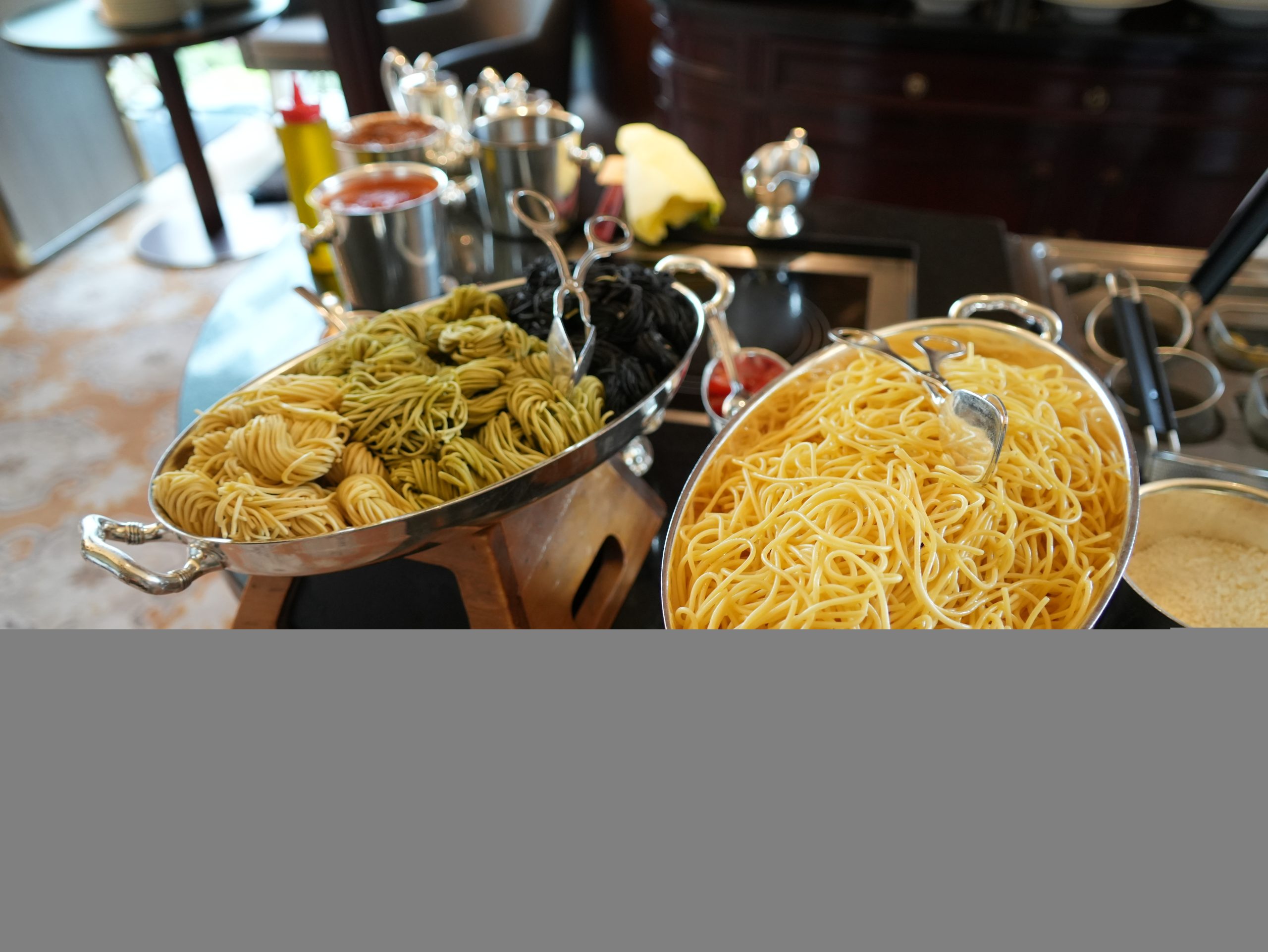
Featured image: Two of Italian Pasta at Pasta noodle station in Conrad… by Peachyeung316, CC BY-SA 4.0, via Wikimedia Commons. Image source · License