Researchers developed an agrivoltaic cold frame system that integrates semi-transparent PV modules to create controlled microclimates for crop cultivation. Field trials in Canada showed significantly increased lettuce yields alongside small-scale on-site solar electricity generation.
An international research team has designed an agrivoltaic cold frame system for controlled-environment crop cultivation.
Cold frames are simple, low-tech horticultural structures typically consisting of a transparent or translucent cover over a low enclosure used to protect plants and create a warmer microclimate, extending the growing season. In general, a cold frame is a small, unheated enclosure that protects plants from harsh weather and extends the growing season by creating a more favorable microclimate.
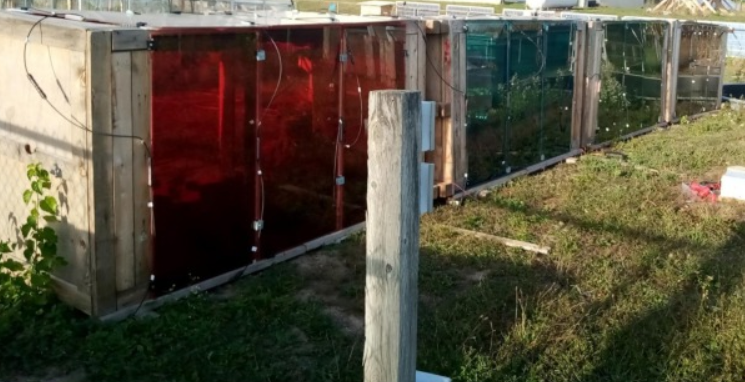
“We upcycled EV charging-station crates into agrivoltaic cold frames to test the potential of agrivoltaics in simple cold frame technology,” corresponding author Joshua M. Pearce told pv magazine. “We specifically tested a variety of colors of thin-film solar modules, originally meant to be colorful windows in buildings.”
Pearce added that his team is currently using the same agrivoltaic cold frame to grow other crops, with results expected to be published in the future. “We expect good results, especially with the increased temperatures from global warming,” he said. “Cold frames can help move the temperature to where you want it in two ways. In summer, the partial shade gives plants a break, especially in extreme heat. Toward the end of the season, closing up the boxes keeps the plants warmer and can extend the growing season.”

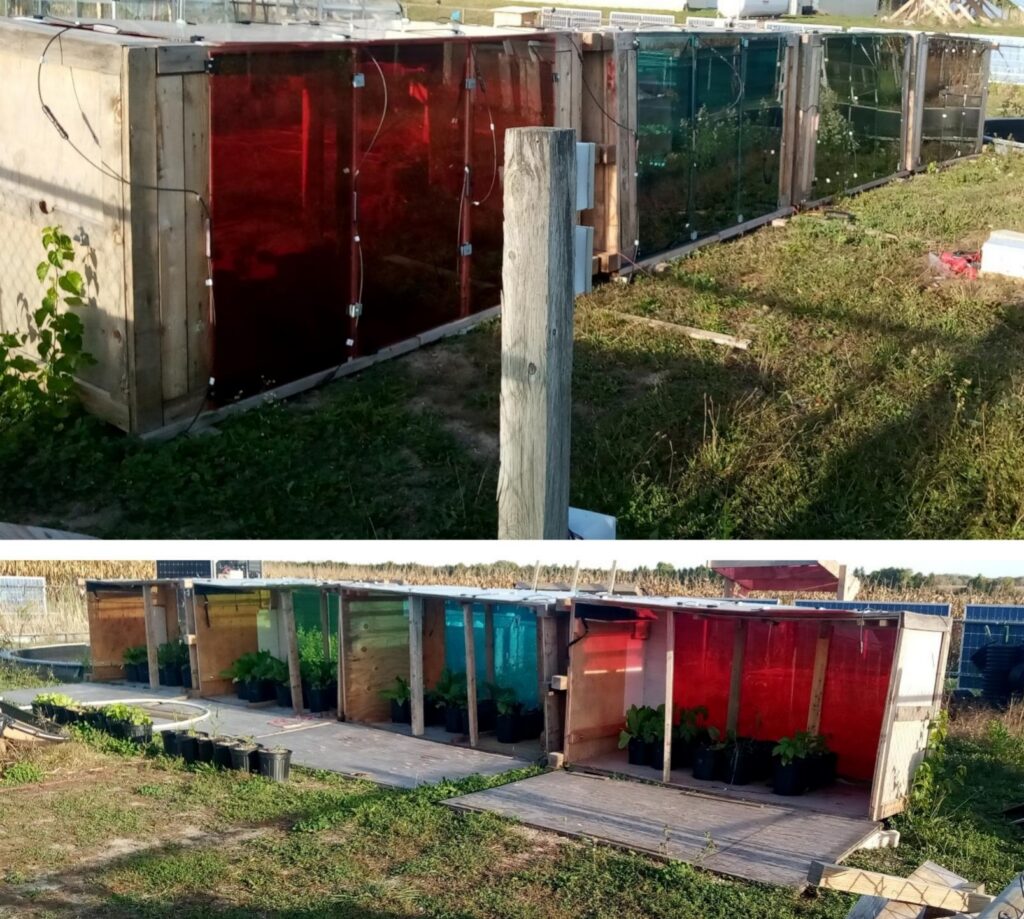
The researchers conducted the field experiment between July and October 2025 in Ontario, Canada. Four identical agrivoltaic cold frames were constructed by repurposing wooden shipping crates measuring 233 cm × 122 cm × 102 cm, with the roof and south-facing wall replaced with 55%-transparent cadmium telluride (CdTe) bifacial thin-film PV modules. Four module colors—neutral (gray), red, green, and blue—were evaluated. All modules measured 0.72 m² with a capacity of 34 W. Each cold frame incorporated six PV modules, comprising three horizontal roof-mounted and three vertical south-facing modules, for a total installed capacity of 204 W.
Romaine lettuce was grown in 1.5-gallon pots inside the frames, while an uncovered outdoor plot served as the control. All plants received identical soil and irrigation, with no fertilizer applied. Transmitted light spectra were measured using a spectrometer, soil temperature was monitored hourly using thermistors, and plant height and leaf number were recorded weekly. Final crop performance was assessed via fresh biomass at harvest. Annual electricity generation of the installed PV system was estimated separately using the System Advisor Model (SAM).
“The agrivoltaic cold frames crushed the controls,” Pearce said. “Overall, agrivoltaic systems created microclimates in the cold frames that enhanced lettuce productivity. The best were the neutral semi-transparent modules with no added color—they produced 300% more lettuce. However, even the colored variants performed better, with green producing 210% more, red 161% more, and blue 120% more yield than lettuce grown in open-air conditions.”
The SAM simulation predicted a specific annual yield of 1,209 kWh/kW for the horizontal modules and 878 kWh/kW for the vertical modules, corresponding to annual electricity generation of 123.3 kWh and 89.6 kWh, respectively. Combined, a single cold frame was estimated to generate 212.9 kWh of electricity per year. “These cold frames can thus grow your dinner and cut your power bills,” concluded Pearce.
The new agrivoltaic technology was presented in “Semi-transparent neutral, red, green, and blue photovoltaics impacts on lettuce growth in agrivoltaic cold frames,” published in Solar Energy. Researchers from Italy’s Polytechnic University of Turin and Canada’s Western University have participated in the study.