By Haley Zaremba – Sep 16, 2026, 3:00 PM CDT
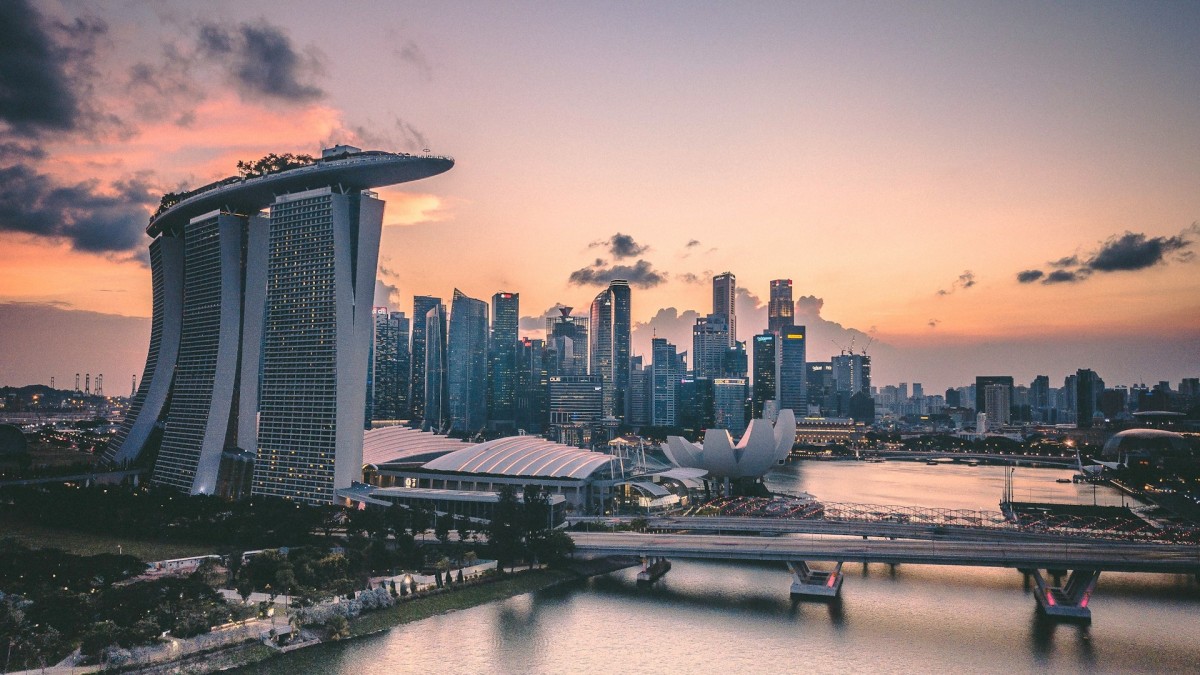
- Singapore already runs its grid on 95 percent natural gas, and AI-driven data center growth is pushing Malaysia, Thailand and Indonesia toward the same reliance.
- The Iran war has disrupted roughly 80 percent of oil and 90 percent of natural gas once bound for Asian markets through the Strait of Hormuz.
- Southeast Asian leaders at Gastech 2026 are backing an all-of-the-above strategy, pairing more gas imports with solar-plus-battery expansion rather than picking a side.

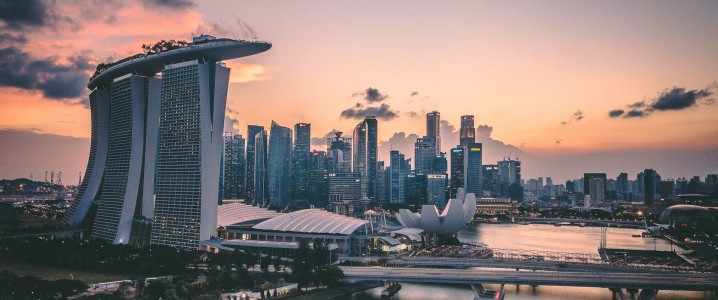
The artificial intelligence boom is sending Southeast Asia’s natural gas demand projections through the roof – but prolonged price hikes triggered by the war in Iran could turn the region toward renewable energies instead. What is more, these competing market forces are taking place against the backdrop of competing political forces as Southeast Asian leaders try to walk a tightrope between developing their economies through the increased growth of the tech sector as well as achieving their climate and decarbonization goals. These opposing factors are creating a lot of uncertainty for industry leaders and policymakers, who met in Bangkok this week to discuss the future of the region’s energy landscape at Gastech 2026.
“On the first day of Gastech 2026, one of the world’s largest energy conferences, policymakers implored pragmatism over net-zero targets and closer cooperation to ensure affordable LNG supplies, particularly among Southeast Asian neighbours whose industrial plans remain hooked on gas generation,” the South China Morning Post reported earlier this week.
Data center construction is off the charts in Asia, and therefore so is demand for liquefied natural gas, as combined-cycle gas turbines (CCGT) remain the most reliable source of round-the-clock energy production in Southeast Asia. Singapore is already running its grid on 95 percent natural gas, while demand from Malaysia, Thailand, and Indonesia is set to explode as industry leaders seek stable and predictable forms of energy production. “These are large, creditworthy off-takers with power needs that remain stable regardless of economic cycles. That does change the risk of calculus for new supply into Southeast Asia.”
Set OilPrice.com as a preferred source in Google here.
“Malaysia and Thailand are at a turning point. Data centre investment is growing quickly just as domestic gas output peaks and declines.” Omarali went on to say. “New import infrastructure is being developed and the importer base is broadening. For LNG suppliers with volumes to place, this timing is important.”
However, solar-plus-battery systems offer another lifeline for Southeast Asia. While these systems are still nascent in the region, they are growing rapidly as the war in Iran catalyzes a pivot away from fossil fuel imports on a global scale. No region has been hit harder by the closure of the Strait of Hormuz. Of the roughly 20 million barrels of oil and oil products that passed through the strait each day before the United States and Israel began their military offensive in Iran back in February, about 80 percent of oil and 90 percent of natural gas were destined for Asian markets.
For cash-strapped emerging economies, that kind of market shock poses a critical threat to energy security at a time when grid capacities are already being pushed to their limit. In addition to the energy autonomy and independence afforded by solar energy, solar photovoltaics are now the cheapest form of energy on Earth by a wide margin, making a renewable revolution inevitable for countries like Indonesia and the Philippines who are already experiencing major disruptions to their imports and energy markets. The clean energy transition, in many ways, is no longer about the climate crisis – solar just makes good economic and political sense.
“For years, clean energy has been sold as a moral imperative. Now it is simply an economic and geopolitical necessity,” Forbes reported earlier this year. “It’s not about emissions. It’s about resilience and price stability.”
However, there are major hurdles that Southeast Asian nations will have to clear before they can dream of weaning themselves off imported liquefied natural gas. The region lacks critical grid and transmission infrastructure to pull off large-scale electrification. In the immediate term, the emerging strategy is an all-of-the-above approach to energy development that embraces both natural gas and solar expansion in order to maintain a resilient energy system as electricity demand skyrockets.
By Haley Zaremba for Oilprice.com
More Top Reads From Oilprice.com
- TTF Gas Hits $92.95 as Gulf Tensions Weigh on Energy Markets
- Sweeping Russia-Iran Sanctions Bill Advances Toward House Vote
- Leaked EU Draft Would Scrap Hydrogen Mandates for EU-Wide Target
Download The Free Oilprice App Today