
Global stocks dipped amid rising fears about AI-driven market bubbles, while British retail sales fell in September. Source: theguardian.com.
AI Stock Selloff and Market Wobbles
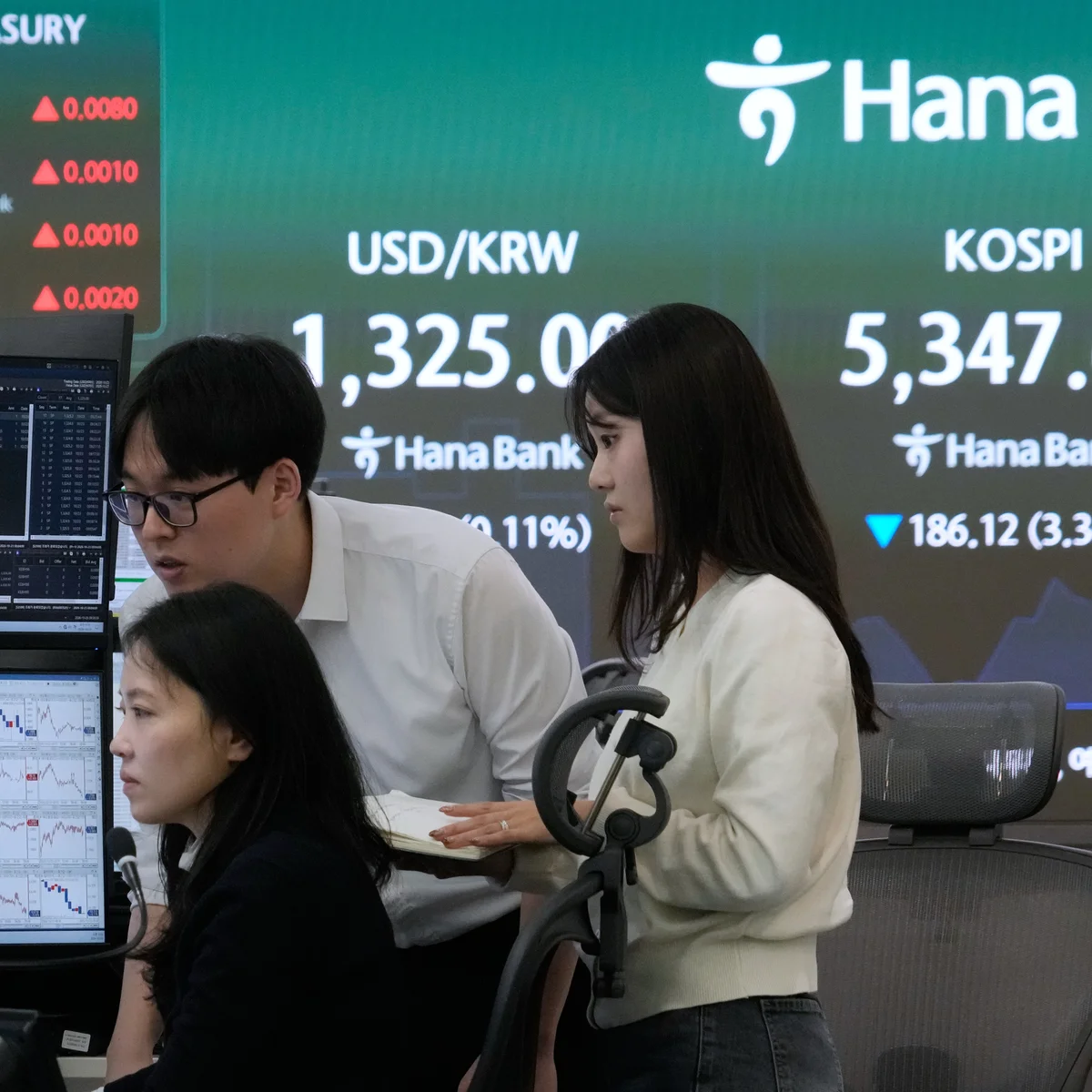
AI-related stocks plunged overnight across global markets. Japanese and South Korean markets, previously boosted by AI investments, dropped before recovering slightly to trade broadly flat. This shift shows growing investor doubt about AI-driven returns.
The US market reacted sharply. The S&P; 500 fell 1.2%, its worst drop since July. The Nasdaq dropped 2.6%, its biggest fall since June. The Philadelphia Semiconductor Index plunged 6.7%, its worst day since June. These declines spread beyond tech stocks, showing broader market unease.
Jim Reid of Deutsche Bank identified three key factors behind the drop. First, storm Austen brought persistent cloud cover, symbolizing market instability. This reflects growing concerns about Europe’s debt sustainability.
Second, AI-related fears intensified. The semiconductor index fell to its lowest level since July. Investors now question whether rapid tech valuations are backed by real earnings or just speculation. Third, geopolitical tensions pushed oil prices higher. Brent crude rose 4.00% to $113.17 per barrel — a 5-month high.
These pressures triggered a sharp risk-off move. This signals a strong flight to safety. Investors poured into US Treasuries, widely seen as a reliable safe haven.
Even with strong US data, sentiment weakened. The 4-week moving average hit its lowest level since September 2022, when unemployment was just 3.5%. This shows that market anxiety outweighs positive fundamentals.
Ipek Ozkardeskaya of Swissquote says memory chipmakers like Samsung and SK Hynix now trade at just 3–4 times forward earnings. That’s far below historical levels. Despite strong AI demand, these companies lack earnings growth to justify their prices. The sharp drop suggests a bubble has burst.
Investors will watch closely next week as Microsoft, Google, Amazon, and Sandisk release earnings. These reports will show whether AI-driven growth remains strong or if the sector is slowing. Slower revenue or margin growth could signal a broader tech downturn.

British Retail Sales Fall
British retail sales dropped 0.4% in September, missing expectations of a 0.1% decline. Official data shows this slump hit online clothing vendors and supermarkets. Warm autumn weather reduced demand for winter clothing, a key factor.
But retailers also reported lower footfall and customers cutting back. This suggests deeper consumer caution. Thomas Pugh, chief economist at RSM UK, says the retail drop and a sharp fall in consumer confidence raise concerns about economic resilience.
Higher inflation and borrowing costs are likely affecting household spending. The drop in confidence may also stem from fears about an upcoming tax-raising budget. While weather explains part of the drop, broader cost-of-living pressures are now impacting spending habits.
What to Watch Next
- Microsoft, Google, Amazon, and Sandisk earnings reports next week — key for assessing AI sector sustainability.
- Flash PMI data for the Eurozone and UK — indicators of business activity and economic momentum.
- US consumer confidence data — a gauge of household spending intentions.
- Interest rate decisions in Russia — could influence global capital flows.
Market volatility reflects a shift in investor sentiment. While AI remains a major growth driver, its financial performance is now under intense scrutiny. The UK economy faces pressure from both external shocks and domestic spending trends. As global markets adjust, the interplay between technology, valuations, and consumer behavior will shape economic outcomes.
For more on how AI investment is shaping business growth, see Meta’s Image Crisis and Business Growth.
For details on how rising heating oil prices affect rural communities, see Rural UK Communities Struggle with Soaring Heating Oil Prices.
For updates on UK banking tax pressures, see UK Banks Expected to Face Tax Hikes in Upcoming Budget.
These developments highlight how global financial markets and domestic economic trends are interconnected, with shifts in one area often triggering ripple effects across others.
Sources & further reading
Featured image: original publisher image. Via original publisher. Image source