
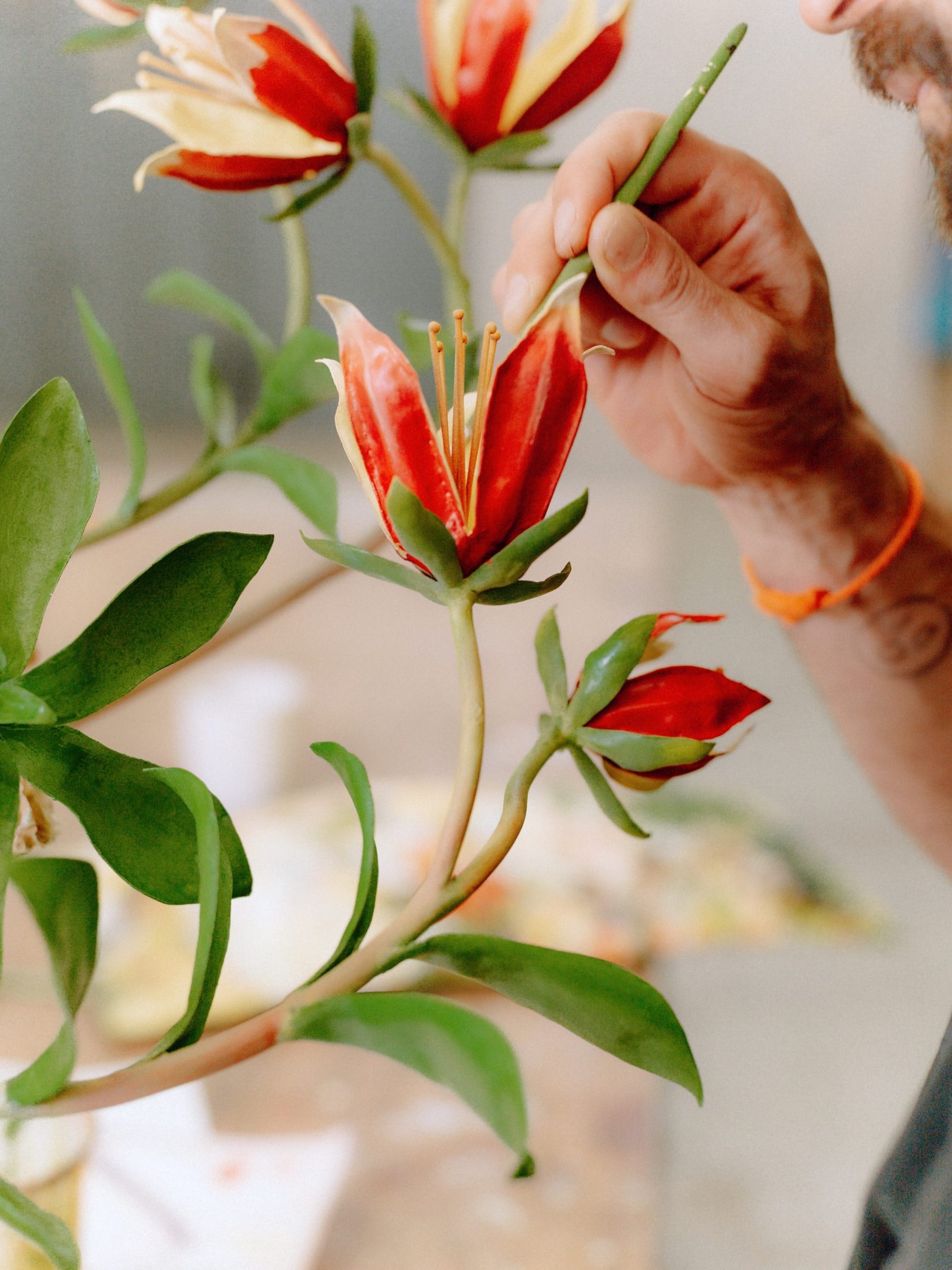
At Museo Jumex in Mexico City, artist Álvaro Urbano presents a new exhibition titled Helen. It honors the legacy of Casa Cueva, a modernist architectural icon built in 1954 and once home to architects Juan and Helen Fowler O’Gorman. Source: thisiscolossal.com.
What Happened at Casa Cueva
The Casa Cueva was constructed inside a natural lava cave in the Pedregal de San Ángel region. It was designed by Juan O’Gorman, an architect, and Helen O’Gorman, an artist. The home became a symbol of modernist Mexican design.
After the couple sold the property in 1969, the structure was largely destroyed. No original elements remain today. The loss of the home has left a gap in the architectural and cultural history of Mexico City.
Urbano’s Homage to Helen’s Work
Urbano draws inspiration from Helen O’Gorman’s 1961 book, Mexican Flowering Trees and Plants. She wrote and illustrated it while living at Casa Cueva. The book documents native plant species found in the region.
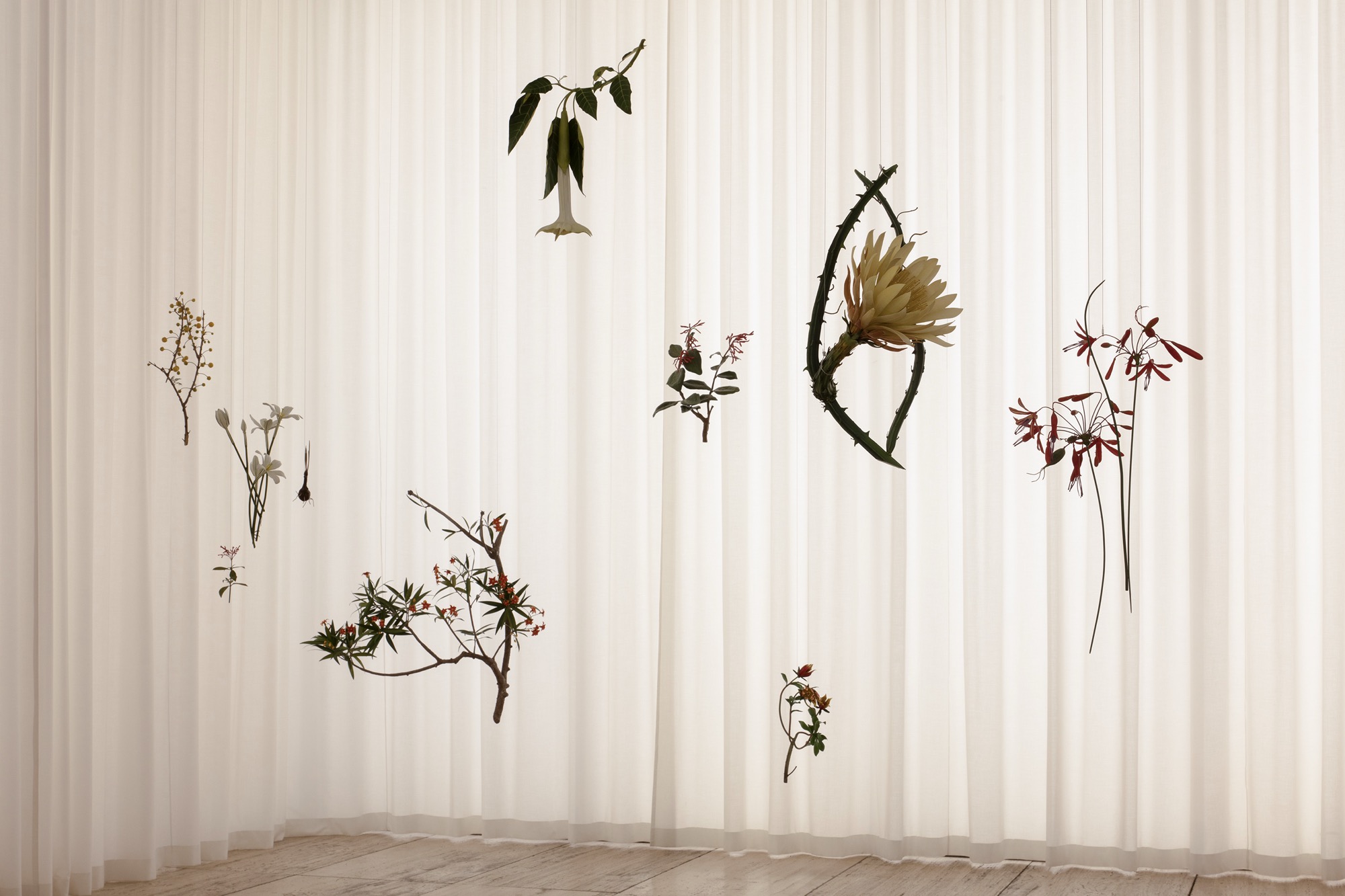
Each sculpture in the exhibition is based on one plant from the book. Urbano translates these botanical renderings into metal forms. The resulting pieces appear delicate and suspended in space.
The installation features a diaphanous curtain and a floor of square pavers. Variegated stone elements are embedded in the floor. The layout unfolds organically, creating a dialogue between space, plants, and viewers.
How the Exhibition Works
- The sculptures hang in mid-air, suspended by metal supports.
- They mimic the appearance of real plants, with lifelike textures and forms.
- Viewers move through the space, guided by the arrangement of the pieces.
- The exhibition mirrors the organic flow of Casa Cueva’s original design.
Urbano’s work does not replicate the home. Instead, it honors the cultural memory of its inhabitants and their artistic contributions.
Why This Matters
While Casa Cueva no longer exists, its influence persists. The exhibition preserves a piece of that legacy through Helen’s writings and Urbano’s reinterpretation.
It demonstrates how art can respond to loss. The work invites viewers to reflect on what remains when physical structures vanish.
For those interested in modernist architecture or botanical art, this exhibition offers a tangible connection to a lost space.
Visitors can explore more of Urbano’s work on his Instagram page.
For more context on Casa Cueva’s history, see this article from Hyperallergic. Learn more about the museum at Fundación Jumex. Urbano’s website is at alvarourbano.com.
Sources & further reading
Featured image: Studio view (2026). Photo by Agustín Farías, © the artist, ChertLüdde, Marian Goodman, and Travesía Cuatro. Via original publisher. Image source
