A UN-backed international tribunal has rejected Argentina’s bid to block oil exploration near the Falkland Islands. Source: bbc.co.uk.
What Happened
The Sea Lion oil project, about 130 miles from the Falkland Islands, will begin drilling within two years. It holds an estimated 1.7 billion barrels of oil.
Two companies—Rockhopper Exploration (UK) and Navitas Petroleum (Israel)—will start operations soon.
Argentina claimed the project violated international law. It said any resource development in disputed waters could worsen tensions over sovereignty.
The International Tribunal for the Law of the Sea ruled against Argentina 18-3. It said its role is maritime law, not sovereignty. The decision found the issue outside its jurisdiction.
Argentina’s Position
Argentina did not ask the tribunal to decide on sovereignty. It sought to apply UNCLOS to the UK’s resource exploitation in the area.
It argued that such actions breach Argentina’s maritime and environmental rights. The government said the project constitutes illegal exploitation of national resources.
After the ruling, Argentina announced sanctions for five individuals involved in the Sea Lion venture. Names were not disclosed. The statement said those participating in illegal resource use will face consequences.
UK Response
Attorney General Ellie Reeves called the decision a ‘clear win’ for the UK. She said it was ‘really significant’ in affirming maritime legal boundaries.
Reeves, with Foreign Secretary Ed Miliband, urged Argentina to stop economic pressure on the islands. They said such actions undermine self-determination and violate international norms.
Background: The Falklands Dispute
The Falkland Islands are a British overseas territory. Argentina has claimed them since the 1980s, citing historical and geographic ties.
The 1982 conflict began when Argentine forces landed to assert control. British forces responded to eject them.
The war resulted in 255 British military deaths, three islander deaths, and 649 Argentine military deaths.
Argentina has never abandoned its claim. Governments have used diplomacy, public statements, and economic tools to support it.
Why It Matters
The ruling confirms the UK holds sovereignty over the islands. It upholds the right of residents to self-determination.
A 2013 referendum showed 99.8% of islanders voted to remain a British territory. This supports the UK’s position.
The decision does not settle sovereignty. It sets a precedent: maritime development in disputed waters must follow maritime law, not sovereignty rulings.
Key Facts
- The Sea Lion oilfield holds 1.7 billion barrels of oil.
- Rockhopper Exploration (UK) and Navitas Petroleum (Israel) will begin drilling in two years.
- The tribunal ruled on jurisdiction, not sovereignty.
- Argentina sought to apply UNCLOS to resource exploitation, not sovereignty.
- Five individuals may face sanctions; names not disclosed.
Expert View
Professor Marc Weller of Chatham House said Argentina’s legal challenge ‘provisionally, but spectacularly, fell at its first hurdle’.
He noted this is a preliminary ruling. A full arbitral hearing may happen next year. The outcome weakens Argentina’s long-term legal case.
Limitations and Open Questions
The tribunal did not decide on sovereignty. That issue remains open.
Argentina may continue using economic or diplomatic pressure. The dispute could return to legal forums.
A full arbitral hearing might follow, depending on whether either side escalates the matter.
What to Watch Next
Future legal steps could reshape the dispute. Argentina may apply more economic pressure or pursue diplomatic actions.
The UK is likely to defend the current status quo. Island residents have strong support for remaining British.
For more on the legal framework, see the original source: BBC News.
Sources & further reading
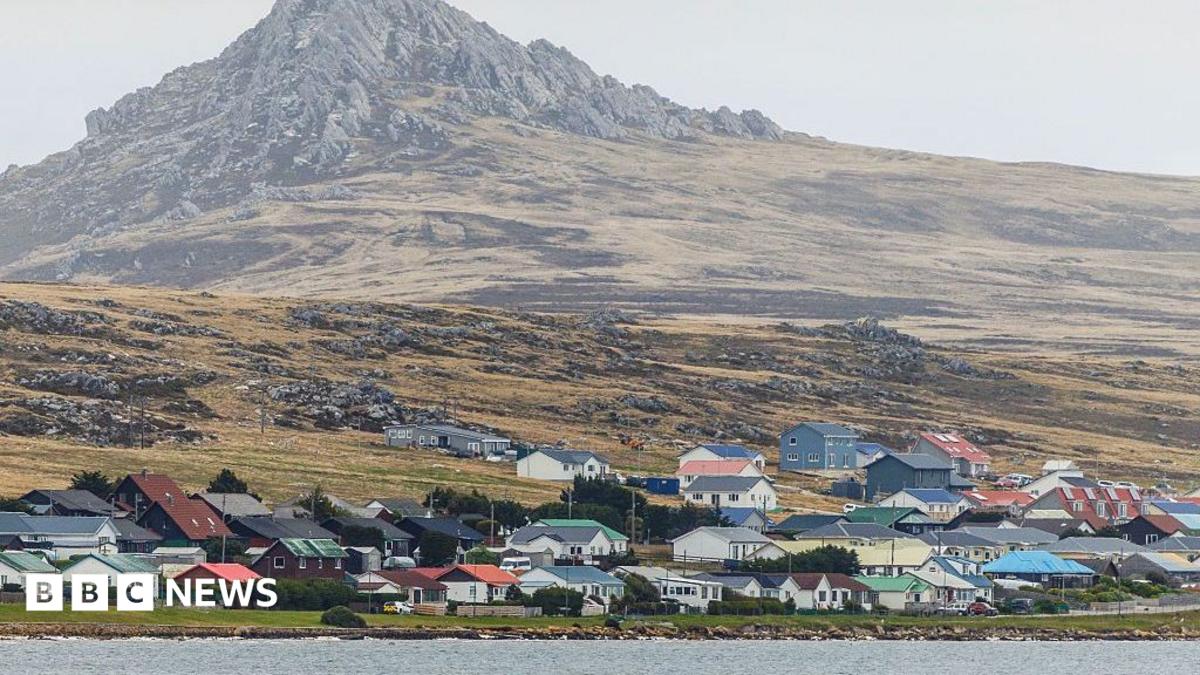
Featured image: A general view of the main town in Port Stanley, Falkland Islands. About two dozen one and two-storey buildings, some with colourful roofs, can be seen in front of a hilly and rocky landscape.. Via original publisher. Image source