Astronomers have found evidence of four large underground tunnels beneath the Moon’s surface. These tunnels likely formed from ancient volcanic activity and could one day protect lunar explorers from radiation and extreme temperatures. Source: sciencealert.com.
What the Scientists Found
Using data from NASA’s Gravity Recovery and Interior Laboratory (GRAIL) mission, researchers spotted four spots with gravitational anomalies. These signals suggest hollow tunnels beneath the surface.
Each tunnel is less than 2 kilometers wide and buried under about 100 meters of rock. This is smaller than earlier estimates—some studies suggested tunnels up to 9 kilometers wide—but fits better with what we know about lunar stability.
The research was published in the journal Icarus. Geoscientists Juan Losarcos and Andrew Dombard from the University of Illinois Chicago analyzed high-resolution gravity data and matched it with surface features.
How the Tunnels Might Have Formed
On Earth, lava tubes form when lava cools on the surface, creating a solid roof. The molten flow continues beneath, then drains away, leaving a hollow tunnel.
On the Moon, weaker gravity and no atmosphere may have allowed lava to flow farther and deeper. This could have created larger underground channels than seen on Earth.
However, the new findings suggest a different origin. The tunnels may have started as narrow underground channels. Over time, molten rock melted and eroded surrounding rock, gradually widening the passage—like a moonworm slowly boring through the crust.
This model is supported by surface features. Sinuous rilles are winding channels that may mark old lava paths. Skylights are pits where lava tube roofs collapsed. When these features align with gravitational signals, the case for intact tunnels grows stronger.
Why This Matters for Lunar Exploration
Long-term human presence on the Moon is hard due to radiation and temperature swings. Intact lava tubes could offer natural protection.
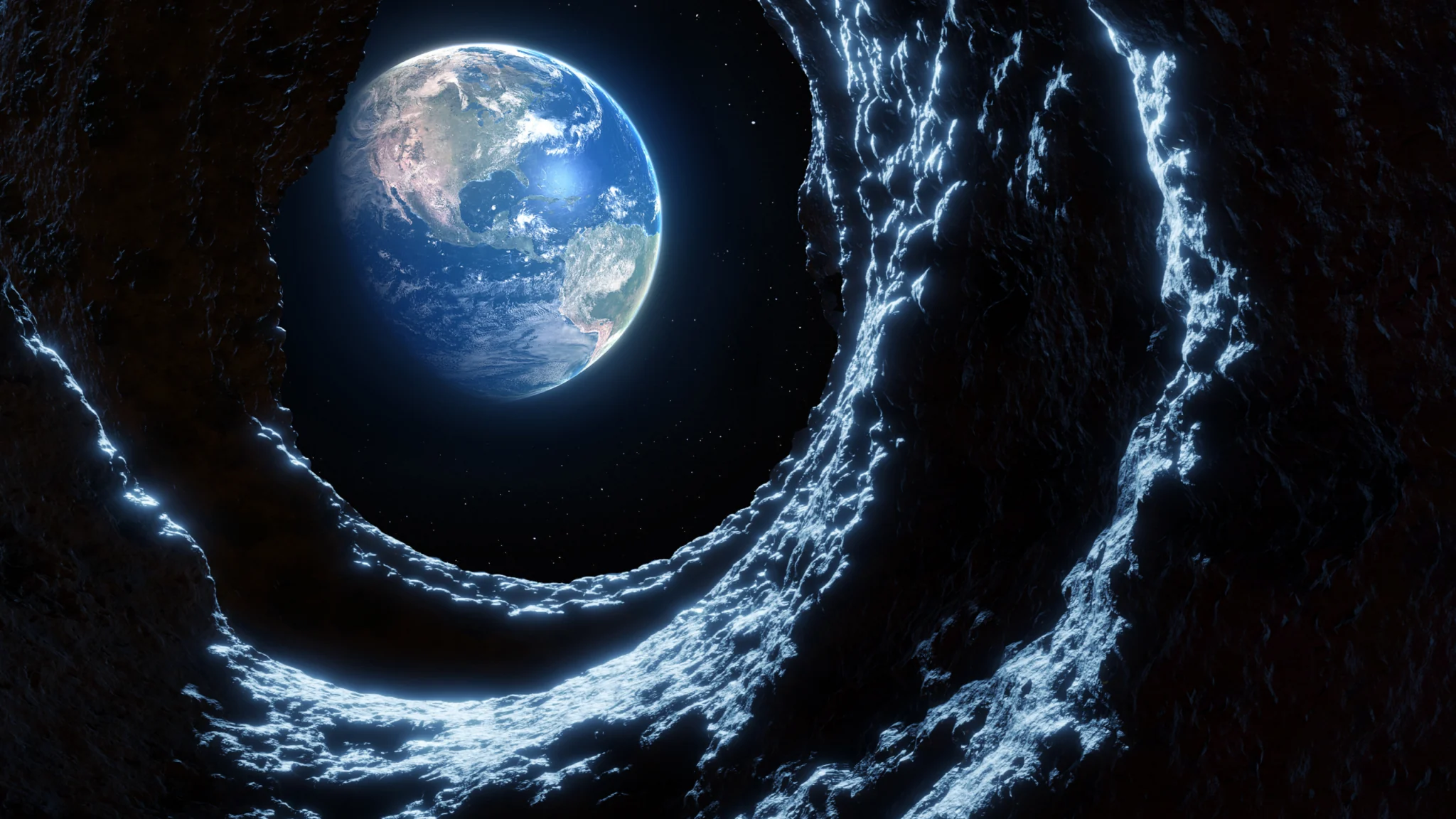
The roof of a tunnel would block harmful solar radiation and insulate against extreme heat and cold. Such structures could become the basis for future habitats or research stations.
The tunnels may also hold records of the Moon’s early volcanic history. Minerals and gases trapped in cooled lava could reveal how the Moon formed and changed over billions of years.
Limitations and Uncertainties
The evidence is indirect. Gravity data shows a weaker pull where mass is missing—but other factors could cause similar signals. Rock density variations or subsurface faults might produce the same effect.
The study relies on surface features like sinuous rilles and skylights. These usually point to collapsed tunnels. That means intact, undisturbed tunnels may be harder to detect.
There is no direct measurement of the tunnels’ size or shape. Future missions using radar or laser altimetry would be needed to confirm their existence and structure. They could also reveal if tunnels are connected or isolated.
What to Watch For Next
Lunar missions like NASA’s Artemis program may include tools to map subsurface structures. These could confirm whether tunnels exist and how accessible they are.
Scientists will also look for signs of slow erosion, not just large lava flows. If confirmed, these tunnels could become key sites for future exploration.
As one researcher noted, ‘Such pristine tubes could preserve important evidence of lunar volcanic and thermal evolution, even if they are less accessible for exploration.’ The findings suggest the Moon hides far more underground features than its surface shows. The results remain tentative—but they mark a major step in understanding the Moon’s hidden geology and open new paths for sustainable lunar exploration.
Sources & further reading
Featured image: Astronomers Detect Evidence of Vast Tunnels Beneath The Surface of The Moon. Via original publisher. Image source