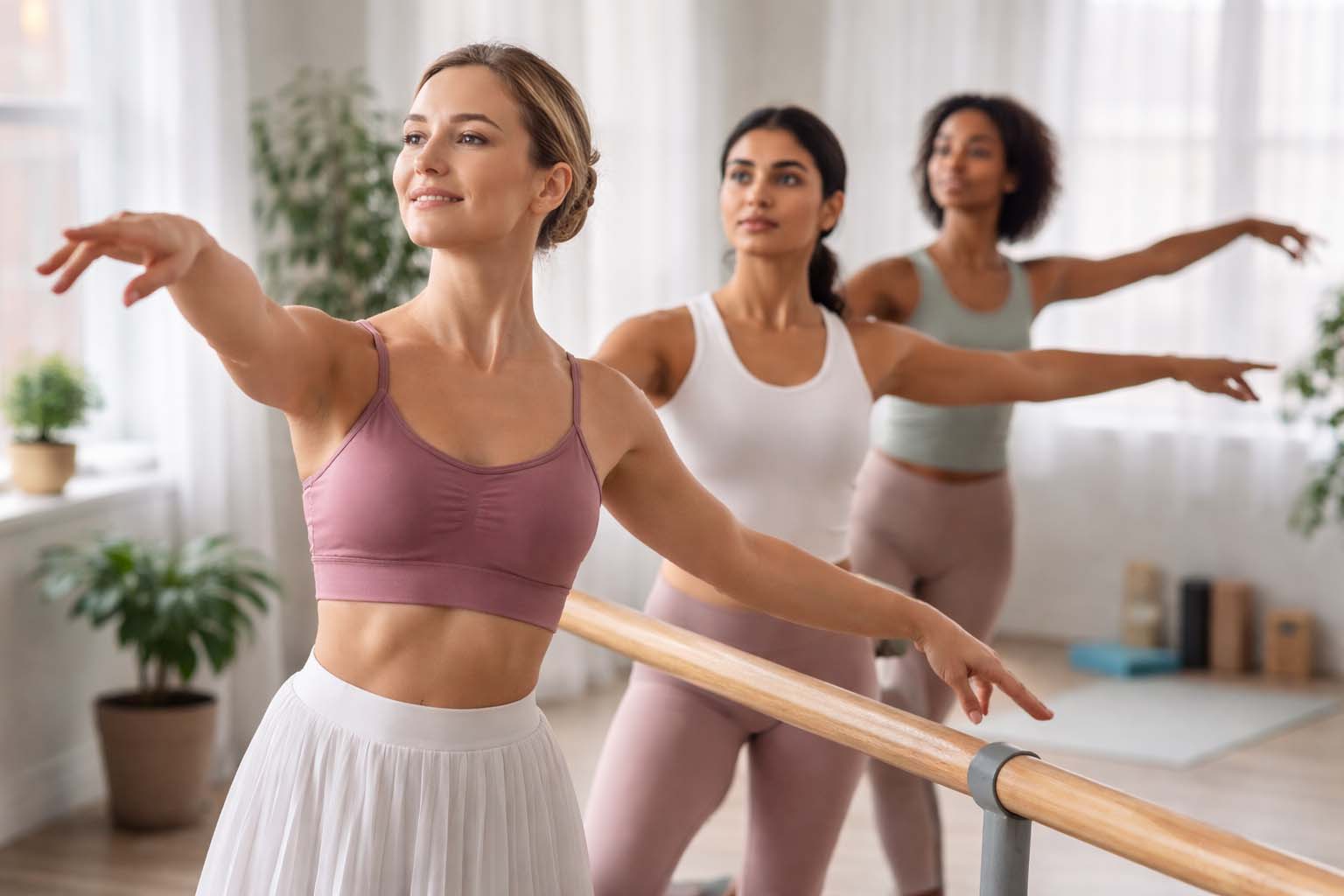
Ballet yoga (often called barre yoga or ballet-inspired yoga) blends the alignment and discipline of ballet with the breath, mobility and calm focus of yoga. The result isn’t only a workout—it’s a habit system that can change how you stand, walk, speak, and carry yourself.
When you practise consistently, ballet yoga tends to build three things that show up in everyday life:
- Confidence (you feel stronger, steadier, and more in control of your body)
- Manners and presence (you move with awareness—less rushed, more intentional)
- Attraction (not “trying harder,” but looking more composed: posture, ease, calm energy)
Below is a detailed, practical guide you can use at home.
What exactly is “ballet yoga”?
Think of it as a fusion of:
Ballet (barre-inspired work)
- posture, spinal length, shoulder placement
- core + glute engagement
- balance, control, “lightness”
- graceful arm pathways (port de bras)
Yoga
- breath regulation, nervous system calming
- mobility and flexibility
- mindful attention and body awareness
- strength in full-body patterns
Why it works for habits: it trains repeatable cues (alignment + breath + control) that you can use anywhere—standing in a queue, walking into a room, or sitting at a desk.
How ballet yoga creates life habits (the real transformation)
1) Posture becomes automatic (not forced)
Ballet yoga teaches “stacking” your body:
- head over ribs
- ribs over pelvis
- pelvis over feet
This reduces slumping and creates a longer silhouette—often the fastest “confidence boost” people notice.
Micro-habit: Every time you check your phone, do a 5-second reset:
“Feet grounded → ribs soft → crown of head tall → shoulders down and wide.”
2) You develop calm confidence through control
Small, controlled movements (pulses, holds, balance work) build the feeling of:
“I can handle discomfort and stay steady.”
That inner steadiness often shows as:
- less fidgeting
- more comfortable eye contact
- calmer voice and pace
3) You learn graceful “manners” through spatial awareness
“Manners” here doesn’t mean old-fashioned rules—it means how you occupy space:
- moving with intention (not rushing, not crashing into things)
- awareness of hands and gestures (less frantic movement)
- pausing before reacting (breath gives you a “gap”)
Ballet cue that transfers to life: soft gaze
Instead of staring down or scanning anxiously, you practise a relaxed, forward gaze—subtle, but powerful for presence.
4) Your body language becomes more attractive (without trying)
Attraction is often non-verbal:
- open chest (without pushing ribs out)
- relaxed shoulders
- grounded stance
- smooth, unhurried movement
Ballet yoga trains these as skills, not personality traits.
5) You build discipline without burnout
Barre yoga sessions are naturally structured: warm-up → focused sets → stretch → calm finish. That predictability makes it easier to form a routine, because you always know what you’re doing next.
The Ballet Yoga “Habit Stack” (7 daily habits in under 5 minutes)
Do these on non-workout days too:
Habit 1: The 60-second posture reset
- stand tall, feet hip-width
- gently engage lower abs
- shoulders down and slightly back
- breathe slowly for 5 breaths
Habit 2: The “quiet core” switch
While standing or walking:
- imagine zipping up from pubic bone to belly button (gentle, not rigid)
This supports your spine and changes your silhouette instantly.
Habit 3: The soft shoulders rule
Every time you exhale, let shoulders drop 1%.
This reduces tension and creates a calmer look.
Habit 4: Ballet walk (20 steps)
- step heel-to-toe
- keep ribs stacked over pelvis
- imagine a string lifting the crown of your head
You’ll feel more elegant immediately.
Habit 5: Breath before response (one cycle)
In conversations or stressful moments:
- inhale 4 seconds
- exhale 6 seconds
It lowers reactivity and improves “manners” naturally.
Habit 6: Hands with purpose
Practise resting hands softly (not gripping).
It reduces nervous body language.
Habit 7: End-of-day stretch (90 seconds)
- calves, hips, chest opener
This keeps you flexible and reinforces the “I care for myself” identity.
A Beginner Ballet Yoga Routine (20–25 minutes, at home)
You need: a chair (as your barre), a yoga mat (optional), and a small towel.
Warm-up (3 minutes)
- shoulder rolls + neck lengthening
- cat-cow or gentle spinal waves
- 5 slow breaths
Barre block (10 minutes)
- Plié squat at chair (2 sets of 10 slow reps)
- knees track over toes
- spine tall, core gently on
- Calf raises (2 sets of 12)
- slow up, slower down
- Standing leg lifts (side/back) (2 sets of 10 each side)
- small range, controlled
- keep hips stable
- Balance hold (30 seconds each side)
- soft gaze forward
- breathe steadily
Yoga flow (8 minutes)
- low lunge (hip opener)
- downward dog (calves + hamstrings)
- plank or modified plank (core)
- child’s pose (reset)
Finish (3–4 minutes)
- chest opener (hands behind back or doorway stretch)
- forward fold
- 5 slow breaths
4-Week Plan to Build Confidence and Graceful Habits
Weekly structure (simple + realistic)
- 3 sessions/week (20–30 minutes)
- Daily habit stack (3–5 minutes)
Week 1: Alignment + consistency
Goal: learn posture cues and finish every session feeling calm.
Week 2: Core + balance
Add: longer holds (45–60 seconds), slower reps.
Week 3: Grace + stamina
Add: smoother transitions, less stopping, more controlled breathing.
Week 4: Presence in real life
Add: “ballet walk” daily + breath before response in conversations.
Progress marker: you’ll notice posture improvements before you notice flexibility changes—this is normal.
Common mistakes (and how to fix them)
- Forcing turnout (twisting knees/ankles) → keep feet more neutral
- Arching lower back → soften ribs, engage lower abs
- Locking knees → micro-bend for safer alignment
- Chasing deep stretches too fast → prioritise control + breath first
- Comparing yourself → ballet yoga works through repetition, not perfection
FAQ
Is ballet yoga good for confidence?
Yes—because it improves posture, balance, and self-control. Confidence often follows physical stability.
Will it make me “look more elegant”?
It can improve body language (posture, shoulders, walking pace). That often reads as elegance.
Do I need to be flexible?
No. Start with small ranges. Flexibility increases over time when you train gently and consistently.
How soon will I notice changes?
Many people notice posture and “presence” in 1–2 weeks. Strength, balance, and flexibility build over 4–8 weeks.
Safety note
Ballet yoga is generally gentle, but it’s still exercise. If you’re pregnant, recovering from injury, have joint/back pain, dizziness, or any medical condition, check with a GP or qualified clinician before starting, and stop if anything causes sharp pain or worsening symptoms.