Body acne is completely normal—whether it appears on the back, chest, or buttocks. It arises from a cycle of clogged pores, inflammation, and poor skin cell turnover. Source: allure.com.
What Is Body Acne?
Body acne forms when sebum, dead skin cells, and bacteria build up in pores. This can result in blackheads, whiteheads, pustules, or deep, tender cysts.
Back acne is especially common due to friction from clothing, sweat, and hair products. These factors often clog pores and trigger breakouts.
Dr. Heidi Prather, a Texas-based dermatologist, explains that back skin has a weaker natural barrier than facial skin. This makes it more sensitive to oil buildup and microbial imbalances.
A study in the Journal of Cosmetic Dermatology found that back skin reacts more strongly to harsh cleansers and exfoliants. This can damage the skin’s protective layer and lead to a cycle of increased oil production and inflammation.
Why Back Skin Is More Vulnerable Than Facial Skin
Back skin has a thinner epidermis and fewer natural oils. This makes it less resilient to irritation and damage.
Dr. Kseniya Kobets, a New York-based dermatologist, notes that while back skin has fewer sebaceous glands, it still produces enough sebum to function normally. Disrupting this balance with harsh products can trigger overproduction of oil and inflammation.
Back skin is also less frequently cleaned and exposed to more daily friction. This combination increases the risk of acne development.
How to Treat Body Acne Effectively
Start by identifying triggers. Hair products with silicones or oils often leave residues that clog pores.
Dr. Prather advises screening all hair and body products for comedogenic ingredients. Silicones like dimethicone can form a film on skin that traps sebum and debris.
When getting a massage, use lightweight, non-comedogenic lotions instead of heavy oils or greasy creams.
Next, use gentle, body-specific treatments. Avoid face acne routines on the back. These can damage the fragile skin barrier and worsen inflammation.
Use a pH-balanced cleanser with humectants like glycerin to retain moisture. Follow with a lightweight lotion containing ceramides and niacinamide.
Benzoyl peroxide should be used sparingly—no more than a few times a week—and applied over moisturizer to avoid drying skin. Overuse can cause irritation and more breakouts.
Salicylic acid, a beta-hydroxy acid (BHA), is effective for body acne. It penetrates oil-filled pores and clears debris. It’s especially useful on the back and chest.
Top Body Acne Treatments Reviewed
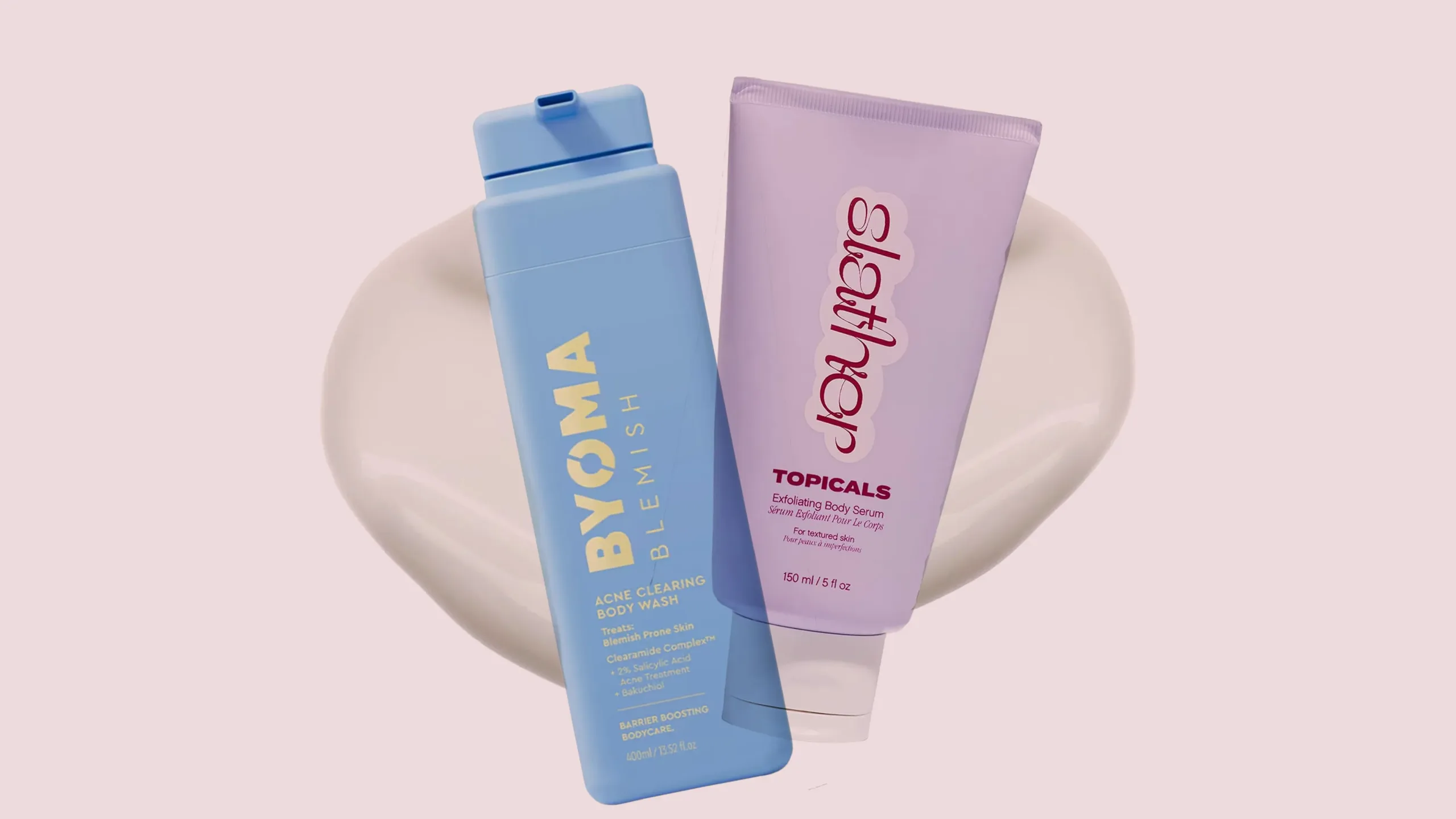
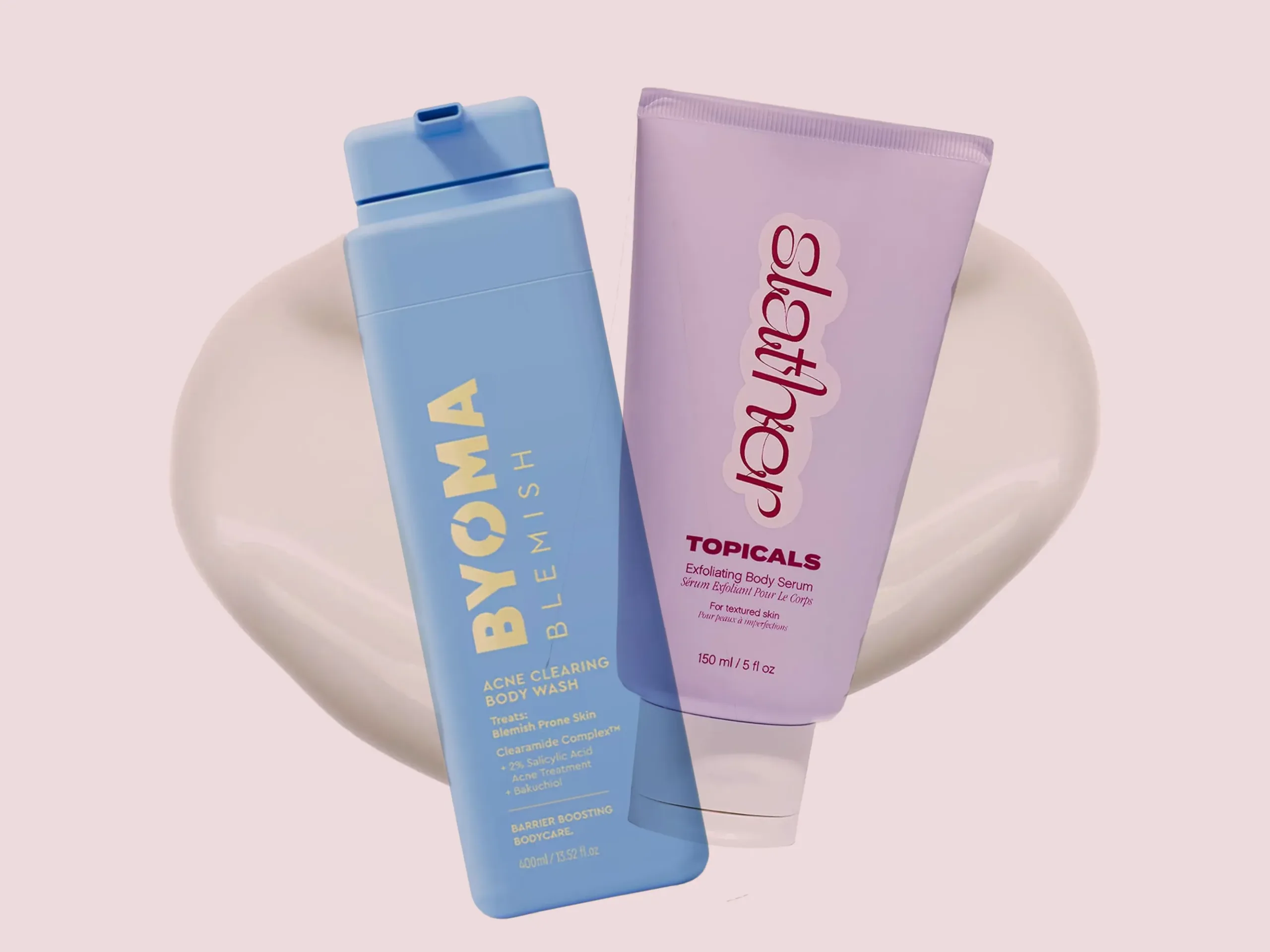
Best Body Serum: Topicals Slather Exfoliating Body Serum
This serum contains retinol, glycolic acid, and lactic acid. These ingredients promote skin cell turnover, preventing dead cells from clogging pores.
Retinol helps reduce post-acne hyperpigmentation. Dr. Geeta Yadav, a Toronto-based dermatologist, says it also improves skin texture and tone.
Glycolic and lactic acids exfoliate the surface, removing dead cells and smoothing texture. They also help even out skin tone.
To prevent dryness, the formula includes squalane and urea—natural moisturizers that hydrate and soften skin.
The texture is milky, like a lightweight body lotion. It absorbs quickly. In dry weather or with dry skin, follow with a body cream.
Former beauty editor Talia Gutierrez found it easy to apply and improved the smoothness of her brown skin.
Best Body Wash: Byoma Blemish Acne Clearing Body Wash
With 2% salicylic acid, this wash clears excess oil and dead skin from pores. Bakuchiol, a plant-based retinol alternative, supports skin cell turnover and reduces inflammation.
Ceramides and phytosphingosine help maintain the skin’s protective barrier. Phytosphingosine has antimicrobial properties. Glycerin draws moisture in. Witch hazel removes excess oil.
Dr. Alexandra Bowles, a Cincinnati-based dermatologist, praises it for treating acne without damaging the skin barrier—a common issue with harsh products.
It is fragrance-free, ideal for sensitive skin. However, witch hazel may irritate some users.
Best Body Lotion: Paula’s Choice Weightless Body Treatment 2% BHA
Containing 2% salicylic acid, this lotion clears pores and prevents clogging. Vitamin E and dimethicone soften skin and reduce moisture loss.
Dr. Dendy Engelman, a New York City dermatologist, calls it one of her go-to picks for body acne, clogged pores, and uneven texture.
Salicylic acid dissolves sebum and loosens dead skin bonds. Green tea and chamomile extract calm irritated skin. Allantoin helps repair and soothe.
Designed for daily use, it has a lightweight feel and doesn’t leave a greasy residue.
Best Body Scrub: Nécessaire The Body Exfoliator
This scrub combines physical and chemical exfoliation. Fine pumice particles buff away dead skin. A blend of glycolic, lactic, salicylic, and gluconolactone acids loosen buildup and clear pores.
Marula oil and niacinamide help hydrate and even skin tone. Dr. Lauren Moy, a Los Angeles dermatologist, says it’s ideal for congested skin.
Tester Deanna Pai found her skin became smoother and softer after regular use. The lather is rich and rinses easily. A fragrance-free version is available.
Best Exfoliating Pads: First Aid Beauty Acne Clearing Pads
These pads contain 2% salicylic acid and rosemary extract. They’re ideal for quick, on-the-go use.

They clear excess oil and minimize pore appearance without drying skin. Rosemary has natural antimicrobial properties.
Tester Deanna Pai uses them to treat upper back and chest breakouts. They resolve zits quickly and reduce post-inflammatory hyperpigmentation.
Best Spray: Glytone Acne Back & Chest Treatment Spray
Formulated with 2% salicylic acid and centella asiatica (cica), this spray is ideal for hard-to-reach areas.
Dr. Heidi Prather recommends misting it after cleansing, especially on the back. It dries quickly and covers areas that are hard to reach.
Centella asiatica soothes and reduces inflammation. It balances salicylic acid’s effects and helps prevent redness. The product is fragrance-free.
How the Reviews Were Conducted
Allure tested each product across five key areas: ingredient efficacy, packaging, fragrance, texture, and daily wear.
Each product was evaluated by in-house editors and contributors. Board-certified dermatologists provided expert input on ingredient safety and effectiveness.
Peer-reviewed studies were reviewed to validate claims. Real-world testing included diverse users across age, skin tone, gender, and background.
Limitations and Considerations
Not all treatments work for everyone. Skin sensitivity varies. Some ingredients, like salicylic acid, can irritate if overused or applied to sensitive areas.
Fragrance may trigger breakouts in sensitive skin. Witch hazel and essential oils can irritate certain skin types.
Back skin has a weaker barrier than facial skin. Face treatments may not be safe or effective on the back.
Results vary by person. Genetics, lifestyle, diet, and hormones affect how well a product works. No treatment guarantees results for all.
Overuse can cause redness, flaking, or more breakouts—especially in reactive skin.
What to Watch Next
Dermatologists are increasingly focusing on skin barrier health and microbial imbalances. Future treatments may be personalized to individual skin types.
Plant-based actives like bakuchiol and ceramides are gaining popularity. They offer effective acne control without irritation.
Fragrance-free and non-comedogenic options remain essential for sensitive skin. The skincare trend is shifting from aggressive fixes to gentle, consistent routines.
More inclusive testing will ensure treatments work across different skin tones, textures, and conditions. This will lead to more equitable skincare solutions.
Sources & further reading
Featured image: original publisher image. Via original publisher. Image source