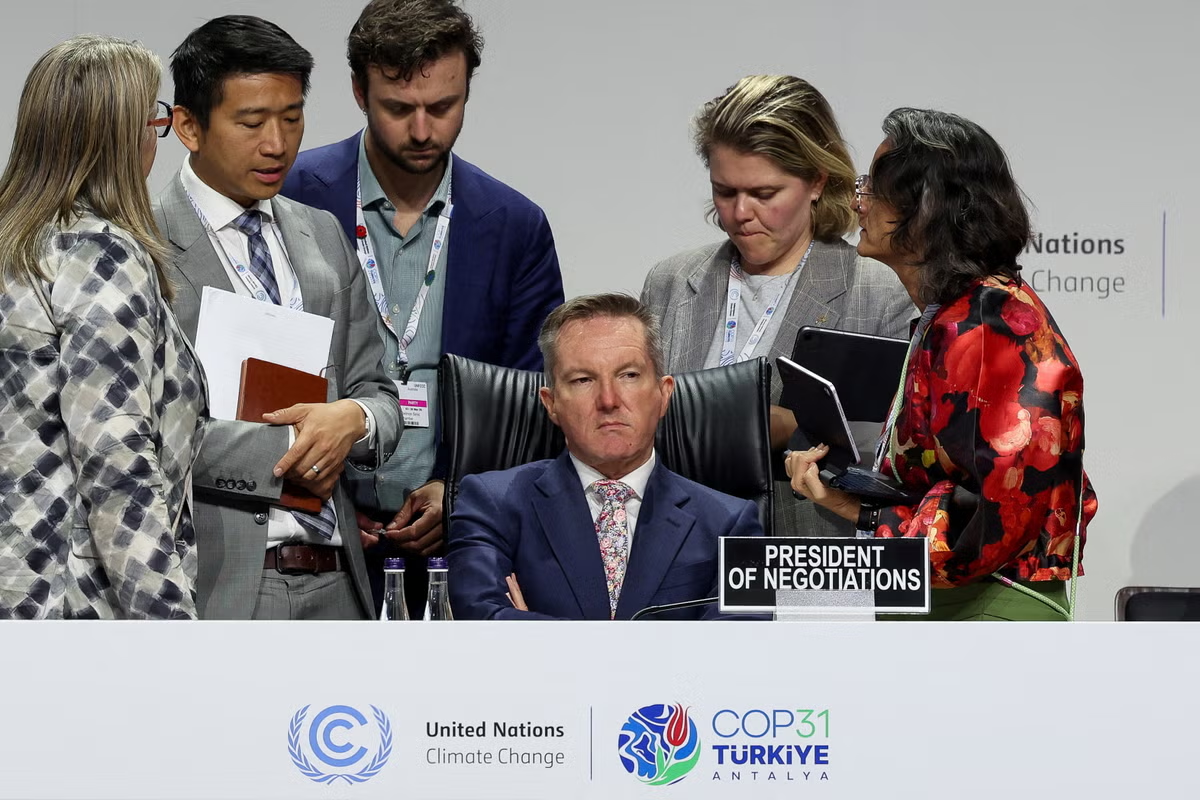
The 31st United Nations Climate Change Conference, or Cop31, ended without a final agreement in Antalya, Turkey. This marks the first such collapse since the 2009 Copenhagen summit. Source: independent.co.uk.
Failure of Climate Negotiations
Over 190 countries attended. More than 92,000 people registered—making Cop31 the largest UN climate conference in history so far.
The draft final decision excluded any mention of fossil fuels’ role in global warming. This move drew strong criticism from environmental groups and climate advocates.
The European Union said it did not support the draft because a few nations’ interests blocked broader climate ambition. The EU is responsible for six per cent of global emissions.
Anna-Kaisa Itkonen, a European Commission spokesperson, said: ‘It was important to bring the countries responsible for 94 per cent of global emissions on board. This is the best possible option we have.’
China’s delegation, led by Vice Minister Li Gao, expressed disappointment. He said: ‘We cannot see this as a failure of the multilateral process. It reminds us we need to try to further the multilateral process to get consensus.’
He added that developing nations missed key opportunities, highlighting concerns about inclusivity in current negotiations.
Domestic Political Response in Australia
Opposition figures in Australia have directly blamed Energy Minister Chris Bowen for the failure.
Angus Taylor, a parliamentary leader, said: ‘This energy minister’s got to go because he’s a complete and utter failure.’
Other opposition members questioned Prime Minister Anthony Albanese about removing Bowen. Australia spent A$150 million on the event.
Albanese did not confirm any action. He said: ‘We believe climate change is real. We believe in the science. We act in Australia’s national interest.’
Global Reactions and Concerns
India’s delegation, led by Bhupender Yadav, maintained a constructive approach. He said: ‘While concerns remain over certain elements of the final decision, we remain committed to dialogue and constructive engagement until the very end to build consensus.’
Small island nations, especially those facing rising seas and extreme weather, expressed deep despair. The Marshall Islands delegation said: ‘We have been let down on all sides.’
Why the Outcome Matters
Global temperatures are projected to exceed 1.5°C. Scientists warn this will intensify extreme weather events.
Without a fossil fuel phase-out, long-term climate goals are undermined. The Cop process has lost credibility.
For the first time since Copenhagen, no final agreement was reached. This raises serious doubts about global cooperation on climate issues.
What to Watch Next
The UN and member states will likely review the need for reform after Cop31.
Pacific island nations may push for greater inclusivity and accountability in future summits.
The EU will continue to advocate for stronger climate action. Australia faces internal pressure to reassess its climate leadership role.
The coming months will be critical in rebuilding trust and momentum in global climate talks.
Sources & further reading
Featured image: original publisher image. Via original publisher. Image source