1 of 4 | Cary Elwes’ “Dead Man’s Wire” is now available on digital platforms and DVD. Photo courtesy of Row K Entertainment
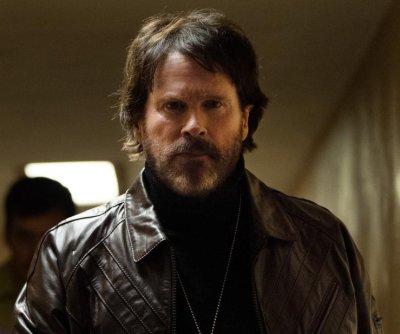
NEW YORK, March 14 (UPI) — Stranger Things, The Princess Bride and Robin Hood: Men in Tights icon Cary Elwes says he thoroughly researched the life of Michael Grable, the real Indianapolis police detective he plays in Gus Van Sant‘s drama, Dead Man’s Wire.
“I went to Indianapolis and spent some time down there and met with my character’s kids, Michael and Jason, and they gave me a ton of material to work with — audio, visual, photograph albums, everything, and his behavior and his likes, his dislikes, his favorite phrases,” Elwes, 63, told UPI in a recent Zoom interview, noting Grable died nine years before the movie was released.
“I brought all of that to Louisville [where we filmed] and shared with Gus and he just handpicked certain things about the character that he wanted me to highlight.”
Now available on digital platforms and DVD, the film was inspired by the 1977 gunpoint kidnapping of prominent banker Richard Hall (Dacre Montgomery) by Tony Kiritsis (Bill Skarsgård), a disgruntled client, who felt he had been swindled.
Grable was an undercover narcotics detective called upon to diffuse the life-or-death situation.
He and Kiritsis were acquainted because they hung out at the same coffee shop, one frequented by police.
“Tony Kiritsis used to eat there a lot because he liked policemen for some reason. For a guy who ended up becoming a criminal, he was fascinated by cops and, so, they knew each other,” Elwes said.
Grable had just taken an FBI hostage seminar about a week before this nerve-wracking event took place.
“Being the first cop on the scene, he was actually more qualified than anyone else to talk Tony off a ledge,” Elwes said.
“Because A. They knew each other, and B. He’d done this seminar, so they had a relationship. And, so, Gus and I worked together to figure out a way to find an arc in that relationship, more in terms of a power play, and it was fun.”
Grable figures out pretty quickly that Kiritsis is experiencing a psychotic break.
“When you’re dealing with someone who’s unstable, you have to approach that person a different way. The course — I took part of the course myself [to prepare] — is to make sure that you don’t let the kidnapper leave the scene,” Elwes explained.
“And, of course, that’s what Tony did right away. So, he threw everything up in the air once he left the scene with the hostage and got back to his apartment. Then all bets were off on how to extricate [him and Hall from] the situation.”
As the radio and television media exhaustively covered the ordeal over nearly three days, the public began to take sides regarding whether Kiritsis is mentally ill, a criminal or a national hero.
“There are modern parallels in the themes in this, about how the role of media [is played] in these kinds of situations,” Elwes said. “That was one of the things Gus wanted to comment on.”
Elwes named Dog Day Afternoon and Taxi Driver as stories that share the same cinematic DNA as Dead Man’s Wire.
“I think we’re fascinated, even throughout film history, about characters who feel marginalized and pushed up against a wall and forced to make decisions that end up having huge consequences,” Elwes said.
Kiritsis eventually surrendered, and was arrested, tried and found not guilty by reason of insanity. He was released from a mental institution in 1988 and died in 2005 at the age of 72.
Colman Domingo, Myha’la and Al Pacino co-star in the film.