In 1970, gay campaigners in the UK were in something of a quandary. The 1967 Sexual Offences Act had lifted only some of the criminal sanctions against sex between men and left immense social stigma unchallenged. At the same time, the media reacted to partial decriminalisation by largely losing interest in homosexuality.
Just one non-fiction television programme and two radio programmes were devoted to the topic in the late 1960s. In these programmes, like those before 1967 explored in my current project Re-viewing LGBTQ+ Lives, all the gay interviewees were either anonymous or else spoke of homosexuals in the third person and distanced themselves from “promiscuous types”.
The most prominent gay campaigner of the 1960s, Antony Grey, lamented in 1969 that “the great majority of homosexuals would sooner have died than admit that they were homosexual”. Though he encountered people who claimed to have come out completely and unashamedly, he doubted whether they were telling the truth.
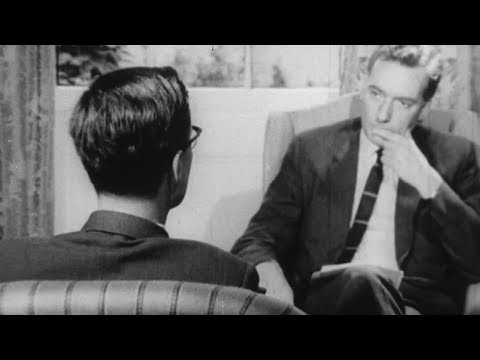
In June 1970, however, Grey was contacted by Nigel Cronin, the secretary of Northern Ireland’s Elmwood Association, which brought together gay and straight campaigners for homosexual rights. Cronin had hit upon a tactic that suddenly became popular among gay organisations across the UK in 1970 and 1971: that of “facing the TV cameras” as an “out” gay man.
Coming out on television
The first purpose of coming out on television was its novelty value for broadcasters accustomed to conducting interviews with incognito homosexuals filmed in silhouette, in negative or wearing false beards. Having been unable to secure television coverage by other means, Cronin resolved that “if the time isn’t ripe now it must be made to be ripe”.
The second purpose was to gain publicity for organisations with had few members and little name-recognition such as the Elmwood Association and its mainland British counterparts the Scottish Minorities Group (SMG), the Committee (later Campaign) for Homosexual Equality (CHE) and the Gay Liberation Front (GLF).
Coming out on television held great personal meaning to those brave enough to do so. Exposing your innermost feelings on the most public of media was an irrevocable act. By outing themselves, these people could act as role models to those still in the closet. They could show straight people what a gay person looked like and how they thought. Most other oppressed groups were immediately recognisable. Gay men and lesbian women had to make themselves visible in order to achieve recognition, form communities and take collective action.

The character of each gay organisation was revealed by the manner in which their representatives came out on broadcasts in late 1970 and early 1971.
The first and flashiest coming out was staged by the GLF’s Warren Hague. He mouthed the words “Gay Liberation Front” while planting a kiss on the crown of journalist David Frost’s head as part of a countercultural takeover of The Frost Programme in November 1970.
CHE’s comparatively understated profile was confirmed in its first television appearance by London organiser Roger Baker on Late Night Line-Up the following month. He was upstaged by another guest, the actor John Breslin, who implored A-list celebrities to dispel camp stereotypes by coming out alongside him.
Sex between men remained illegal in Northern Ireland as in Scotland after 1967. This might explain why there is no record of Cronin fulfilling his ambition to come out on television and why a radio interviewer of his successor as secretary of the Elmwood Association elicited a “total lack of reaction” from listeners in spring 1971.
Warren Hague’s next television appearance on Panorama in April 1971 exemplified the benefits and costs of the GLF’s publicity seeking tactics. His Afro, scarf, necklace, lilac shirt and red and blue jeans were certainly more eye-catching than the attire of Antony Grey, whose brown suit, brown tie, brown socks, brown shoes and receding brown hair were of a piece with his message that lesbians and gay men aspired towards “better social integration”.

Hague’s dismissal of Grey’s assimilationism signalled the GLF’s antagonism towards both heterosexuals and more moderate gay organisations. Meanwhile the woolly and contradictory statements of GLF doctrine provided by his colleagues Andrew Lumsden and Barbara Klecki corroborated CHE’s claim that the GLF was “clearly not yet ready” for media exposure.
The GLF were so “totally disruptive” on Jimmy Savile’s Speak-easy in 1971, according to CHE’s Jackie Forster, that they were not invited back to the Radio 1 programme in 1972. In the absence of actual television coverage, they fabricated their own “GLF TV” film crew equipped with “lots of impressive-looking lights”.
By the time that GLF disbanded in late 1973, CHE had emerged as the broadcasters’ gay organisation of choice. They were willing in Roger Baker’s words “to promote essentially a normal, conventional public image for the homosexual” with none of the sensationalism of the GLF or the problems that came with it. Yet, for all their worthy sobriety, subsequent broadcast appearances by CHE demonstrated just how perilous it remained to come out in the 1970s.
Gay men and lesbian women who appeared on air reported being sacked, evicted and expelled from their families. Through their personal sacrifice, they made straight people that much more accustomed to the existence of homosexuality and made it that much easier for the next person to come out.