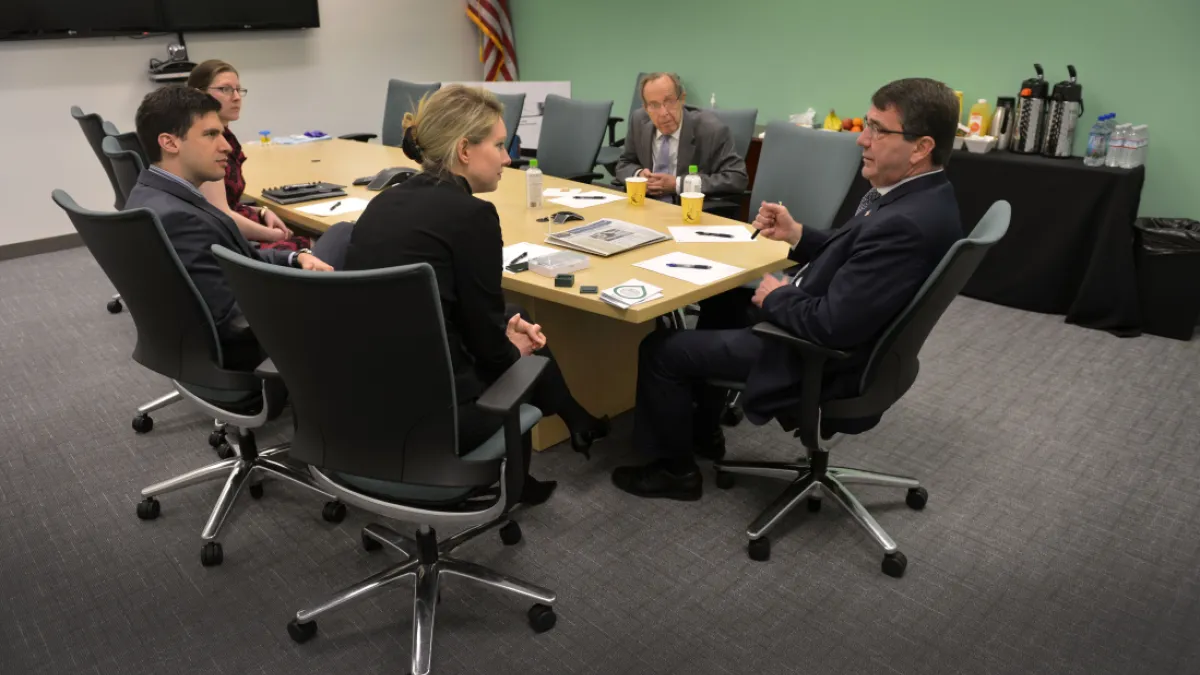
A meeting between Jay K. Varma, M.D., and Elizabeth Holmes reveals a key issue in healthcare trust: confidence can override expertise. This encounter shows how human perception of authority can distort judgment, even among trained professionals.
What Happened in the Meeting
Varma, then a public health official, joined a video call with Holmes and her team. The meeting was part of a city effort to assess new technologies that could improve public health access.
Theranos claimed to have developed a blood-testing device that could run many tests on tiny blood samples—just a finger prick. The device required no large lab equipment. They said it had been validated, approved by regulators, and would launch at New York Walgreens pharmacies soon.
Varma and his colleague asked for scientific data—like studies, peer-reviewed papers, or lab results. Each time, Holmes responded: ‘We can’t disclose business secrets. Everything works and is approved.’
After the call, both were left in disbelief. The claims went against known principles in lab science. Blood tests for many biomarkers need standardized validation, traceable calibration, and repeatable results. No public data or third-party audits were available. Yet, they questioned whether they had missed something or lacked the context to judge properly.
Why Confidence Can Mislead
Varma describes the ‘halo effect’: when someone is credible in one area, others assume they’re expert in unrelated fields. Theranos had investors and board members with high-ranking government and military backgrounds.
None had training in lab medicine. Still, Varma thought: ‘If these people are trusted by the Pentagon, they must have reviewed the science carefully.’
This belief led him to trust their judgment over his own understanding of lab science. It reflects a common human tendency: we give more authority to people who appear confident and have strong connections—even when their expertise is outside their field.
How Healthcare Relies on Trust
Doctors rely on specialists to interpret scans and run tests. A physician can’t personally verify every technical detail. For example, when a doctor orders an MRI, they depend on radiologists to read the images correctly.
When a blood test is ordered, lab technicians perform the procedures using proven methods and equipment. Patients, especially, depend on providers to make decisions they can’t evaluate themselves.
This creates a system where trust isn’t optional—it’s essential. Medical errors happen. Some are mistakes in commission. Others are omissions. Knowledge changes over time. What was valid a decade ago may now be wrong. Early cancer treatments, for instance, were based on outdated science.
What This Means for Patients and Professionals
Varma advises patients to ask questions and seek second opinions when making major health decisions—especially with new or unproven technologies.
For professionals, it means recognizing their knowledge limits. It means not assuming others are equally competent just because they appear confident. Humility is a professional strength. A doctor who admits uncertainty is more likely to consult colleagues, verify data, and avoid decisions based on unverified claims.
Limitations of the Case
No independent evaluation of Theranos’s device ever happened. There was no follow-up after the call. When the Wall Street Journal first reported on Theranos in 2015, Varma said: ‘We knew it!’—confirming the claims were false.
There is no evidence Holmes or her team ever provided verifiable data. All validation came through assertions, not documented science or audits.
Why This Matters Today
Healthcare decisions often involve complex, costly, or hard-to-verify claims. Trusting someone with confidence—especially one backed by powerful connections—is natural. But confidence does not equal competence.
The Theranos case shows how easily experts can be misled by the appearance of authority. It highlights a core principle: trust in healthcare must be earned through evidence, not just presence.
Whether a patient is choosing a new treatment or a professional is evaluating a new technology, asking questions and seeking independent validation remains essential.
Ultimately, Holmes’s story is not just about fraud—it’s about human psychology. It shows how we judge trust in uncertain domains. It serves as a cautionary tale for anyone facing decisions where expertise is invisible and confidence is all that remains.
For more on self-esteem and confidence, read the original source.
Sources & further reading
Featured image: original publisher image. Via original publisher. Image source