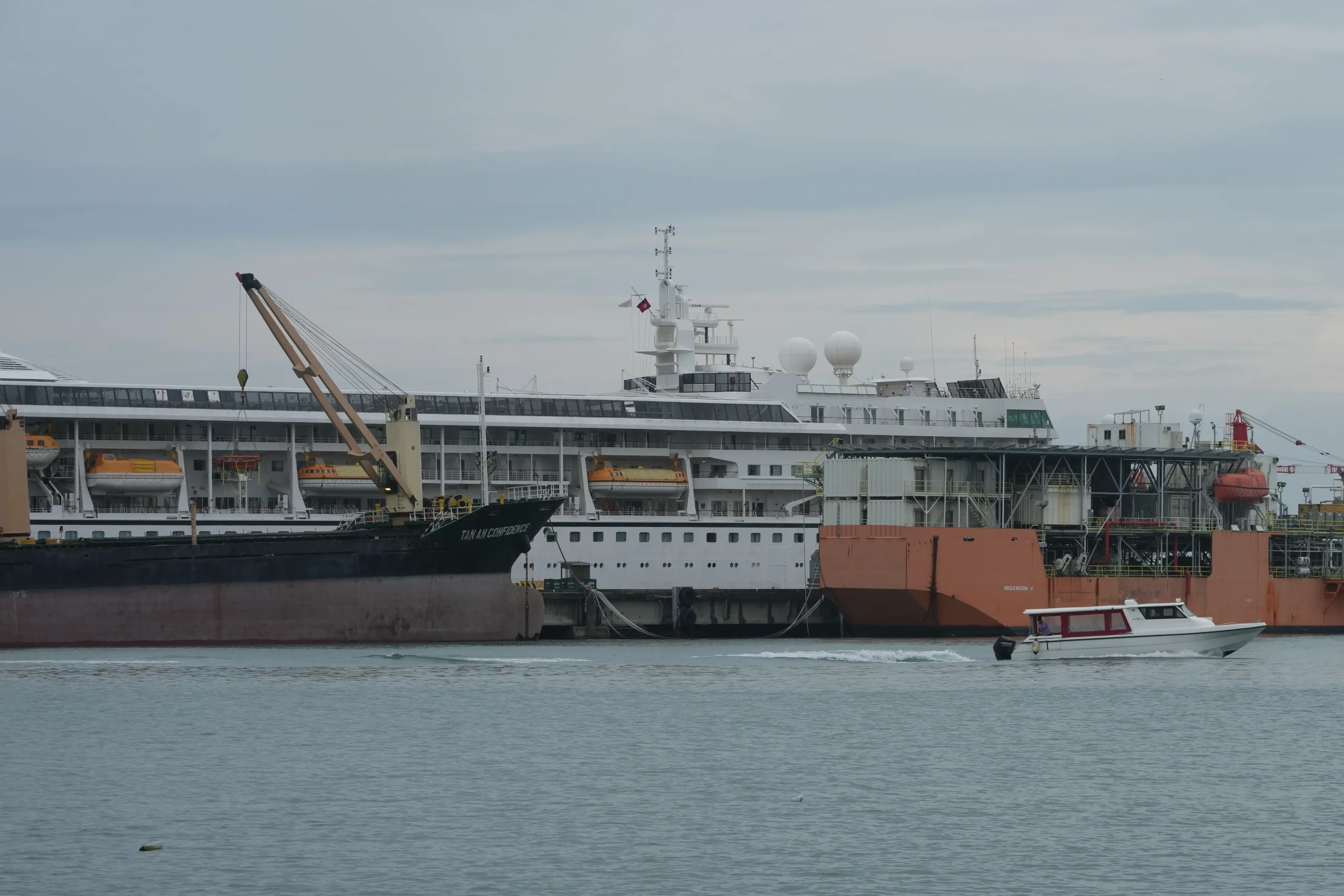
A U.S. cruise ship has ended its voyage after fuel costs made operations unsustainable. The vessel, named the Odyssey, began its journey two years ago with a promise: a three-year voyage to all seven continents, blending long-term living at sea with global travel. Source: npr.org.
What Happened
The Odyssey set sail two years ago on a three-year voyage to the seven continents marketed as combining long-term living at sea with global travel. It was marketed as a floating community, with passengers living aboard for extended periods, visiting each continent over the course of three years.
According to a report by NPR, the vessel was forced to terminate its voyage due to rising fuel costs. The financial burden grew significantly as the ship traveled farther and required more energy to maintain operations.
Passengers reported losing access to their homes after the ship’s return. The original contract did not include provisions for financial compensation or property reversion. Some passengers said they had planned to use the voyage as a life transition, with the expectation that they would return to land with new perspectives and stability.
Key Facts
- The Odyssey began its voyage two years ago.
- It was designed as a three-year journey to all seven continents.
- Passengers were promised long-term living at sea as part of the experience.
- Passengers lost access to their homes after the ship’s return, with no formal reversion or compensation plan.
Background: How the Voyage Worked
The Odyssey was not a traditional cruise. It was conceived as a living experiment — a floating community where individuals would live aboard for months or years, visiting different continents as part of a curated itinerary.
Each stop was designed to include cultural immersion, community events, and educational programs. The ship was equipped with living quarters, shared kitchens, and communal spaces. It was intended to offer a new form of travel that prioritized experience over luxury.
Passengers signed contracts agreeing to live aboard for extended periods. The model assumed that fuel and maintenance costs would remain stable over time.
Why It Matters
The Odyssey case highlights a gap in long-term travel models. While innovative, the project lacked financial safeguards for passengers. It also raises questions about the sustainability of such ventures in a volatile market.
For those who invested time and money into the experience, the end of the voyage left them without a clear path to return to their previous lives. The loss of homes — not just physical property, but also the sense of stability — is a significant personal consequence.
It underscores the need for transparency in long-term travel contracts, especially when financial risks are involved.
Limitations and Open Questions
The original source provides limited detail on passenger experiences beyond general reports. There is no mention of formal complaints, legal actions, or compensation attempts.
It is unclear whether any passengers were directly affected financially. The source does not specify how many people were involved or what the total cost of the voyage was.
There is no evidence that the ship was involved in any safety or environmental issues. The termination was attributed solely to fuel costs.
Passengers may have viewed the voyage as a personal journey, but the outcome has left many without a clear return path or financial support.
What to Watch Next
Future long-term travel ventures may need to include financial risk disclosures and exit plans. The Odyssey case could serve as a cautionary example for similar projects.
Regulatory bodies may begin to examine the legal frameworks for floating communities and long-term maritime living. This could lead to new standards for transparency and accountability.
As more people explore unconventional travel models, understanding the risks and responsibilities involved will become increasingly important.
cruise ship ends voyage due to fuel costs and passengers lose their homes
Sources & further reading
Featured image: A U.S. cruise ship, the MV Odyssey, docks at the Sihanoukville Autonomous Port in Sihanoukville, Cambodia, Wednesday, Oct. 28, 2026.. Via original publisher. Image source