Saving money doesn’t have to mean living on toast and cancelling everything fun. The easiest savings come from tiny habits—small changes that cut waste, lower bills, and stop “silent spending” without making life feel smaller.
This list is designed for real life: busy weeks, rising costs, and the kind of spending that sneaks up on you—subscriptions, impulse buys, takeaway, and energy use.
How to use this guide:
Pick 5 habits to start this week. Once they feel automatic, add 5 more. Small changes compound fast.
The “5-minute setup” that makes saving easier
Before the 30 habits, do these quick actions once:
- Create one “Bills & Essentials” account (or pot) so bills are never mixed with spending money.
- Turn on bank notifications for card payments (instant awareness reduces impulse buys).
- Add a note in your phone called “I want to buy…” and park impulses there for 48 hours.
Now the tiny habits actually stick.
30 tiny habits that save money (without misery)
A) Food & groceries (biggest wins, no deprivation)
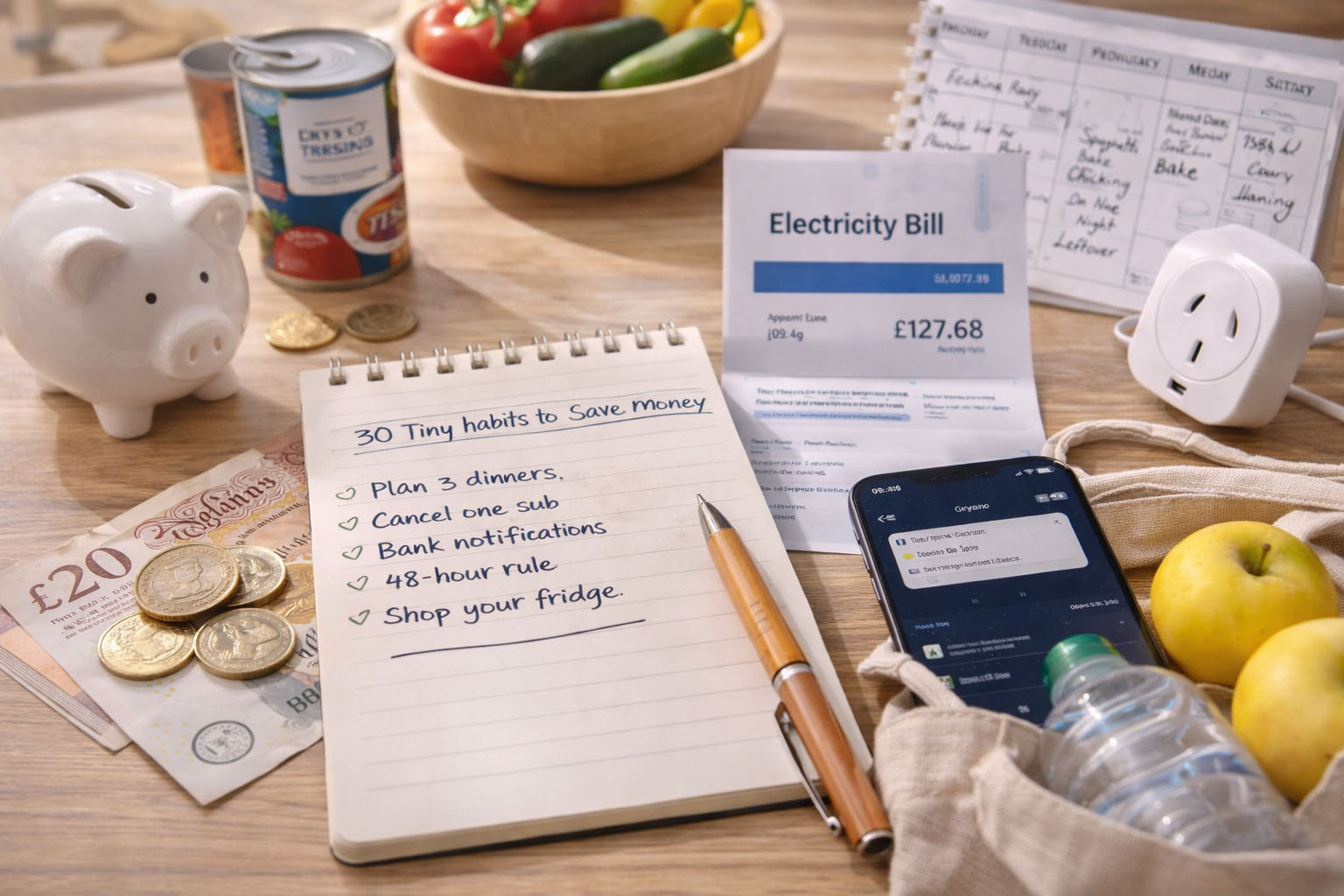
- Plan 3 dinners, not 7. You’ll still save, without overplanning.
- Shop your fridge first. Build meals around what’s already there.
- Keep a “default breakfast.” Same 2–3 options = fewer random buys.
- One “use-it-up” meal weekly (stir-fry, pasta, omelette, soup).
- Swap one takeaway for a “fakeaway.” Same vibe, half the cost.
- Buy own-brand basics (rice, pasta, tinned tomatoes, oats).
- Frozen veg is your budget hero. Less waste, same nutrition.
- Take snacks with you (fruit, nuts, yogurt) to avoid convenience spending.
Mini tip: If you only do one thing: stop food waste. It’s like throwing money away.
B) Energy & home bills (comfort stays, waste goes)
- Turn appliances off at the wall (especially TV/console setups).
- Wash at 30°C for most loads—often enough and cheaper.
- Air-dry when possible (tumble dryers are costly).
- Shorten showers by 2 minutes (set a timer).
- Close curtains before it gets dark (heat stays in).
- Boil only the water you need in the kettle.
- Batch cook once (oven heat used efficiently).
- One “energy sweep” nightly: lights off, chargers unplugged, heating check.
C) Subscriptions & digital spending (silent budget killers)
- Cancel one subscription today (or rotate monthly).
- Use reminders before renewals (calendar alert 3 days before).
- Switch to annual only when proven (after 3 months of use).
- Replace one paid app with a free alternative (notes, fitness, editing).
- Audit your phone contract (many people overpay for data).
Quick test: If you wouldn’t buy it again today, cancel it.
D) Shopping & impulse control (save without feeling “restricted”)
- 48-hour rule for non-essentials (add to wish list, wait).
- One in, one out for clothes/beauty (stops overflow spending).
- Unsubscribe from promo emails (reduced temptation = reduced spending).
- Remove saved card details from shopping apps (adds “friction”).
- Use a “fun budget” on purpose (small amount weekly removes guilt spending).
- Set a “no-buy hour”: no online browsing after 9pm (prime impulse time).
E) Transport & commuting (small tweaks, real monthly savings)
- Combine errands into one trip (less fuel/less fares).
- Walk one short journey weekly (or get off one stop early).
- Keep an “emergency snack + water” in your bag to avoid expensive station shops.
The 3 habits with the biggest impact (start here)
If you want maximum savings with minimum effort, choose these first:
- Subscription audit (cancel/rotate)
- Meal plan 3 dinners + shop your fridge
- Bank notifications + 48-hour rule for impulse buys
These alone can cut meaningful monthly spending without changing your lifestyle drastically.
A simple weekly routine to make it automatic
Sunday (10 minutes):
- Check upcoming direct debits
- Choose 3 dinners
- Put 1 “no-spend” day in your calendar
Midweek (5 minutes):
- Do a fridge check
- “Use-it-up” meal
End of week (5 minutes):
- Look at your transactions
- Pick one thing to improve next week
Consistency beats intensity.
Quick FAQ: saving money without deprivation
Will tiny habits really make a difference?
Yes—because most overspending comes from repeat actions: daily coffees, quick shops, unused subscriptions, food waste, and impulse buys.
What if I’m already careful?
Then focus on the “leaks” you don’t see: subscriptions, energy, and small convenience spending.
How much can I realistically save?
It depends on your starting point, but many people find savings fastest from food waste reduction, subscription cuts, and stopping impulse buys.
Your next step: pick 5 habits for the next 7 days
Choose any 5 from the list, write them in your notes, and track them for one week. You’ll feel the difference faster than you expect—because you’re not “being strict,” you’re removing waste.
If you tell me your biggest cost problem (groceries, energy, subscriptions, or impulse shopping), I’ll turn this into a personal 7-day saving plan with realistic targets.
Safety note: If cutting costs affects your health or wellbeing (e.g., heating, medical needs, nutrition), prioritise safety and seek support from a qualified professional or local services if needed.