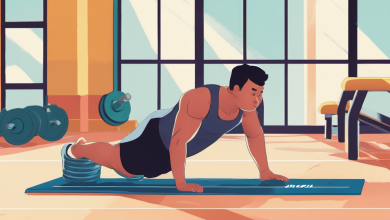
Bodyweight training does not require a gym to build strength. That’s a common misconception — one that can discourage people from starting fitness routines.
Strength Training Works Anywhere
Both bodyweight and weight training are forms of strength training. They follow the same principle: progressive overload.
Progressive overload means gradually increasing the challenge your muscles face. This triggers adaptation and growth.
How It Works in Practice
- With weights: Add more pounds to a barbell or machine.
- With bodyweight: Change your body’s leverage — for example, doing a staggered squat or a decline push-up.
These changes increase the load on muscles, even without external equipment. The result is the same: stronger muscles over time.
Real-World Examples of Success
Elite athletes like gymnasts and calisthenics performers demonstrate what’s possible with bodyweight alone.
Jimmy, a client of Nerd Fitness, trained at home for 12 months. He built significant strength and later cosplayed as Spider-Man — a testament to what bodyweight training can achieve.
Why the Gym Myth Persists
Some people believe you must go to a gym to make progress. This idea spreads in fitness communities — from friends to trainers.
Statements like ‘It only counts if you do it this way’ create barriers. They make people feel inadequate or stuck.
Such comments are not only unhelpful — they are counterproductive. They delay action when the best starting point is already available.
Advantages of Each Approach
Bodyweight training has clear benefits:
- Works anywhere — living room, hotel, park.
- Needs little to no equipment.
- Is highly scalable based on current ability.
Weights and gyms offer advantages too:
- Progression is simpler — adding 2.5 or 5 pounds is straightforward.
- Heavier loading, especially for lower body strength, is easier with barbells.
- Pulling exercises like rows are harder to do without equipment.
- Some people find the gym a space for focus and mental clarity.
Progress Is Built on Principles, Not Location
True progress comes from consistent application of training principles — not from where you train.
- Increase intensity: Add reps, sets, or change body leverage.
- Increase volume: Add more rounds or exercises.
- Introduce novelty: Try new positions or variations to avoid stagnation.
These principles work whether you’re at home or in a gym. The key is consistency and progress, not equipment or location.
What This Means for You
Ask yourself: which routine works for me, right now?
For some, that’s a bodyweight routine at home. For others, it’s a gym session. Both are valid.
Don’t let a single comment — or a belief — stop you from starting. You don’t need a gym to get strong.
Source: Nerd Fitness
If you’re ready to begin, try the free Bodyweight Adventures Workouts. They are scalable, progression-based, and designed for home use.
For more resources, explore our guide on progressive overload or read about Jimmy’s journey in this case study.
Sources & further reading
Featured image: How to Get Strong p047 (Edward Hanlan Ten Eyck in… by Published by Harper, Public domain, via Wikimedia Commons. Image source