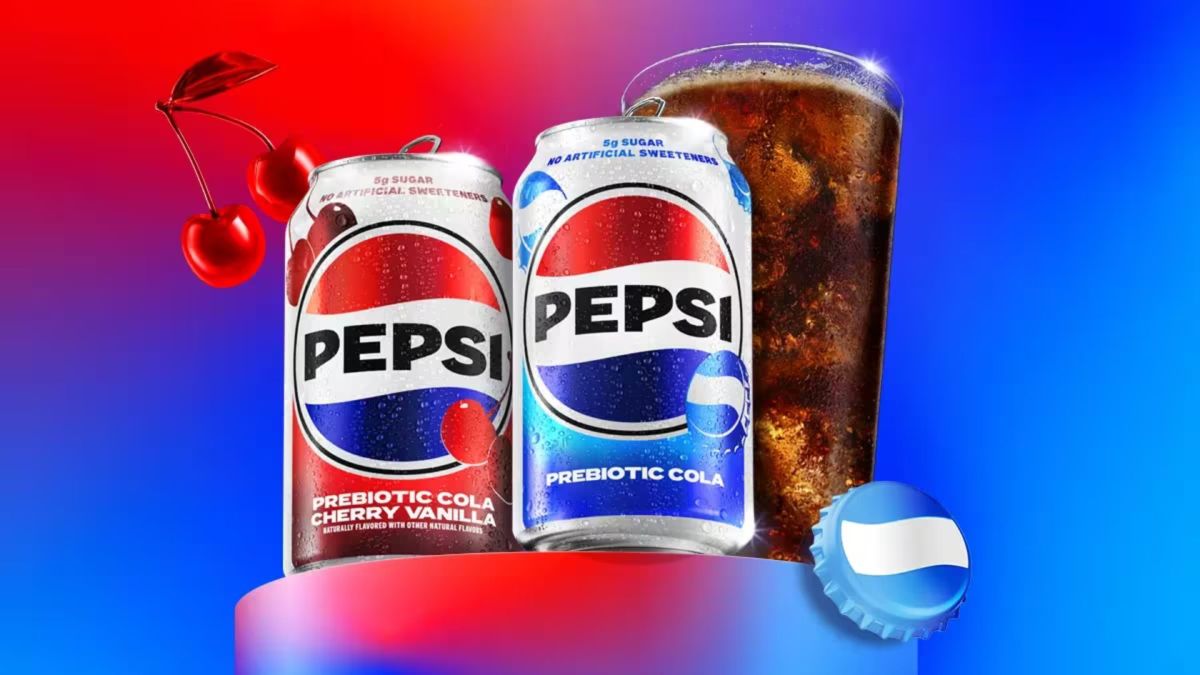
Pepsi has officially launched a new drink that seems to be tapping into a trending consumer preference for healthier beverages, bringing a prebiotic cola to American stores.
In an announcement on Tuesday, the company said that after the success of a debut during Black Friday last fall, the Pepsi Prebiotic Cola drink is now being officially launched. During the Black Friday sale, the company said the drink completely sold out.
It adds that it is also the “first legacy cola to introduce prebiotic fiber,” delivering the “’Unbelievably Pepsi’ taste people love, now with functional ingredients that reflect today’s modern beverage preferences.”
What Is Prebiotic Pepsi?
The new drink, Pepsi Prebiotic Cola, contains 3 grams of prebiotic fiber, in a nod to the consumer trend of prebiotic drinks grounded in a growing awareness and consciousness of gut health.
Pepsi’s major rival, Coca-Cola, previously launched its own prebiotic soda. This time last year, Coca-Cola launched its Simply Pop Prebiotic Soda drinks containing 6 grams of prebiotic fiber, which the company said would support gut health, and which also contain Vitamin C and Zinc to support immune function.
Pepsi’s version comes in both the original cola and cherry vanilla flavors, with no artificial sweeteners. It is 30 calories, and contains 5 grams of sugar. Pepsi said this was “all without compromising the iconic Pepsi taste that consumers love.”

When Did Prebiotic Pepsi Become Available?
The drink became available for purchase on Tuesday, and is now being sold in stores across the United States. Consumers can find Pepsi Prebiotic Cola in 12 oz. single cans and 8-packs in the carbonated soft drink aisle of retailers.
Consumers have already taken to social media platforms to share their thoughts on the new drink. One wrote in a comment on Instagram: “Just tried it last night! Made a review! So good.”
Others deemed the drink a “game changer,” and “super and delicious.”
Some voiced their excitement over the announcement, writing: “im gunna need that right now,” and “I definitely gotta try this!”
Why Are Prebiotics Good For You?
There are around 100 trillion microorganisms in the gut, mainly bacteria, which are collectively known as the gut microbiome. The majority of this bacteria is important and needed for our health, and also counterbalances bad kinds of bacteria to keep ensure gut health.
Prebiotics act as nutrition for the good bacteria and “fortify (selectively) positive bacteria in the gut,” Glenn Gibson, a professor of food microbiology at the University of Reading, England, told Newsweek.
A healthy gut microbiome has been associated with a number of positive health outcomes, meaning that prebiotics can play a vital role in keeping the body healthy.
“When those bacteria thrive, they help digestion, support the immune system, and maintain the gut lining that keeps harmful substances from entering the bloodstream,” Andrea Azcarate, a professor of medicine at the University of North Carolina at Chapel Hill, told Newsweek.
According to a review by Harvard University, research has found a link between higher prebiotic intake and improved intestinal absorption of dietary calcium, better blood sugar control, a well-functioning immune system and a reduced risk of colorectal cancer.
Prebiotics are found in a wide range of foods like garlic, onions, bananas, artichokes, soybeans, asparagus, wheat and whole-grain products such as cereals and breads.
“Supplements are also good to raise levels—as long as the ingredient is a proven prebiotic, as determined in vivo, and added at an active dose,” Gibson said.
However, for some, eating more prebiotic food is not always the best idea. For example, some people with irritable bowel syndrome may find a diet heavy in prebiotics worsens their symptoms, the Harvard review reported. Finding the balance is therefore key.
Are There Any Health Benefits To Prebiotic Sodas?
While the prebiotic soda business is booming, experts have warned these drinks should not be seen as an alternative to getting prebiotics through food.
Typically, prebiotic drinks have between 2 to 9 grams of prebiotic fiber, while the recommendation for daily fiber intake is around 25 to 38 grams per day, so it’s up for debate whether these drinks will do much to push the needle on gut health.
It’s also important that these drinks are not consumed in excess as too much prebiotic soda can lead to bloating, diarrhea, flatulence and gas pains, according to Cleveland Clinic.
Dietitians have said that it is better to see prebiotic sodas as a treat or a once-in-a-while supplement, and not a substitute for dietary fiber. They can also be healthier for those trying to break away from drinking conventional sodas.
Another important factor to consider is that, in order to know if prebiotic sodas have health benefits, they need to be tested.
“This requires human studies but in vitro lab models can help the understanding too,” Gibson said.
What The Experts Say
Kieran Tuohy, a professor of energy metabolism and microbiome at the University of Leeds in England, told Newsweek: “I think existing literature is fairly consistent that both sugar sweetened and non-sugar sweetened beverages are associated with increased cardiometabolic and other diseases. They are generally not good for your health. However, it is also very obvious that all of us on a typical Western style diet are not eating enough fiber, and the people who are consuming a lot of sweetened beverages are also the section of the population who often have the lowest fiber intake. Therefore, adding prebiotic fibers to sweetened beverages does appear to be a good idea. Of course this will be dependent on the specific prebiotic or fiber, and the product formulation and when/how that food or beverage will be consumed and by whom. All of these things need to be studied, but from a gut microbiologists point of view, adding more prebiotic fibers to some of the most commonly consumed foods/beverages should be supported.”
Andrea Azcarate, a professor of medicine at the University of North Carolina at Chapel Hill, told Newsweek of prebiotic drinks: “They can provide some of the fiber that feeds beneficial gut bacteria, especially if they contain well-studied prebiotics and enough of them—typically a few grams per serving. That could lead to modest benefits, such as improved digestion or support for helpful microbes. But they’re still soda. Even with added fiber, they don’t offer the overall nutrition you get from whole foods, and they may contain sweeteners or acids that don’t support long-term health. Adding fiber to soda doesn’t turn it into a health food.”
She added: “Right now, it’s impossible to assess whether this soda has real health benefits because the company has not specified what type of “prebiotic fiber” it contains. Different fibers have very different effects in the body, and only some have strong scientific evidence showing they support beneficial gut bacteria. Without knowing the exact ingredient and dose, we can’t evaluate whether the product delivers meaningful benefits. At best, it may provide a small amount of added fiber. But that alone doesn’t make soda a healthy choice, and it shouldn’t replace fiber from whole foods like beans, vegetables, and whole grains.”
Lawrence David, a professor of molecular genetics and microbiology at Duke University, told Newsweek: “This product’s 3 grams of fiber per can is not insignificant. Most Americans are recommended at least 20 grams of fiber per day but only average around 10 to 15, so something is likely better than nothing. Fiber in liquid form can also be metabolized by gut bacteria, and the natural sweetness of some prebiotics helps reduce the sugar needed.”
He added: “That said, there are reasons for caution. Many research studies on prebiotics use fiber mixed with water: they don’t carbonate or add other ingredients, so it’s unclear how other components of a soda will affect prebiotic benefits to the gut microbiome. It also matters which fibers are used: structurally complex fibers may produce more reliable microbiome impacts than simpler fibers, which are more likely to end up in a commercial product. A mix of different fiber types is probably better than any single one. This new soda also still contains 5 grams of sugar per can, and most Americans are already getting too much.”
Update 2/18/26, 11:15 a.m. ET: This article has been updated with comment from Professor Lawrence David.