A Kenyan businessman became the country’s first confirmed Ebola case after traveling through three nations while seriously ill. Source: bbc.co.uk.
What Happened
The man, whose identity has not been disclosed, lived in the Democratic Republic of Congo for seven years and traveled through three provinces on business.
He spent time in Bas-Uélé province in late August and early September, visiting towns including Buta, Aketi, and Likati. The World Health Organization confirmed an Ebola case in Buta in August, though there is no evidence he contracted the virus there.
His symptoms first appeared around 15 September. He was given antibiotics and sent home. Two days later, he was admitted to the Tongo Etandi Health Centre in Bondo, where he remained until 19 September.
Despite fever and a rash, he was diagnosed with a skin infection. No Ebola test was conducted during his stay.
Travel to Kisangani and Beyond
On 20 September, he flew to Kisangani, where he stayed for more than 10 days seeking medical care. The specific hospitals or clinics that treated him are unknown.
On 1 October, he boarded a domestic flight to Beni, then continued to Kasindi — a busy border town in North Kivu province — which has recorded a significant number of Ebola infections.
He crossed into Uganda later that day. The border region is remote and difficult to monitor, and it remains unclear whether he passed through an official health checkpoint.
Arrival in Uganda and Kenya
After crossing into Uganda, he traveled by road to Kampala and then to Entebbe International Airport.
At airport screening, his temperature was normal. Ugandan officials said he did not show signs of illness at the time.
He boarded a flight to Nairobi. Upon arrival, a relative collected him and drove him directly to Nairobi Hospital, a private medical facility.
By then, he was suffering from fever, chills, muscle pain, a sore throat, and bleeding. Laboratory tests confirmed he had the Bundibugyo species of Ebola — the same strain responsible for the outbreak in DR Congo.

Aftermath and Response
The man died two days later. His funeral was held under strict infection-control measures.
Kenya has identified a number of people who may have been in contact with him. The World Health Organization says this number is likely to grow as contact-tracing continues in Uganda and DR Congo.
Kenya’s health ministry says a large number of travelers have been screened and healthcare workers trained to handle Ebola. Five facilities are designated for such cases.
Key Questions Raised
- When and where did the man contract Ebola? The exact timing remains unclear.
- Why were no Ebola tests conducted during his visits in DR Congo or Uganda?
- Did he pass through an official health checkpoint when crossing into Uganda?
- Could his medication have suppressed his fever, making temperature checks ineffective?
Why This Matters
The case highlights gaps in cross-border biosecurity during an active Ebola outbreak.
Temperature checks and self-declarations are not reliable indicators of infection. The virus has an incubation period ranging from two to 21 days, meaning symptoms may not appear for weeks after exposure.
Dr Wessam Mankoula, emergency director at the Africa CDC, urged travelers with Ebola symptoms to seek medical help early. He said early reporting could improve survival chances and prevent spread.
The World Health Organization warns that stigma around Ebola may discourage people from reporting symptoms or seeking care — a major issue in DR Congo, where some health workers have been attacked for claiming the virus exists.
What to Watch Next
Further contact-tracing in Uganda and DR Congo will likely reveal more about the full scope of exposure.
Health authorities are reviewing how the patient was handled at Nairobi Hospital, with concerns raised by some healthcare workers.
The Africa CDC has reconstructed the man’s movements over nearly six weeks, identifying missed opportunities to detect the infection early.
Original article
Sources & further reading
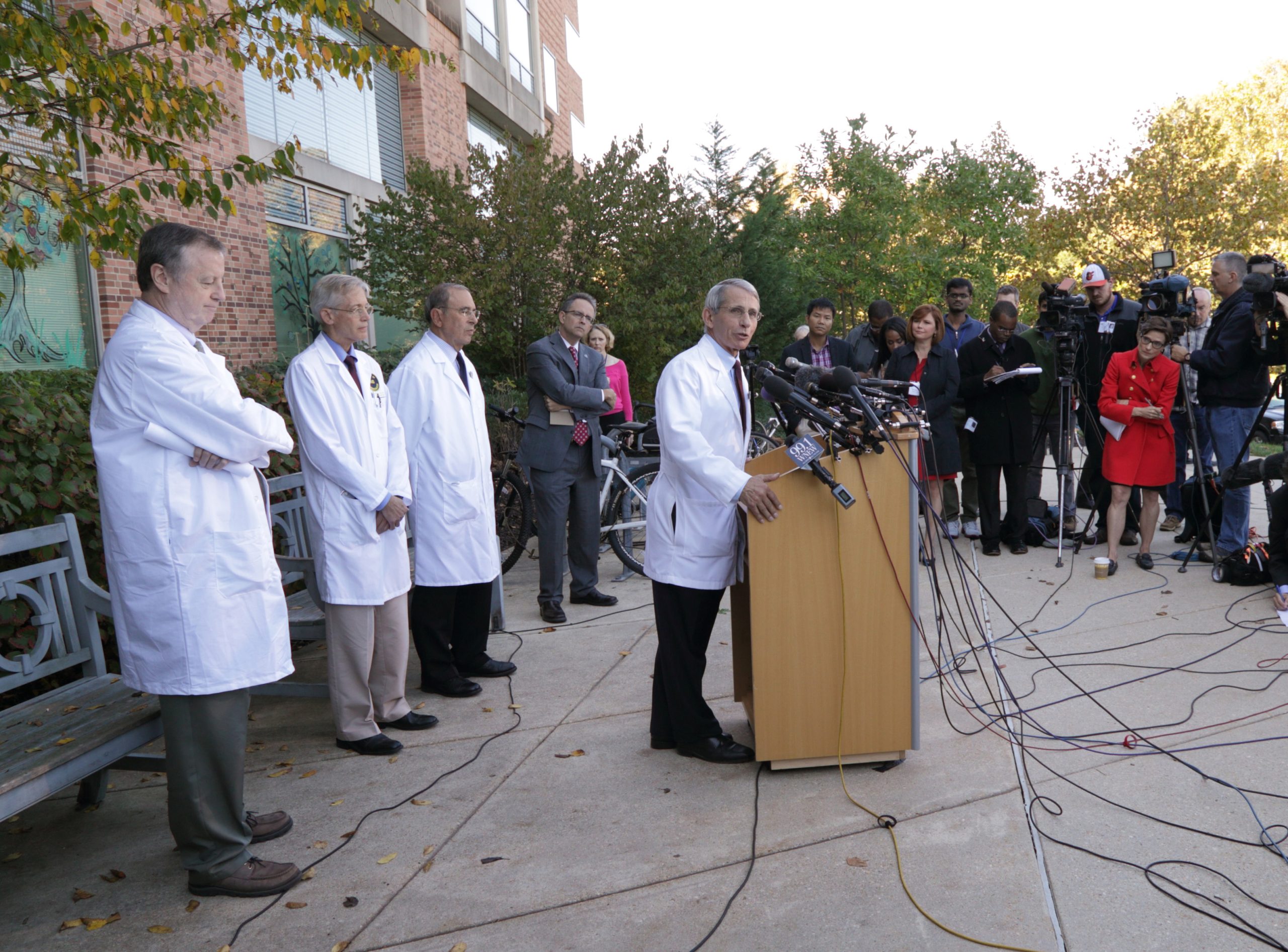
Featured image: Press Briefing on Arrival of Ebola Patient at NIH -… by NIAID, CC BY 2.0, via Wikimedia Commons. Image source · License