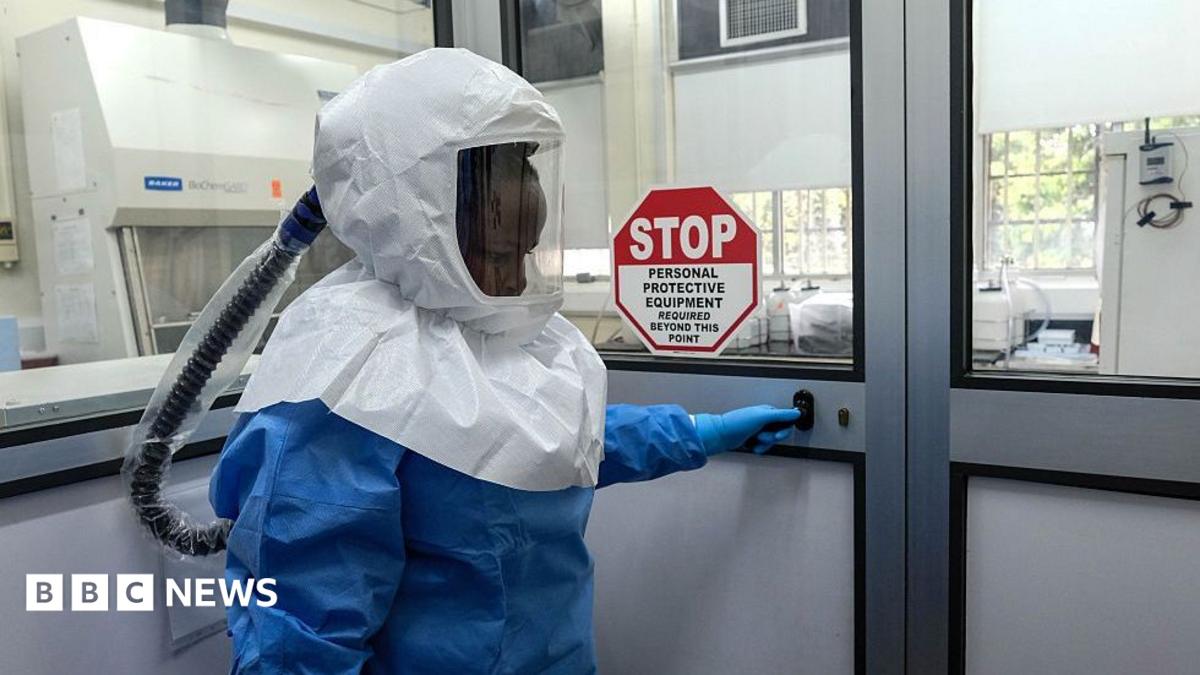
Health officials in Nigeria and Kenya are investigating whether two Ebola patients passed through Uganda’s Entebbe International Airport on 3 October. Both individuals arrived on the same day, but no confirmed link between them has been found. Source: bbc.co.uk.
What Happened at the Airport
Dr Wessam Mankoula of the Africa Centres for Disease Control and Prevention (Africa CDC) said interaction between the cases is under review. He called it ‘one of the possible scenarios,’ but stressed no evidence of contact has been found.
Entebbe is a major transit point in East Africa. It has shared spaces like restrooms, security lines, and baggage areas. These areas could theoretically allow exposure, especially without real-time screening.
Nigeria’s Ebola Case
The Nigerian patient is a 42-year-old woman born in Uganda who lives in Abuja. She returned to Nigeria on 3 October after a two-hour stopover in Addis Ababa, Ethiopia.
She developed symptoms four days after arriving in Abuja. She sought treatment at two private clinics before testing positive for Ebola on 20 October.
Her husband, a Swiss diplomat in Nigeria, traveled with her to Uganda. He is now in isolation and has not shown symptoms.
Uganda previously said the woman visited eastern Democratic Republic of Congo (DRC) for business. But the WHO, Africa CDC, and Nigeria’s health ministry have not verified this claim. The travel detail remains unconfirmed.
Kenya’s Ebola Case
The Kenyan man traveled from the DRC through Uganda before arriving in Nairobi on 3 October. He later died, becoming Kenya’s first recorded Ebola-related death.
All nine confirmed cases in Kenya are linked to this first patient. There is no evidence of community spread.
Dr Patrick Amoth, Kenya’s Health Director-General, said the outbreak is contained. The remaining eight patients are in isolation and responding well to treatment.

Investigations and Response
Nigeria is reconstructing the full travel and exposure history of the Nigerian patient. This includes contacts with healthcare staff and family members.
Genomic sequencing is being done by Nigeria’s Centre for Disease Control and Prevention (NCDC). It may show if the virus matches known cases. Dr Pavel Ursu, WHO representative in Nigeria, said this is a top priority.
Nigeria has found more contacts than the initial 44. These include medical staff and family members. Authorities are working to quarantine high-risk individuals. A final list has not yet been released.
Why This Matters
This case highlights cross-border disease risks in East Africa. The DRC and Uganda share a long, porous border. Many people cross daily for trade, work, and family visits.
Many crossings happen at informal points. These areas are hard to monitor. Dr Mohamed Janabi, WHO regional director for Africa, urged stronger regional surveillance and better protection for health workers.
Limitations and Open Questions
There is no proof the two patients met or shared facilities at Entebbe. Uganda says it has no active Ebola cases. The woman’s travel through Uganda does not mean she got infected there.
The source of the Nigerian patient’s infection is still unknown. Her full travel history is limited due to hospitalization and privacy concerns. The timeline remains partially reconstructed.
What to Watch Next
Genomic results may show if the infections are linked. A match could suggest a common origin. Updated contact lists and quarantine figures are expected soon.
Health authorities will continue monitoring for new cases or spread. This incident raises concerns about cross-border health protocols in mobile, underserved regions.
For more on the situation, see the original report at BBC News.
Sources & further reading
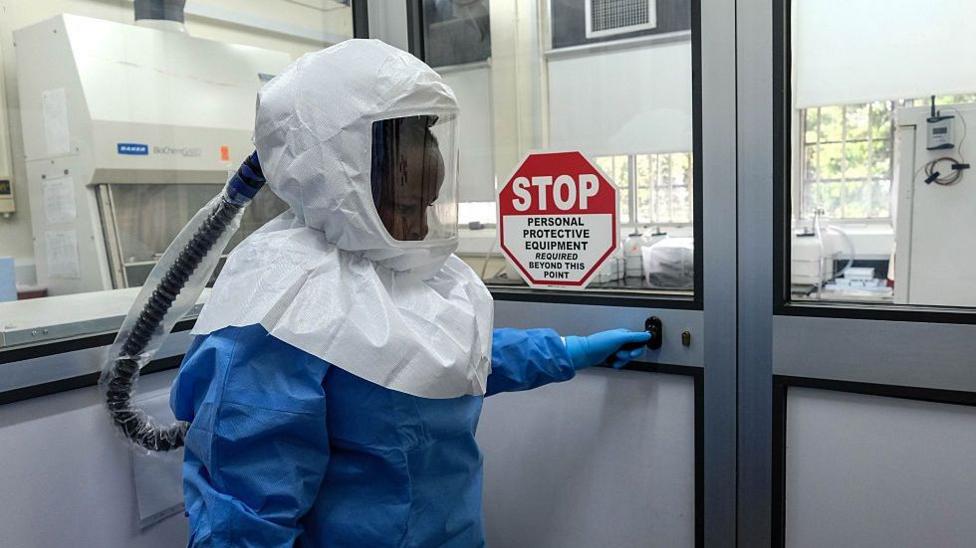
Featured image: A laboratory technologist wearing protective equipment as she prepares to enter the Viral Hemorrhagic Fever Laboratory at Uganda Virus Research Institute in Entebbe, Uganda. Via original publisher. Image source