

Tsvetana Paraskova
What I Cover
Tsvetana Paraskova is an energy and commodities journalist who has contributed to Oilprice.com for nearly a decade, covering global energy markets, commodities,…
Set us as your preferred Google source
Premium Content
By Tsvetana Paraskova – Jul 18, 2026, 6:00 PM CDT
- Europe’s heatwave is disrupting energy and transport, with low river levels restricting barge traffic on the Rhine and driving up shipping costs for fuel, coal, and other goods.
- High river temperatures have forced France to cut nuclear power generation, reducing electricity output as reactors face cooling constraints.
- The extreme weather is adding to Europe’s energy challenges, increasing inflationary pressures and threatening economic growth alongside ongoing disruptions from the Strait of Hormuz crisis.


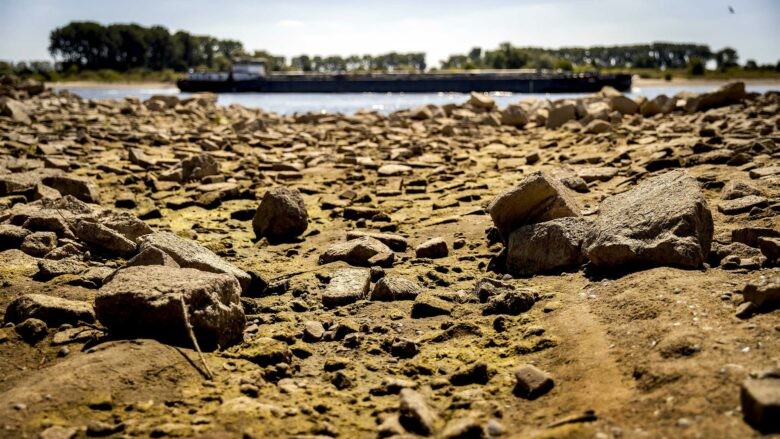
The intense early summer heatwave in Europe is warming the biggest rivers and drying up their water levels, disrupting energy deliveries, power generation, and key supply chain routes.
The heatwaves in Europe started as early as June, with record-breaking temperatures for weeks on end in Europe’s biggest economies, Germany and France.
As a result, rainfall was severely limited, and key inland transportation river routes were affected by navigation restrictions, with curbs on the freight volumes a barge can ship. This, in turn, has raised shipping costs and added additional strains to the economies at a time when the protracted Strait of Hormuz crisis is already hiking Europe’s energy costs and inflation.
On top of economic and inflationary effects in Germany, the heatwave actually curbed electricity supply in France.
Early this week, France’s nuclear power generation was slashed by 6.4 gigawatts (GW), or about 14% of the country’s total power demand for the day, amid the heatwave that hiked river temperatures and limited the ability of the nuclear power plants to use the water to cool reactors.
This is not the first time France has had to curb output at reactors and limit nuclear power production due to high summer temperatures.
France still exported electricity to its neighbors despite reduced nuclear power output, but these events appear to be becoming more frequent as heatwaves last longer with more extreme temperatures.
The same goes for disruption to shipping on the 800-mile-long Rhine River, the biggest inland shipping corridor in Europe, which is critically important for Germany’s and central Europe’s supply of coal, diesel, and goods.
The Rhine handles an enormous amount of supplies for Europe, including fuel and coal, adding to supply chain issues that the Hormuz crisis has created for sea routes.
The Rhine River, which runs northwest from Switzerland through Germany, France, and the Netherlands into the North Sea, is a major petroleum product transportation corridor in Europe. Due to the heatwaves and drought, the levels on the river are low and have now become too shallow for many barges shipping petroleum products to pass. Barges are not being fully loaded to keep them lighter on the water, which lifts shipping costs and delays shipments of coal, fuels, and other goods.
The Kaub gauge, on the Middle Rhine between Koblenz and Mainz, sits at the shallowest chokepoint on the river. It sets the maximum draft and, therefore, the laden weight for every barge moving between the Amsterdam-Rotterdam-Antwerp ARA seaports and the industrial hinterland of the Rhine valley, shared by Germany, France, and Switzerland.
The previous major crisis with low Rhine water levels was in 2022, and in 2018 before that.
The 2022 critically low Rhine levels occurred when the first energy crisis hit Europe and its economy after the Russian invasion of Ukraine.
This summer, the low Rhine level due to scarce rainfall and intense heatwaves coincides with the Middle East crisis to mount additional pressure on industry, energy supply and prices, transportation costs, and ultimately, inflation.
Water level at the Kaub chokepoint is now at its lowest level in decades for mid-July, which has hiked the freight cost to ship diesel from Rotterdam to southern Germany by more than 50% in the past week.
The early heatwaves and low river levels could pressure Germany’s industry and economy, which has just managed to shake off the initial shock from the Middle East crisis.
Back in 2018, the low Rhine levels in November 2018 led to a 1.5% decline in Germany’s industrial production, which in turn lowered Germany’s GDP by 0.4%, according to the Kiel Institute for the World Economy.
This year, the end-June heatwave cost the German economy more than $6.8 billion, or 6 billion euros, an exclusive analysis by economic research firm Prognos for German business daily Handelsblatt showed this week.
In the future, Germany could see three or four intense heatwaves each summer with temperatures exceeding 35 C, or 95 F. Prognos has estimated that Germany could lose 1 billion euros, or $1.14 billion, on each day in which temperatures exceed 35 C. Thus, the annual damage to the German economy could top 20 billion euros, or $23 billion.
By Tsvetana Paraskova for Oilprice.com
More Top Reads From Oilprice.com
- China Seeks Long-Term LNG Deals Beyond the Strait of Hormuz
- India Hikes Diesel and Jet Fuel Export Tax
- Brent Futures Flip to Backwardation as Middle East Supply Risks Return
Download The Free Oilprice App Today



Tsvetana Paraskova
What I Cover
Tsvetana Paraskova is an energy and commodities journalist who has contributed to Oilprice.com for nearly a decade, covering global energy markets, commodities,…