Planting perennials in fall offers gardeners a strategic advantage. These plants establish strong root systems before winter, setting the stage for vibrant spring blooms. Source: bobvila.com.
Why Fall is Ideal for Planting Perennials
Soil remains warm in fall, even as air temperatures drop. This warmth supports root development without the stress of summer heat.
Plants shift energy from above-ground growth to root formation during fall. This transition reduces water needs and helps them survive winter.
According to High Country Gardens, plants use less water when going dormant. This makes fall planting especially beneficial in drought-prone areas.
Weather in fall is typically calmer and less windy than spring. This reduces physical stress on young plants.
For gardeners in hot regions, fall planting should happen before temperatures drop significantly. Waiting too long risks plant damage from frost.
Key Perennials to Plant in Fall
Many perennials thrive when planted in fall. They grow steadily through winter and bloom in spring.
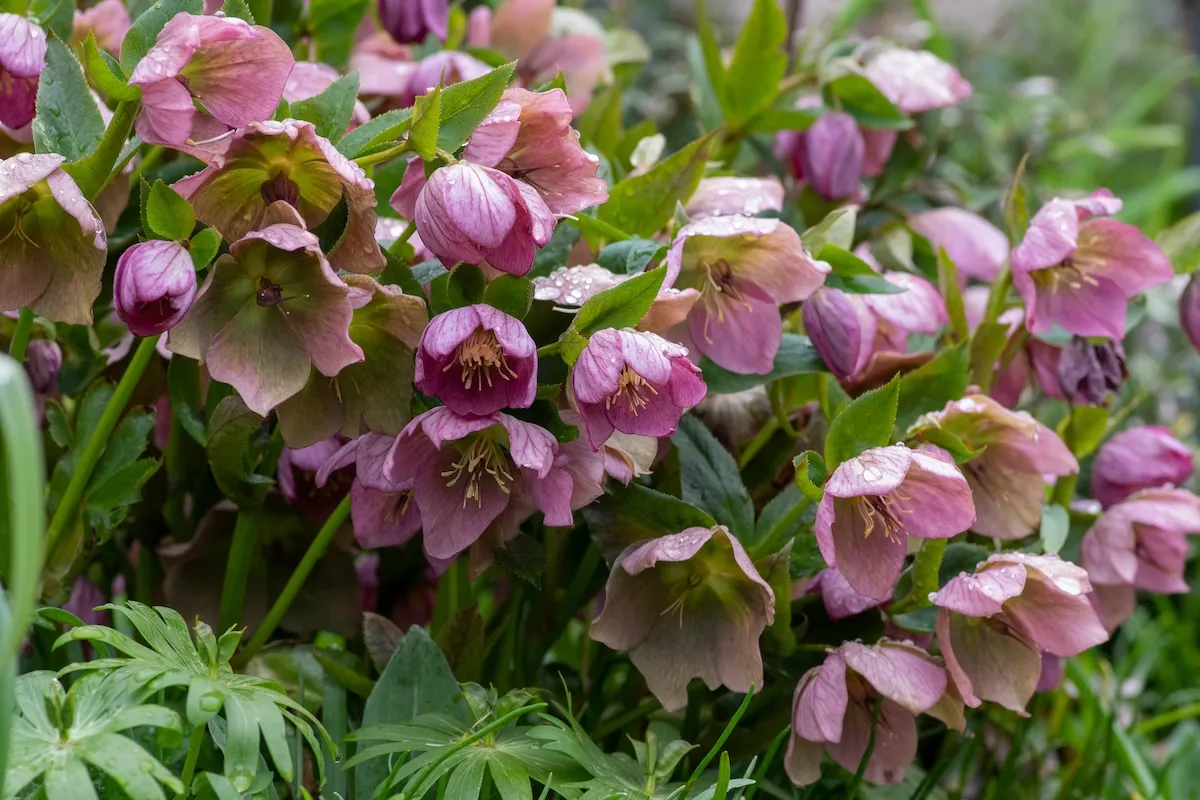
Hellebores (Helleborus spp.)
One of the earliest flowers to appear each year, hellebores often emerge through snow in late winter or early spring. Gardeners who are eager for early blooms can plant them in fall, as summer heat makes it difficult for these plants to establish.
They grow best in partial shade and neutral to alkaline soils with good drainage. While deer and rabbits tend to avoid them, the leaves, stems, and sap are poisonous if ingested.
These plants are ideal for mass plantings or as ground cover.
Pasque Flower (Pulsatilla vulgaris)
Known as windflower or meadow anemone, pasque flower features purple bell-shaped blossoms native to dry meadows in Europe. It blooms in time for Easter and is naturally resistant to rabbits.
For optimal root development, it is best to plant in August if possible, allowing time for establishment before winter.
Creeping Phlox (Phlox subulata)
Creeping phlox forms a mat and produces fragrant, flat blooms in purple, pink, red, or white. It blooms from March onward and works well in rock gardens or as a wall cover.
It prefers dappled sunlight and sandy, well-drained soil.
Virginia Bluebells (Mertensia virginica)
Virginia bluebells emerge in early spring with pale flowers that deepen to rich blue. They thrive in moist, shady conditions and form a self-sustaining ground cover.
They require minimal maintenance and attract pollinators.
Columbine (Aquilegia spp.)
Columbine has graceful, nodding flowers in white, yellow, red, or blue. It grows best in partial shade and moist soil and is resistant to deer and rabbits.
It is one of the shorter-lived perennials. Gardeners may need to replant it annually to maintain color and support pollinator activity.
Indigo (Baptisia spp.)
False indigo produces dark-blue blooms from late spring through fall. It grows best in full sun but can tolerate some shade and is drought-tolerant.
It attracts bees and butterflies and is deer- and rabbit-resistant, making it ideal for wildlife-friendly gardens.
Astilbe (Astilbe spp.)
Astilbe has long, fuzzy flowers that resemble false goat’s beard. It blooms from spring to summer and is deer-resistant.
It grows best in loamy, slightly acidic soil and needs dividing every 3 to 4 years to maintain health and vigor.
Sundrops (Calylophus hartwegii)
Hartweg’s sundrops, also called evening primrose, bloom at sunset. They have bright yellow petals that open in the evening and last through the next day.
They thrive in hot prairies and plains and grow best in partly shaded areas.
Spotted Dead Nettle (Lamium maculatum)
This ground cover features variegated foliage in silver, gold, and green. It produces pink and purple flowers in late spring and summer.
It grows well in clay and alkaline soils and prefers dry conditions. Deadheading encourages new blooms and extends flowering time.
Dianthus (Dianthus spp.)
Dianthus offers clusters of bright, fragrant blooms in pink, white, yellow, and red. It grows best in full sun and well-draining soil.
It is ideal for rock gardens, containers, or borders and attracts pollinators. It is deer- and rabbit-resistant.
Shasta Daisy (Leucanthemum x superbum)
Shasta daisy produces large white flowers with yellow centers. It grows best in rich, well-drained soil and handles heat well.
It can survive short droughts better than wet soil. Deadheading keeps blooms coming and allows for fresh cut flowers.
Pincushion Plant (Scabiosa columbaria)
Pincushion plant has delicate lavender, pink, or white flowers on tall stalks. It is moderately drought-tolerant and attracts butterflies and hummingbirds.
It thrives in sunny spots and is ideal for rock gardens or fairy gardens.
Purple Coneflower (Echinacea purpurea)
Purple coneflower has large, daisy-like blooms that appear in spring. It grows best in full sun but can handle partial shade.
It is drought-tolerant once established and wilts when it needs water, signaling hydration needs.
Tickseed (Anacis or Coreopsis spp.)
Tickseed produces yellow flowers from spring through summer. It is drought-tolerant and deer-resistant and attracts pollinators and songbirds.
Deadheading extends the blooming period and supports continuous floral display.
Whirling Butterflies (Oenothera lindheimeri)
Oenothera lindheimeri has intricate, butterfly-like flowers with pink and white petals. It is native to Texas, Louisiana, and Mexico and is drought- and heat-resistant.
It is best suited for native or prairie-style gardens and thrives in sandy, well-draining soils.
Catmint (Nepeta spp.)
Catmint has purple flowers and aromatic foliage. It is deer-resistant and can be used in rock gardens or as a border.
It needs no fertilizer and reblooms after pruning, making it a low-maintenance option.
Bleeding Heart (Lamprocapnos spectabilis)
Bleeding heart has arching stems with heart-shaped pink flowers. It grows best in part shade and moist, well-draining soil with organic material.
It may retreat in summer but returns after winter, offering reliable seasonal color.
Lantana (Lantana camara)
Lantana produces clusters of colorful flowers in purple, orange, pink, yellow, red, or white. It is drought-tolerant once established and attracts butterflies and hummingbirds.
It is toxic to livestock, cats, and dogs. Use with caution in homes with pets or livestock.
Yarrow (Achillea millefolium)
Yarrow has umbrella-shaped flower heads in yellow, pink, red, white, and gold. It is drought- and heat-tolerant.
Its seeds require a cool period to germinate, making fall sowing ideal. It can spread aggressively, so plant in open areas where it can grow freely.
Cushion Spurge (Euphorbia epithymoides)
Cushion spurge has small yellow flowers surrounded by yellow/pale green bracts. It grows in poor soil and is drought-, deer-, and pest-resistant.
Its milky sap can cause skin irritation. Handle with care when pruning or touching.
Oriental Poppy (Papaver orientale)
Oriental poppies have large, paper-like petals in deep red, orange, coral, or white. They grow best in cooler, drier regions and require well-drained soil.

They bloom from late spring to early summer and are best suited for gardens with a Mediterranean or cottage style.
Mexican Bush Sage (Salvia leucantha)
Mexican bush sage forms clumps of long leaves and velvety purple flower spikes. It thrives in full sun and is drought-tolerant once established.
It is best suited for borders, mass plantings, or butterfly gardens, especially on slopes.
Planting Tips for Fall
Plant perennials 6 weeks before the first frost. The soil should still be warm, but not hot.
Do not add fertilizers at planting. A light top-dressing of compost or slow-release organic fertilizer can help.
Avoid high-nitrogen or fast-acting fertilizers, which can harm young roots.
After planting, apply 2 to 3 inches of organic mulch. Fallen leaves can be repurposed for this.
Water new plants frequently during the first few weeks if rain is scarce. Continue until the ground freezes.
FAQs
When Should You Plant Perennials in Fall?
Plant 6 weeks before the first frost. This gives plants time to establish roots before winter.
September is a common time for planting, especially in regions with mild fall weather.
Planting too late or on hot days increases the risk of frost heave—when thawing soil pushes plants out of the ground.
What Is the 3-Year Rule for Perennials?
Most perennials grow slowly in their first year. They may not show much above-ground growth or bloom.
By their second year, they begin to grow more and may show modest blooms.
By the third year, they typically bloom as expected and may require pruning.
Is Fall a Good Time to Transplant Perennials?
Yes, fall is generally good for transplanting perennials.
Warm soil and cooler nights reduce stress on roots. This helps plants establish before winter.
Be mindful of your average first frost date. Count backward to plan planting.
Which Perennials Should You Avoid Planting in Fall?
Bare-root plants like roses and fruiting trees should be planted in late winter or early spring.
Summer-flowering bulbs should be planted in spring.
Some perennials are less hardy in cold, damp areas. Avoid planting them in fall if you live near the edge of their hardiness zone.
Perennials prone to root rot should be planted in spring, especially in moist, cool soils.
Always consider local climate and soil conditions when choosing plants.
For more information on perennials, see what is a perennial.
For a detailed fall planting guide, visit High Country Gardens’ fall planting guide.
Learn how to test and review products at Bob Vila’s product testing page.
Sources & further reading
Featured image: Photo: Pauws99@Yahoo.co.uk via Adobe. Via original publisher. Image source