South Africa has a paradox when it comes to food availability. Its supermarkets are overflowing. But it continues to record high levels of stunted growth.
This seems to be a global problem. Data suggest that the world has produced more food in the last two decades and more wealth. Yet, roughly 150 million children under five remain stunted (too short for their age).
Stunted growth and poor cognitive development often stem from the same early-life problems, like poor nutrition, illness and unhealthy environments. These impediments to a child’s learning ability and physical growth have been shown to have serious long-term consequences for health and future economic prospects.
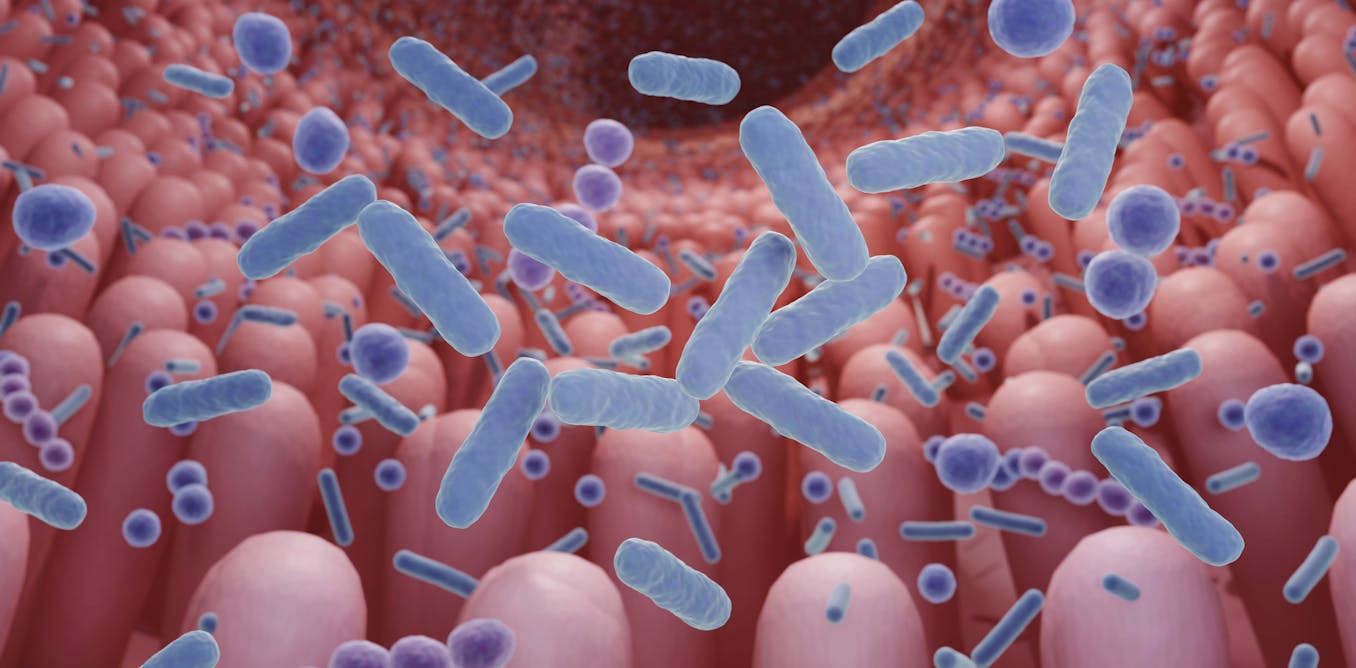
More concerning is that it appears that putting calories into mouths is not enough to prevent stunting. The science points to the role played by our intestinal microbiome – the trillions of microscopic organisms, including bacteria, viruses and fungi, that live in and on us – and the inability to digest nutrients.
We – a microbiologist and a health economist – recently published a paper in which we outline emerging evidence demonstrating that poverty affects children’s physiology – the way their bodies work – not merely their access to resources. Addressing childhood stunting therefore requires moving beyond single interventions such as providing food. What’s needed are integrated approaches that simultaneously tackle sanitation, infection control, nutrition quality and early childhood stimulation.
Our findings support the growing scientific evidence that both physiological and environmental factors must be addressed together to break the intergenerational cycle of poverty and developmental impairment. Nutrition is not the full story. The gut microbiome plays a complementary role by breaking down complex carbohydrates that our bodies cannot digest on their own, converting them into forms that may be absorbed and used for growth and development.
Diet provides the essential raw materials, while the microbiome helps unlock their nutritional value, thereby contributing to growth and development. There is also strong evidence that the environment shapes the microbiome’s ability to carry out these functions.
Gut microbes, poverty and stunting
Children’s growth is affected not only by what they eat, but also by how well their bodies can process and absorb nutrients.
Children living in informal settlements, where sanitation is generally poor, are exposed to microorganisms through dirt, toxic dust and sewage. This exposure may lead to a condition called environmental enteric dysfunction. This is when an inflamed intestine impairs the absorption of nutrients, including fats, proteins and vitamins.
The result is stunting. This may remain undiagnosed but can affect health negatively across a lifetime.
The prevalence of environmental enteric dysfunction in South Africa remains unclear. One reason is that there are no easily administered diagnostic tests. The other is the lack of large scale coordinated national studies.
Evidence from studies in Asia supports the potential role of the microbiome as a central contributor to stunting. These studies suggest that gut microbial communities of healthy children tend to follow predictable developmental milestones during the first two years of life. Failure to achieve these milestones may compromise the microbiome’s capacity to process food efficiently, with important implications for child growth and development.
In contrast, children with severe acute malnutrition often carry an immature gut community that does not mature in response to food or interventions focused on water, sanitation and hygiene services alone.
Read more:
South African policy isn’t connecting child nutrition and sanitation
In a study done in Malawi, scientists transplanted gut bacteria from malnourished children into young animals and showed that the animals developed growth deficits. Conversely, microbes from healthy children could restore growth.
These studies show that an unhealthy gut community may be a cause – not just a consequence – of poor growth. Although the concept of a “healthy” microbiome has been the subject of extensive debate, there is increasing consensus that healthy microbiomes are typically characterised by high microbial diversity, the absence of dominance by a single organism, the capacity to remain stable, resilience and the ability to maintain essential functions even when community composition changes or is subject to environmental disturbance.
Studies that look directly at the small intestine have found that many stunted children have bacteria from the mouth growing in the wrong part of the gut. These bacteria may interfere with how the body absorbs fat, creating a direct link between the makeup of gut microbes and poor growth.
Other studies show that what really matters is what the microbes do – their ability to make vitamins and other building blocks – not just which species are present.
Put simply, the microbiome can help determine whether the food a child eats is used to grow body tissue or is wasted.
Knowledge gaps
Progress in tackling stunting has been slow for a number of reasons.
Firstly, traditional interventions focused on food provision and sanitation without understanding the underlying biological damage that impairs how nutrients are absorbed.
Secondly, the evidence base relies on studies from high-income contexts where nutrition alone may be the primary constraint. In lower and middle income countries the biological mechanisms driving stunting involve multiple interacting pathways.
Part of the answer is geography of research. Many of the early groundbreaking studies come from Asia and south Asia and from a few sites in east Africa and Malawi. Large multicountry cohorts such as the MAL-ED project and several studies in Bangladesh have provided strong evidence about enteric pathogens and their links to growth.
But sub-Saharan Africa remains under represented in longitudinal microbiome studies despite carrying a large burden of stunting. That gap has real world consequences. We know that the gut microbiome varies considerably and is influenced by several factors including diet and geography.
Children in different places have different diets, different exposures and different baseline microbes. Interventions that work in one region may fail in another.
The answers
What’s needed is African led research that samples African children across geography to understand what will work on the continent.
This requires a change in approaches to policy and research.
First, policy makers must stop treating food availability as synonymous with nutritional success. Food security matters but it is not sufficient.
Secondly, routine growth must be monitored better at primary healthcare level so stunting is not missed in communities where short stature looks normal to the eye.
Third, studies must measure gut function – not only weight and height. This will show who is failing to extract the benefit of food.
Fourth, water, sanitation and hygiene must be integrated.
Finally, build African capacity for this work, and fund African research.
Where the science could lead
Research into the microbiome can shift strategies from treating hunger to restoring lifelong health.
For example, it may be possible to identify new microbes that block fat absorption or those that degrade essential vitamins. We may begin to map how early disruptions in gut function influence metabolism and increase the risk of non-communicable diseases later in life.
We may also learn to use simple stool or blood markers to identify children who, despite having enough food, will not grow without gut-directed therapy.