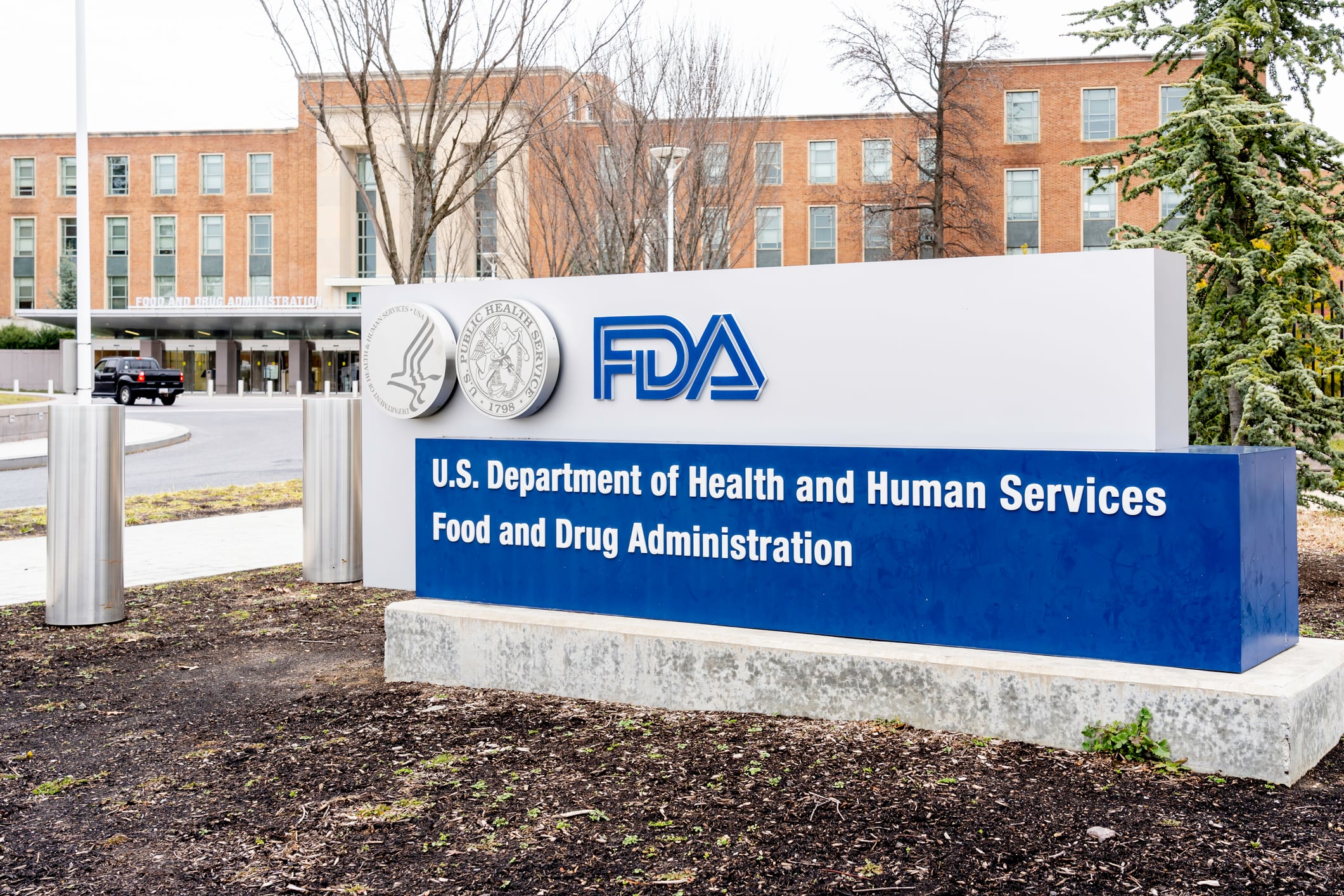
The US Department of Health and Human Services (HHS) made two landmark announcements Monday, proposing stronger federal oversight of food ingredients under the Generally Recognized as Safe (GRAS) program and promising to submit a definition for ultra-processed foods.
HHS proposed a rule that would require food and beverage manufacturers to notify FDA when determining that a substance added to human or animal food is Generally Recognized as Safe.
HHS and USDA also announced they have submitted a proposed definition for ultra-processed foods, but did not provide details on the definition.
“Nearly 60% of the American diet is made up of ultra-processed foods, and childhood obesity now affects more than one in five American children,” said HHS Secretary Robert F. Kennedy, Jr., in a press release. “We cannot reverse America’s chronic disease epidemic without transforming our food system. These historic actions bring greater transparency to what’s in our food and stronger science to federal nutrition policy. President Trump and I promised to Make America Healthy Again, and today we are turning that promise into policy.”
GRAS rule proposed
An unpublished version of the 140-page proposed GRAS rule submitted by the FDA was available Monday and expected to be published in the Federal Register on August 11. The existing GRAS notification program, established in 1997, gives companies the option of notifying FDA that a substance entering the food system is safe for human consumption.
The proposal’s major provisions include:
• Make the voluntary GRAS notification program mandatory and explain that if the notification requirement is not met for a substance’s conditions of intended use, FDA would consider such noncompliance as a factor in its prioritization of food substances for post-market review.
• Establish some exceptions to the requirement to submit a GRAS notice, including a time-limited option to make a streamlined submission to FDA for certain intended uses of substances already in interstate commerce instead of initially submitting a GRAS notice.
• Revise procedural regulations for a threshold of regulation (TOR) exemption for human food to reflect updated scientific guidance and to include uses of substances in food and as a food contact substance (FCS).
“Through a GRAS notice, parties can share with us the underlying data and other scientific information used to support their conclusion that the use of a substance is GRAS under the conditions of its intended use. A GRAS conclusion constitutes an assertion on the part of the notifier that the intended use of a substance is not a food additive use that is subject to the premarket review and approval requirements of section 409 of the FD&C Act,” FDA explained.
FDA added that a submitter’s “conclusion that a substance is GRAS under the conditions of its intended use (or similar claims by a person that they have independently ‘certified’ the use of a substance as GRAS) does not necessarily mean that such a use is GRAS or that the use is not an unapproved food additive use.”
That means that the FDA may already determine that the use of a substance is not GRAS or that it is otherwise an unapproved food additive.
State GRAS requirements
The controversy surrounding the GRAS program has prompted multiple states, such as New York, New Jersey and Pennsylvania, to pursue their own GRAS programs.
New York’s proposed Food Safety and Disclosure Act (S1239E), for example, would establish a mandatory GRAS program requiring companies to submit GRAS information to a public database for additives currently eligible under FDA’s self-certification GRAS program.
Pennsylvania’s Show Us Your Science Act (HB1130) includes a similar provision.
The New York bill was approved by the state assembly in April and awaits the signature of Gov. Kathy Hochul to take effect. The other two state-level GRAS proposals are still making their way through their legislatures.
Acting FDA Commissioner Kyle Diamantas said in a prepared statement that the two provisions announced today provide science-based oversight in ingredients in the food system.
“By proposing mandatory GRAS notifications, we are closing critical information gaps and giving the FDA greater visibility into substances entering the food supply,” he said. “By advancing a proposed definition of ultra-processed foods, we seek to create a stronger foundation for future nutrition research. Together, these reforms represent a significant step toward a more transparent and modern food safety system.”
Critiques of GRAS changes
Advocates of a tighter GRAS program applauded the announcement today, but some argued it does not go far enough to reform the system.
The Environmental Working Group (EWP) said in prepared statement that the regulatory loophole has “allowed companies to add new, potentially harmful chemicals and other substances to snacks, drinks and more without first undergoing FDA safety review.”
The group added that the self-affirming loophole has allowed the food industry to greenlight chemicals entering the food supply instead of the FDA.
Melanie Benesh, EWG’s vice president for government affairs, said the system is in “urgent need of reform” and that eliminating the self-certification pathway is a “first step.”
“But true GRAS reform requires more than mandatory notification. It must also include strong, science-based safety standards and thorough, independent FDA review before chemicals are allowed in our food. And it must address the thousands of substances already on the market that have not been meaningfully reviewed in decades,” she said. “Americans deserve a system where food safety decisions are made by independent experts at the FDA – not by the companies that profit from selling these chemicals.”
Marion Nestle, professor emerita of nutrition, food studies, and public health at New York University, offered a severe critique of the GRAS proposal, saying it does little to reform the system.
“My immediate reaction was ‘that’s all?’” Nestle wrote in an email. “After all this time all they have done is to require food companies to notify the FDA about new additives they would like considered GRAS. That’s it? Everything else stays the same?”
She noted that the reform measure fails to reconsider the lack of pre-market approval, adding that, “companies can still put what they like into the food supply until the FDA gets around to considering the notification.”
“Mind you, advocates have been calling for this for decades so this is a necessary step but I was hoping for more,” she said. “Let’s give them credit for issuing a substantial Federal Register notice. This is real regulation! At last! But they could be doing so much more about potentially unsafe additives while they have the chance.”
No details on UPF
While the announcement drew some criticism on the federal government’s pursuit of a formal definition for ultra-processed foods, HHS offered no new information about what the definition would entail.
The Consumer Brands Association released a statement Monday from Rhonda Bentz, executive vice president of public affairs, questioning the federal government’s attempt to define UPFs and warning that any definition “lacks a sound scientific foundation and will create consumer confusion and increase grocery costs for American families.”
“America’s packaged food supply is safe and has been a staple in American households for decades. That’s something that a guidance document, crafted without credible experts cannot change. Any so-called definition that captures 80% of the nation’s food supply while picking winners and losers is fundamentally flawed, not based on sound science and politically motivated,” Bentz said.
She added that the “rhetoric” around the government definition “will create widespread consumer confusion and increase grocery costs.”
“President Trump has taken numerous critical steps to keep prices low that our industry has welcomed, and it is unfortunate that some rogue unelected bureaucrats are trying to push this misguided definition without his knowledge,” Bentz added. “We are confident that this definition won’t move forward once the president is made aware of it and the disastrous consequences it will have on his affordability agenda.”
HHS said in its announcement that UPFs have been linked to type 2 diabetes and heart disease, noting that “the absence of a standardized federal definition has limited research consistency across the federal government.”
“The proposed definition incorporates feedback from thousands of stakeholders, including industry, consumer organizations, researchers and members of the public,” HHS said. “Today’s actions further implement the Trump Administration’s Make America Healthy Again Strategy Report and build on recent efforts to strengthen nutrition science, improve transparency, and modernize oversight of the nation’s food supply. HHS also encourages Congress to build on these efforts through legislation that further strengthens the safety of the American food supply.”