Heat pumps are becoming a key part of the UK’s plan to reduce carbon emissions and lower household energy bills. Source: bbc.co.uk.
What Are Heat Pumps?
Heat pumps transfer heat from one place to another using electricity. They do not burn fuel like gas boilers. Instead, they absorb ambient heat from air, ground, or water and amplify it to warm a home.
How Air Source Heat Pumps Work
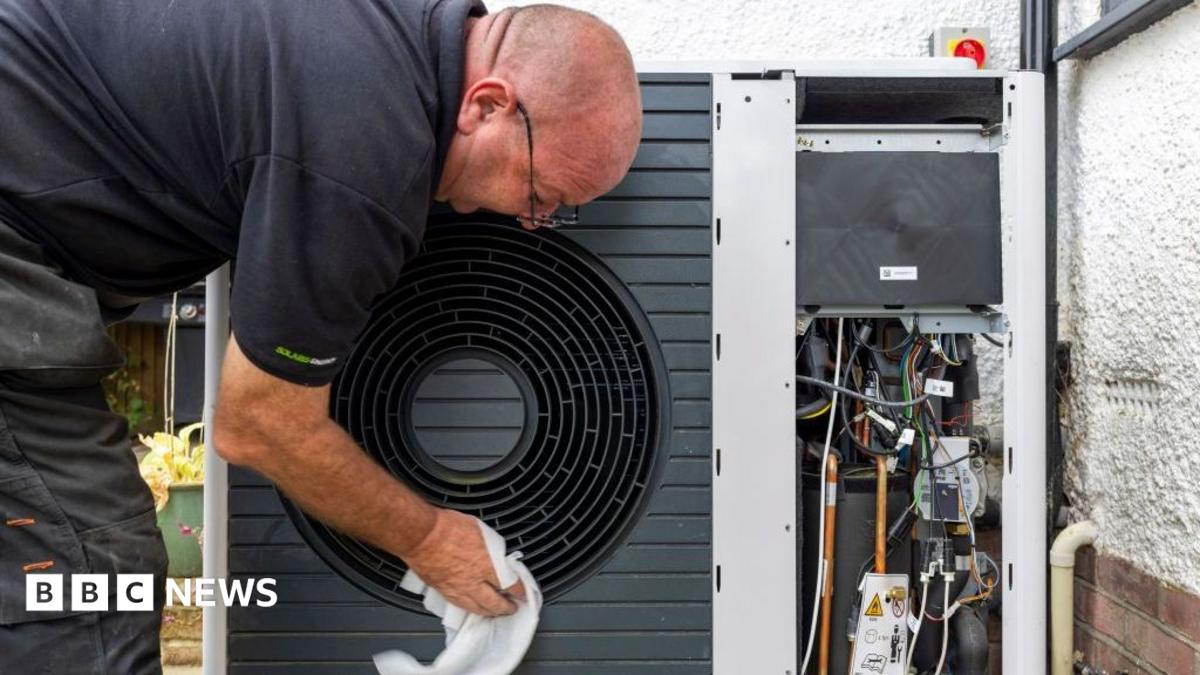
These are the most common type. They pull outdoor air through tubes filled with a refrigerant fluid. The refrigerant absorbs heat and evaporates into a gas. Compressing the gas raises its temperature. This heat is then passed through a heat exchanger and sent into the home via radiators or underfloor heating.
The outdoor unit is about 1m x 1m x 0.4m (3ft x 3ft x 1.3ft). It stands outside the home. The indoor unit is roughly the size of a gas boiler. A hot water cylinder is installed inside to store heated water. Its size depends on the home’s heating and hot water needs.
Ground Source Heat Pumps
These are more efficient than air source models. They extract heat from the stable temperature of the earth. However, they are less common. Installation requires either a deep bore hole or a large horizontal loop buried in the ground. Such systems are only possible in areas with suitable land and soil. They are typically more expensive than air source units.
Government Policies and Costs
From March, all new homes in England must have heat pumps and solar panels. This rule ensures future homes use low-carbon technologies. This cost is expected to be offset by long-term energy savings.
The government launched a £15bn Warm Homes Plan in January. It aimed to help households adopt green technologies. The autumn budget cut £1bn from this to fund defence. This change has raised concerns about the plan’s long-term viability.
The Boiler Upgrade Scheme offers a £7,500 grant for air or ground source heat pumps in England and Wales. A property must have an Energy Performance Certificate (EPC) from the last 10 years to qualify. No existing insulation is required. This saves households about £2,500 upfront. The UK spending watchdog says this is too high for many low-income families.
The Warm Homes Loan Scheme offers low or no-interest loans of £7,500 to £35,000. This helps households avoid large upfront payments. The government will fund the Boiler Upgrade Scheme at £400m in 2027–28, with annual inflation adjustments. This level is a significant drop from earlier plans.
Costs and Energy Savings
Electric heat pumps use three to four times less energy than gas boilers. This makes them more efficient in energy use. However, running costs depend on electricity prices. These prices are currently tied to global gas prices. The government expects prices to fall as renewable energy grows and VAT on electricity is removed.
Nesta, an innovation charity, estimates a typical home with both a heat pump and solar panels could save nearly £1,000 annually. This saving comes from combining efficiency with self-generated energy.
Installation Rules and Progress
Old rules restricting heat pump installation within 1m of a neighbour’s property have been removed. This change encourages wider adoption. Modern heat pumps operate at 42dB or below — similar to a fridge’s noise level.
Rules on the number and size of heat pumps per household have also been relaxed. This allows more flexibility for larger homes or those with higher heating needs.
Current Adoption Rates
Less than 2% of UK homes have heat pumps. Installation rates are much lower than in France, Germany, and Italy. These countries have already seen strong adoption.
Heat pump installations doubled in the first half of 2026 compared to 2021. A government official says progress may be slowing and more support is needed.
Climate Targets and Future Needs
The Climate Change Committee (CCC) says heat pump sales must reach nearly 450,000 per year by 2030 and 1.5 million by 2035. Around half of UK homes will need heat pumps by 2040 to meet net zero goals. To reach these targets, the CCC says there must be a major increase in trained installers across the UK.
While heat pumps offer long-term savings and environmental benefits, challenges remain. High upfront costs, limited installer availability, and uncertain electricity prices may slow adoption. Homeowners should check eligibility for the Boiler Upgrade Scheme or Warm Homes Loan Scheme through official sites.
Scotland and Northern Ireland have separate schemes for home energy efficiency. These reflect regional differences in policy and infrastructure.
For more details, visit the original source.
Find a certified installer at Ogem.
Check eligibility for the Boiler Upgrade Scheme at GOV.UK.
Sources & further reading
Featured image: A male engineer wearing a black T-shirt wipes the outside of a black heat pump with a cloth. To the right of the picture, the heat pump abuts the wall of a property with the pipes and electrical components visible.. Via original publisher. Image source