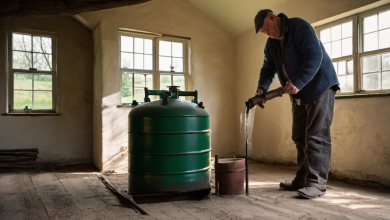
Featured image: A man is seated at a wooden window, leaning over a small, handheld device. AI-generated image; not a photograph of the reported event.
Heating oil customers across the UK are facing steep price increases. The government has responded by promising tighter regulation and improved consumer protections. Source: bbc.co.uk.
What’s Changing in the Heating Oil Sector?
Ministers say they will develop a new regulatory regime for the heating oil market, aiming to promote competition and protect consumers. This includes reviewing minimum order levels, currently set at 500 litres for some users.
Domestic tanks typically hold between 1,000 and 2,000 litres. The current minimum order levels have left some households paying for more fuel than they need.
Government Actions and Promises
- Regulatory reforms to strengthen consumer protections in the heating oil market.
- Review of minimum order volumes to ensure fairness.
- Establishment of clearer compensation routes for customers affected by price spikes.
- Work with industry to create a more transparent and competitive market.
Energy minister Polly Billington said: Thousands of heating oil customers felt they had nowhere to turn when they paid the price of rising oil and gas costs earlier this year. We won’t accept that. Energy is an essential good and people should not have to think twice about whether they’re protected in the market.
Why This Matters to Consumers
Some 1.5 million households depend on heating oil, mostly in Northern Ireland where 60% of households rely on it. Unlike gas and electricity, heating oil lacks a standard price cap under Ofgem, which only covers England, Wales and Scotland.
Customers in Northern Ireland are not covered by the same protections. The UK government has said it will engage with the Northern Ireland Executive as they consider these recommendations in parallel.
One customer, Nick from West Suffolk, said off-grid households remain a major policy blind spot. He said heating oil has become ‘almost an investment’ after prices rose to 111p per litre — more than double from a year ago.
What’s Missing in Current Support?
An inquiry by the Competition and Markets Authority found that 1,700 households were forced to re-order at significantly higher prices or go without fuel — costing them up to £350. Those affected were told they were entitled to compensation. The government has now accepted the CMA’s recommendation to strengthen regulation.
Price comparison site Boiler Juice’s chief executive, Tim Buckman, said stronger regulation alone won’t lower prices. He called for a VAT reduction on heating oil or targeted relief, arguing that heating oil is twice as expensive as it was before the war.
Key Limitations and Open Questions
- No proposal to extend the standard variable tariff price cap to heating oil.
- Regulatory changes are not yet scheduled for implementation.
- Off-grid and rural users remain underprotected.
- There is no clear timeline for when new rules will take effect.
Charity National Energy Action has also called for a price cap on heating oil, similar to those in gas and electricity markets.
While a code of practice exists and discounts on heat pumps are being offered, these measures do not address the root issue of price volatility or lack of consumer safeguards.
What to Watch Next
Consumers should monitor updates from the Competition and Markets Authority and the Department for Energy Security and Net Zero. The government’s engagement with Northern Ireland will be a key development.
For more on energy costs and household budgets, see our original report from the BBC.
Heating oil users in the UK are still navigating a market with limited protections. The promised reforms may offer relief, but their impact remains uncertain without clear timelines and enforcement.