Sanrio, the company behind Hello Kitty, has ended its merchandise partnership with the Japanese TV series Vivant after facing strong backlash in China. Source: bbc.co.uk.
What Happened
The partnership was canceled after Chinese state media and users criticized Vivant for showing Chinese agents torturing a Japanese operative.
Specific scenes from the show’s second season depict a Japanese character being severely abused—cutting fingers and stabbing the abdomen.
Chinese outlets argue these actions mirror historical torture by Japanese forces during World War II, raising concerns about historical distortion and national sensitivity.
Sanrio confirmed the partnership ended because the content ‘contained elements inconsistent with Sanrio’s core values’.
The company said it has always promoted values like care and connection, and remains committed to fostering harmony among people.
Sanrio also said it takes the public feedback seriously and will improve its review process for future collaborations.
Key Facts
- Vivant is a spy thriller that began in 2023, with its second season launching in July.
- The second season includes scenes where Chinese agents torture a Japanese character, sparking widespread criticism in China.
- Sanrio canceled the partnership after receiving public feedback, citing a conflict with its core values.
- China-Japan relations have worsened since Prime Minister Sanae Takaichi suggested Japan might use self-defense forces if China attacks Taiwan.
- China has responded with export limits on rare earth minerals, tourism restrictions, and the reclamation of its pandas from Japan.
Background: How the Show Works
Vivant follows a Japanese salaryman caught in a web of international espionage and crime.
The first season was set in a fictional Central Asian country. The second season expands to a global setting, including scenes with Chinese agents.
On Wednesday, Masamine Ryuho, president of TBS Network, said the show is fictional and has no intent to insult any country.
Still, Chinese media claims the torture scenes closely mirror wartime actions by Japanese forces in China, sparking public concern.
Why It Matters
Sanrio’s move shows growing awareness among global brands about cultural sensitivity in geopolitical contexts.
China views Japan’s wartime history as deeply sensitive. The show has been seen as reactivating that trauma.
Sanrio’s response highlights a shift in how international companies evaluate partnerships—now under greater public and political scrutiny.
A Chinese foreign ministry spokesperson said the incident should ‘serve as a warning to the international community and discerning people in Japan’.
Limitations and Open Questions
Sanrio has not revealed how many products were affected or the financial impact of the decision.
While the show claims to be fictional, the torture scenes have triggered strong emotional and historical reactions in China.
It is unclear how many other global brands may face similar scrutiny in the future.
Sanrio has not explained how it evaluated the show against its stated values.
China’s swift response shows state media plays a key role in shaping public views on cultural content.
What to Watch Next
Sanrio may face further review of partnerships with Japanese media or content.
Japan’s government may respond, especially given Prime Minister Takaichi’s recent remarks on Taiwan.
Other international brands with global icons may soon reassess their partnerships in China.
Chinese state media has criticized Sanrio, saying Hello Kitty, as a symbol of care, should not ‘dance with Japan’s right wing’.
This incident joins recent cases like French footballer Kylian Mbappé, who was dropped over comments about Mao Zedong—apologizing afterward.
Sources & further reading
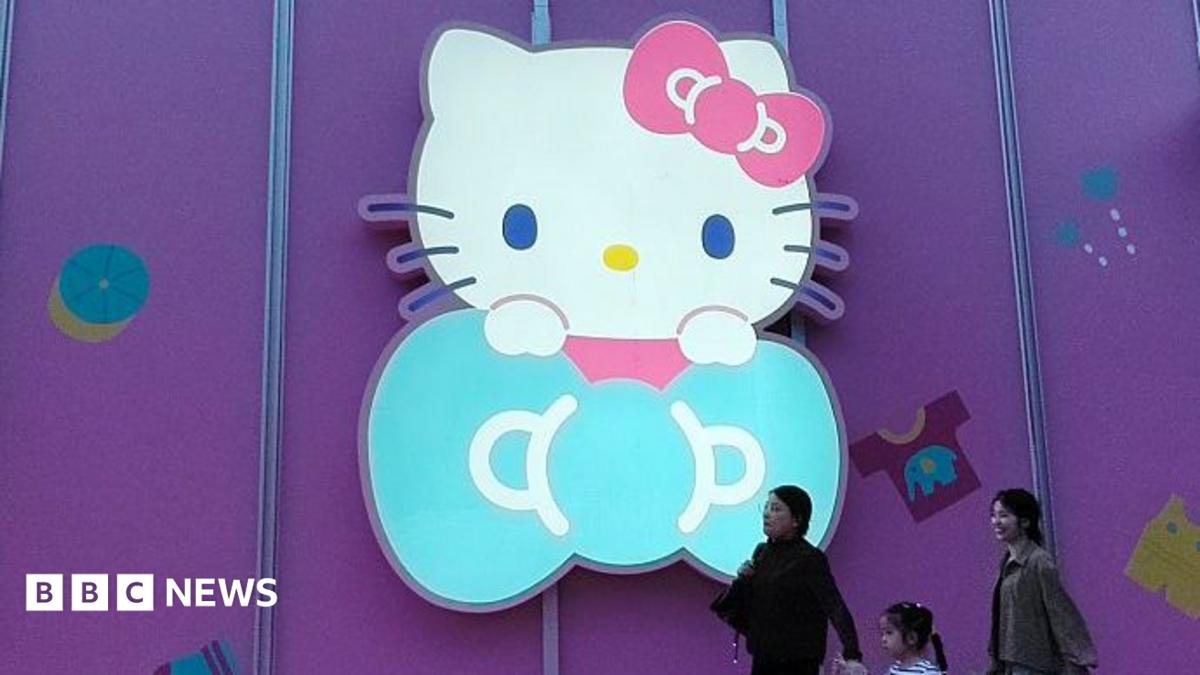
Featured image: Three women walk past a big glowing Hello Kitty signage on a purple store wall in Shanghai, China. Via original publisher. Image source