Every year in my third-grade classroom, I see the same small emergencies.
A child loses a math game and dissolves into tears. Another hovers at the edge of a group, desperate to join but unsure how.
A minor argument on a project becomes a major crisis with multiple students shut down.
A student hits a hard math problem and announces, before even trying, “I can’t.”
These are not bad kids. They’re honestly amazing kids. But they are under-practiced.
Experts call this “executive function,” the mental toolkit children use to handle frustration, control impulses and push through when something is hard.
Adults now write books, create programs and build interventions around these skills.
But here’s the ironic thing: Childhood itself used to give children daily chances to practice them. For free.
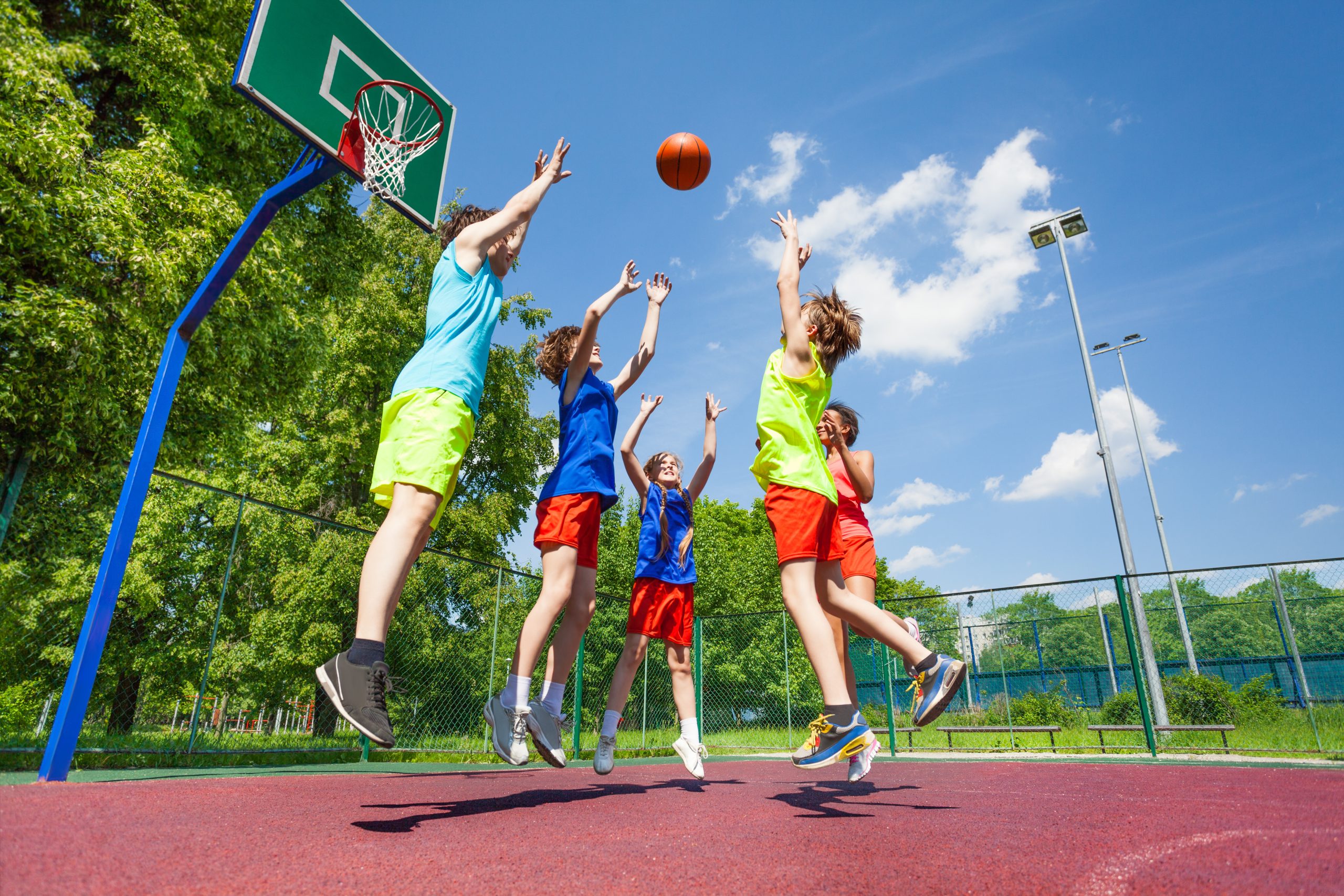
Kids made up games and fought over the rules — and learned to compromise or risk losing their playmates.
They got bored and invented something. They lost. They pouted. They tried again. They got left out, made up, built forts, scraped knees and discovered, crucially, that disappointment is not the end of the world.
This is not nostalgia. The old days were not perfect. Some children were unsafe. Some were excluded. Some adults looked away when they should have stepped in.
We can acknowledge all of that without denying what a play-filled childhood gave children: daily, low-stakes practice at becoming capable and resilient human beings.
That kind of childhood has been quietly squeezed out, and we are living with the results.
We built a world where a child’s freedom depends on parents’ work schedules, extracurriculars, travel sports and whether there is anywhere left for kids to gather without an adult turning it into a monitored program.
Then we act confused when children can’t handle a little independence, manage interpersonal conflicts or tolerate being bored for four minutes.
A child does not become resilient because adults lecture her about grit. She becomes resilient by facing low-stakes problems she is actually allowed to solve.
The deepest skills of childhood are learned through free play: tiny conflicts, disappointments, negotiations and recoveries that teach children, over time, “I can handle this.”
Get opinions and commentary from our columnists
Subscribe to our daily Post Opinion newsletter!
Thanks for signing up!
A child does not become socially skilled from a kindness curriculum but by entering a group, reading faces, making mistakes, repairing harm and coming back a little more socially skilled next time.
You cannot lecture a child into these skills. Yet that is exactly what modern childhood keeps trying to do: introduce more activities, more adult management, more structured enrichment — all to compensate for the play-filled childhood we’ve crowded out.
There is a great childhood divide in America now.
Some children still have neighborhoods with sidewalks, backyards, a playground within walking distance and a pack of neighborhood kids to join after school.
For too many though, every social experience is scheduled, supervised, paid for and chauffeured by an exhausted parent.
That is less development. Less practice. Less learning. And less fun.
And here is the part parents know: They can’t fix this alone.
One family can’t rebuild a neighborhood. The first brave parent who sends a child outside finds the same thing: emptiness, because every other child is at practice, tutoring or inside on a screen.
That family cannot become the entire village.
So who steps up? Everyone else.
A church opens its playground/gym one evening a week for free play where kids make up their own games.
A PTA hosts before-school play on the playground — no agenda, no craft, no activity stations.
A block chooses Thursday afternoons as “kids outside” time.
A library sets aside two hours each Saturday for loose-parts free play instead of another adult-led program.
Schools run a play club each week after school.
A parks department protects open fields and encourages free play, not just organized leagues.
None of this requires a product, a curriculum or another expert on a podcast.
It requires ordinary adults (teachers, coaches, pastors, librarians, YMCA workers, community organizers, neighbors) to stop treating unstructured free play as bygone and quaint, and start treating it as the fundamental way children become capable, resilient, socially skilled human beings.
For years, we have asked what is wrong with kids today. We’ve added programs, charts, activities and interventions.
Maybe the better question is simpler: What did we take away from them?
Unstructured play is where children practice becoming capable. It is where a lost game becomes survivable, a group enterable, a conflict solvable and “I can’t” slowly becomes “I’ll try.”
We don’t need to recreate the past. But we do need to rebuild the conditions that let childhood happen, and it’s going to take all of us.
Kevin Stinehart is a South Carolina elementary-school teacher and doctoral student focusing on childhood, play and redesigning schools around children’s developmental needs. Adapted from Substack.