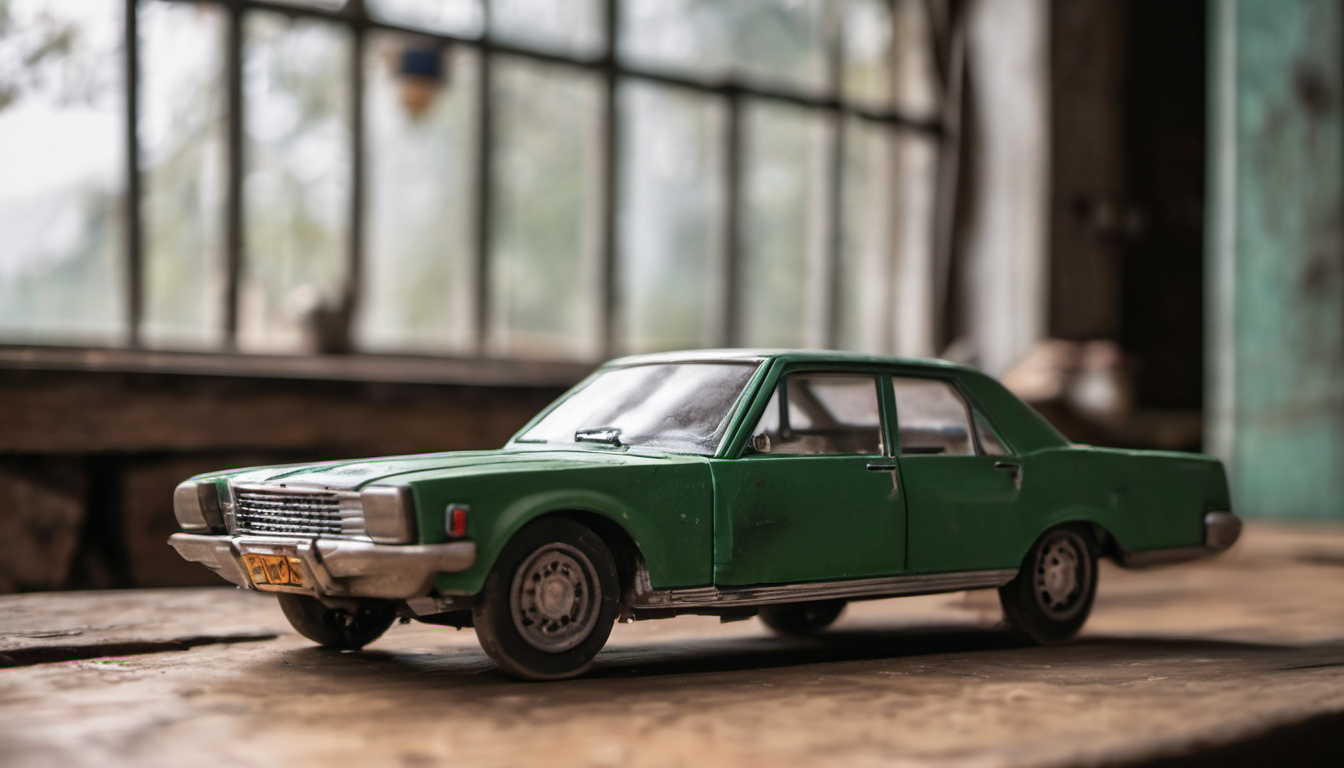
Featured image: A green toy car model is the main subject. AI-generated image; not a photograph of the reported event.
Most children’s toys sold in the US have ‘Made in China’ on the underside. Source: bbc.co.uk.
From Design to Factory
Toy design starts with an American company. It begins with a concept for a child’s toy—like a learning tool or a playset.
That design is sent to factories in Guangdong province. It borders Hong Kong and is the heart of global toy manufacturing.
At Mihox in Dongguan, workers remove plastic parts from steel moulds. The parts go into crates for painting and finishing.
The factory employs more than 800 people. It makes about 55 million toys a year. Half go to the US market.
Design Revisions Are Common
Designs often change. Melanie Wang from Mihox says customers revise the design multiple times.
Changes happen for safety, durability, or how the toy feels in use. Each revision is tested before final approval.
Production Takes Time
Once approved, a mould takes about one month to build.
Production runs for three months. During that time, plastic parts are made and sent to other factories for sewing, electronics, or packaging.
What the Factory Earns
For a toy, the factory earns a portion of the cost that covers materials, labor, and profit.
Chinese factories earn a profit between 3% and 10% of that cost. So for a given cost, their profit is between 60 and 18 cents.
Labour Still Plays a Key Role
Samson Ko of the Toys Manufacturers’ Association says automation is growing—but not everywhere.
Soft toys and some electronics still need skilled hands. Tasks like stitching and quality checks are done by workers.
Why China Still Dominates
Guangdong has factories close to each other. This allows fast handoffs between stages.
Factories pass products from one to the next without delay. This system runs smoothly and efficiently.
Shipping to the US
After production, toys go by truck to ports like Shenzhen.
Shenzhen is the largest port in Guangdong.
Ivy Tse of FreightAmigo says cargo ships take about 15 days to reach the US west coast. It takes 25 to 30 days for the east coast.
Christmas toys left China in August and September to arrive in time for the holiday.
Freight Costs Add to the Price
Shipping adds a portion to the manufacturing cost.
That cost is not paid by the factory.
Import Tariffs Apply
US Customs charges a tariff on Chinese toys.
It applies to the manufacturing cost—not the retail price.
Where the Money Stays
After making the toy, shipping it, and paying tariffs, the total cost is a portion of the retail price.
That money stays in the US. It goes to the US company, the delivery firm, and the retailer.
Revenue Is Shared
After delivery costs, the toy maker and retailer split the rest 50-50.
That gives each a portion of the remaining revenue.
Profit Margins Are Not Public
Exact profit numbers are not shared. Industry studies suggest margins up to 25%.
Why This Chain Still Works
Many toys go through multiple stages. Each step happens in a different factory.
Factories in Guangdong are close. This makes the process fast and efficient.
Trade Talks May Change Tariffs
Recent talks between President Trump and Xi Jinping suggest possible changes to tariffs for toys.
But no new rate or start date has been set. A public consultation is still needed.
What’s Next?
US-China trade talks could affect toy prices. Changes might impact how much US buyers pay.
China remains central to toy manufacturing. Even with rising labor costs, the supply chain stays strong.
For more on international trade and supply chains, see the original BBC report.