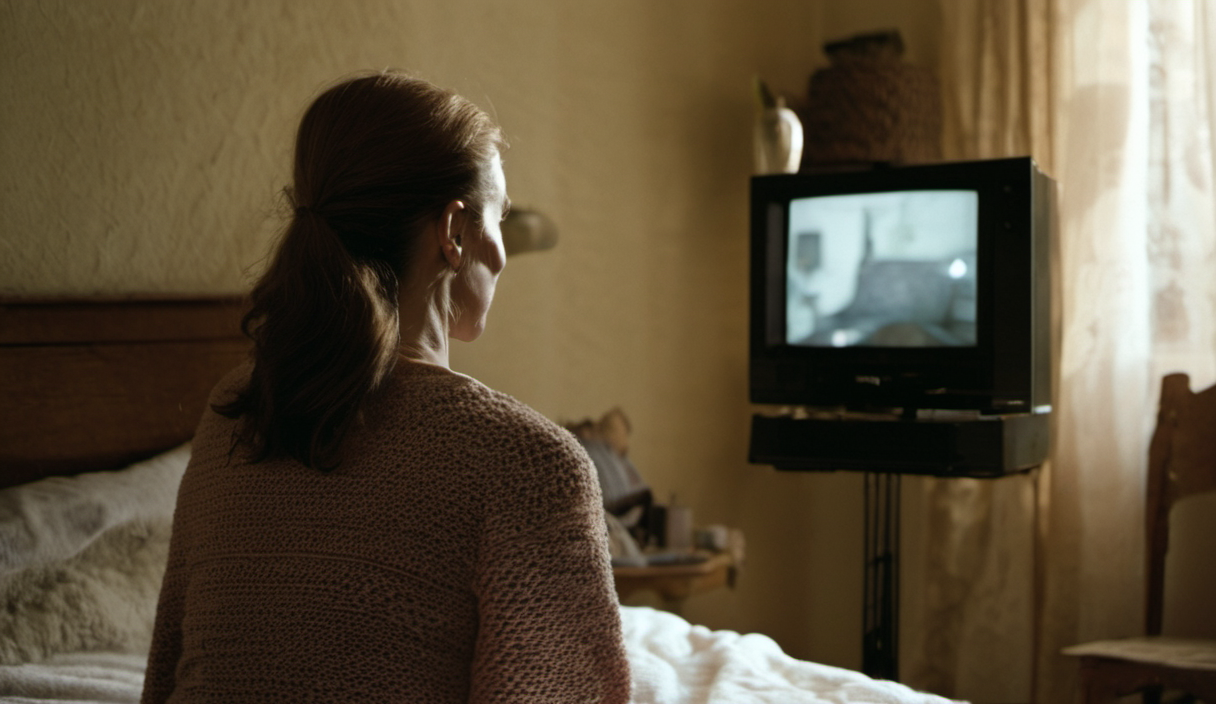
Featured image: A woman with brown hair pulled back into a ponytail is sitting on a bed. AI-generated image; not a photograph of the reported event.

Lillian Crawford shares how watching the French film Amélie transformed her understanding of herself and neurodivergence.
First Encounter with a Reflective Character
At 19, Crawford watched Amélie on a DVD in her room. She was alone, surrounded by silence and film.
She saw a character who moved through the world like her: with firm likes and dislikes, a sensitivity to sound and smell, and a deep connection to culture and justice.
What Amélie Represents
- Amélie likes the sound of cracking crème brûlée with a spoon.
- She loves the smell of books and cinema.
- She hates the sound of people eating popcorn.
These sensory preferences mirror the lived experience of many neurodivergent people.
Neurodivergent Coded Characters Before Amélie
Before Amélie, Crawford had seen two other characters with neurodivergent traits: Margot Tenenbaum from The Royal Tenenbaums and Suzy Bishop from Moonrise Kingdom.
But these characters were side roles. Amélie was different—she was the central figure. The story unfolded through her eyes.
Stimming and Sensory Overload in the Film
Young Amélie flaps her hands over her ears, spins a coin, and runs a finger around a glass—behaviors now recognized as stimming.
When adult Amélie takes the Paris Métro, the cinematography intensifies the sound and widens the lens—showing sensory overload.
When she is happy, everything glows. When she is sad, she becomes a puddle on the floor. These visual cues reflect emotional and sensory states.
Personal Reflection and Emotional Growth
Crawford didn’t get a formal diagnosis until her early 20s. Her parents suspected autism as a child, but she masked her behaviors to fit in.
She had hyperfixations, a love for history and culture, and a sense of humor that didn’t align with typical academic interests.
Autism can present differently in girls. They often mask their traits more than boys. This makes diagnosis harder and later.
Why This Matters
Amélie was the first film character to show a neurodivergent woman at the center of a story.
It allowed Crawford to see herself reflected—not labeled, but deeply understood.
She now feels a connection to the character, as if helping her would also mean helping her younger self.
What to Watch Next
Crawford has since organized neurodivergent film screenings and built a community of autistic people around her.
She hopes her story inspires others—especially younger versions of themselves—to embrace their differences and take up space in life.
Her book, The Mind of the Doctor, explores these themes. It is available at the Guardian bookshop.
For more stories of cultural awakening, visit our feature page.