
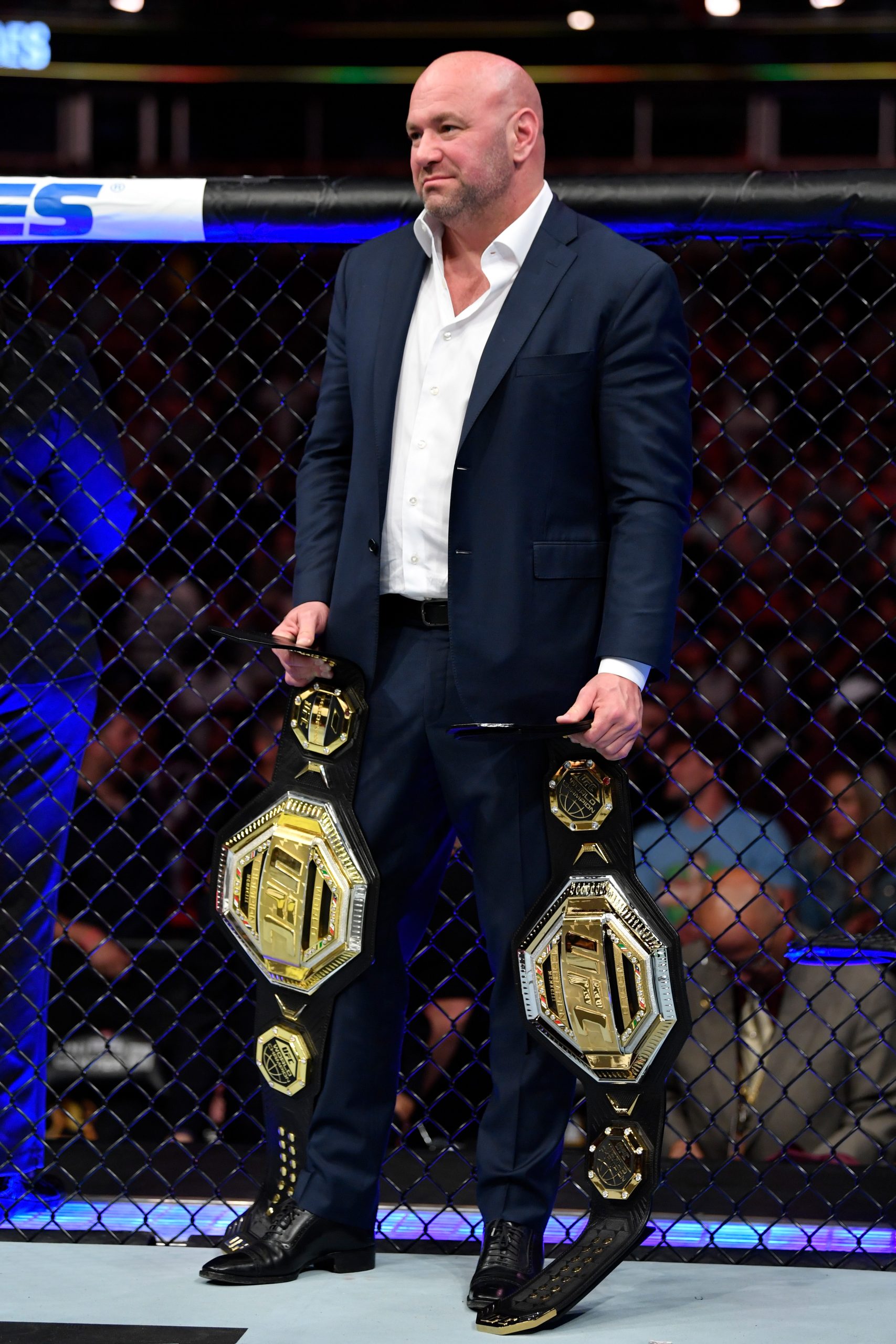
Dana White is a gambling man. In his home city of Las Vegas, the UFC boss is known to bet as much as $400,000 per hand at the baccarat tables. His wagering and drinking were once so prolific that he lost $3 million over the course of a single night and did not realize it — until his casino host told him the next day.
Nevertheless, according to Vegas host Steve Cyr, “Dana is a dangerous gambler because he’ll play three hands for $300,000 each, win and go home with $900,000. He’ll hit and run. He won’t play for hours, and he doesn’t give a s–t about comps. He’s got his own jets and will pay for his own dinner. Plus, he has the bankroll” to withstand losses and bet huge.
White’s last gamble? Sixty-million dollars to put on UFC Freedom 250, a mixed martial arts extravaganza that brought fights to the White House Lawn. The eight-figure sum provided President Trump with the ultimate 80th birthday party, some 200,000 people watching live and what White characterized as “monstrous” numbers for streaming views.

As for what White himself might have gotten out of the whole thing, biographer Michael Thomsen, author of “Cage Kings,” told The Post, “I’m sure it was a high-water mark for Dana. He’s always been big on visualizing; he’s a big Tony Robbins fan and that is one of Tony’s main tenants. He could have easily visualized [the White house event]. It’s one of those weird little things that become possible when you have your nose down and you go step by step. On a professional level, I think it is very meaningful and life-affirming for him, to go where no one else has gone.”
White declined to be interviewed by The Post.
According to Sports Illustrated, White has ascended to a point that few of us will ever go to: The magazine reported in 2025 that he had a net worth of some $500 million.
“My gut inclination would be that it is probably more than that. Before the UFC sale to Endeavor [for $4 billion, in 2016, of which White is said to have received some $360 million], he received at least $100 billion in bonuses alone, not counting salary or executive compensation,” Thomsen said.

White indulges a life worthy of mogul status. His idea of a vacation is renting a 377-foot yacht for $2.8 million per week. White’s Vegas home — which he shares with Anne, his wife of 30 years (they met in middle school) and three kids — has nine bedrooms and sits on a compound said to be worth $60 million. H drives a Ferrari Testarossa, customized Maybach van and a Barracuda muscle car from 1971.
“Obviously, with the UFC, he’s flying on private jets,” Thomsen added.
But massive wealth has not made White, 56, soft. This past May, at the White House Correspondents Dinner, when Secret Service agents rushed in brandishing automatic weapons and demanding that everyone get down, White remained on his feet, standing alongside Pete Hegseth.
Soon after, in conversation with the New Yorker’s David Remnick, White said of the mayhem, “I’m never a ‘get down’ kind of guy. If there’s something going on here, I got bad news for my family — it’s going to be a closed casket, because I’m not getting shot in the back laying on the ground.”


Born in Connecticut, White was in third grade when he moved with his sister and mother, a nurse who raised them solo, to Vegas. He squeaked through high school before dropping out of college twice.
White landed in Boston during the late 1980s, gettin into boxing and the gym business. By the early ’90s, he was back in Vegas with the hopes of eluding violent mobster Whitey Bulger and a $2,500 debt that he could not pay. There, he became the jiu-jitsu trainer of choice for casino bosses and managed MMA fighters Tito Ortiz and Chuck Liddell.
He also reunited with high school chum Lorenzo Fertitta and his brother Frank, who were running Station Casinos. When White found out that UFC was for sale, he got the Fertittas to put up $2 million to buy it.
A quandary over the brand launched White’s friendship with Trump. With UFC having been characterized as “human cock fighting” by critics and banned in 36 states, finding a place to hold fights was tough.


“Dana went to a couple of venues and they shot him down,” said Burt Watson, who began working on logistics for UFC soon after White took over. “He wound up in Atlantic City, talking to Trump, and Trump said, ‘What the hell, I’ll give it to you.’ He gave us the venue and, with that, we got a little television deal. And he showed up at two of the [first] fights.”
Watson said the two men have something in common, for better or worse: “Neither one takes no for an answer.”
The money did not gush in immediately. During the nascent days of UFC, White continued to run his Vegas gym and personally train select clients.
“I worked out there and wrote him a $40 check for an hour of training,” recalled “Whale Hunt in the Desert” author Cyr. “The day he got the check, he ran to the bank and cashed it or sent his assistant to do it. He was too broke to put gas in his car. Now he’s a billionaire. That shows how good of a businessman he is.”


The sport’s popularity has certainly been helped by the pugnacious White serving as the face of the fights.
“How many guys do you see running billion dollar companies and dropping F-bombs the way Dana does?” asked Watson. “He talks smack and fits into this whole crowd. He helps put their butts into seats.”
Former UFC Randy Couture said he knows White’s secret to success.
“He’s savvy, he understands people, he stays focused and he is gregarious. Dana understands the market and he understands the sport. He’s not a d–k — unless you piss him off,” Couture told The post. “And then he is an absolute d–k.”
