Inside the control room feeding your weather app Source: bbc.co.uk.
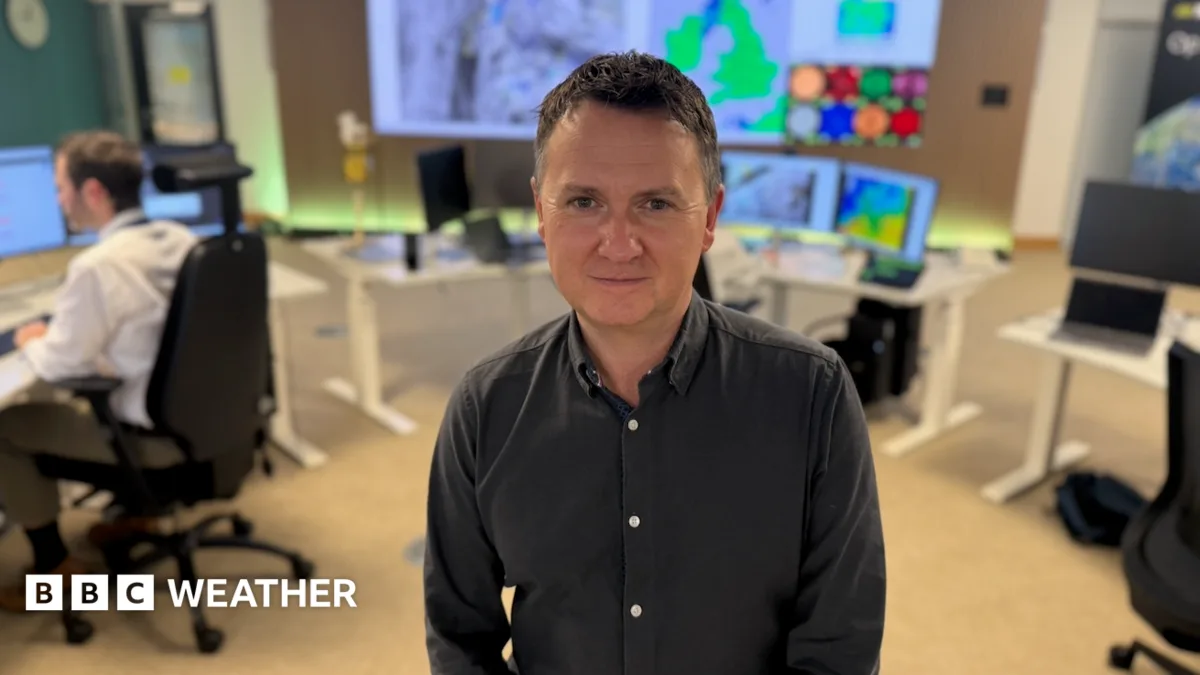
BBC Weather’s Matt Taylor tours the Met Office control room, showing how real-time weather data is processed and delivered to apps and services across the UK.
What happens in the control room
It’s where weather data from satellites, weather balloons, and ground stations is collected and processed.
Analysts monitor live feeds from across the UK and beyond. They check for anomalies, such as sudden temperature drops or unusual wind patterns.
Each data point is verified before being used in forecasts. This ensures accuracy, especially for short-term predictions used by apps.
How the data flows to apps
Once processed, weather data moves through a network of servers. These servers are linked to mobile apps, websites, and smart devices.
For example, when you open a weather app on your phone, it pulls data from the Met Office’s central system. The app then displays temperature, rain chance, and wind speed.
This frequency supports real-time user experience.
Key facts from the tour
- Analysts use automated tools to detect extreme weather events.
- The Met Office shares data with other agencies, like the Environment Agency.
- Human oversight remains essential—machines can’t detect all anomalies.
Why it matters
Accurate weather data affects daily life. From travel plans to outdoor events, users rely on app-based forecasts.
When a storm is predicted, apps can alert users. This helps people prepare, such as bringing umbrellas or adjusting schedules.
For emergency services, timely weather data can improve response times during severe weather.
Limitations and open questions
Not all weather events are predictable. Rapid changes—like sudden thunderstorms—can still surprise forecasters.
The system relies on a global network of sensors. Gaps in coverage, especially in rural areas, may reduce accuracy.
While apps use real-time data, they don’t always show the full picture. For instance, air quality or wind direction may not be included.
What to watch next
The Met Office is testing new AI tools to improve forecast speed and precision. These tools will be rolled out gradually.
Future updates may include more detailed regional forecasts and alerts for extreme weather.
As climate patterns shift, the Met Office will need to adapt its data collection and processing methods.
Source: BBC Weather, Inside the control room feeding your weather app
Sources & further reading
Featured image: BBC Weather's Matt Taylor looks at the camera from the Met Office's control room. Via original publisher. Image source