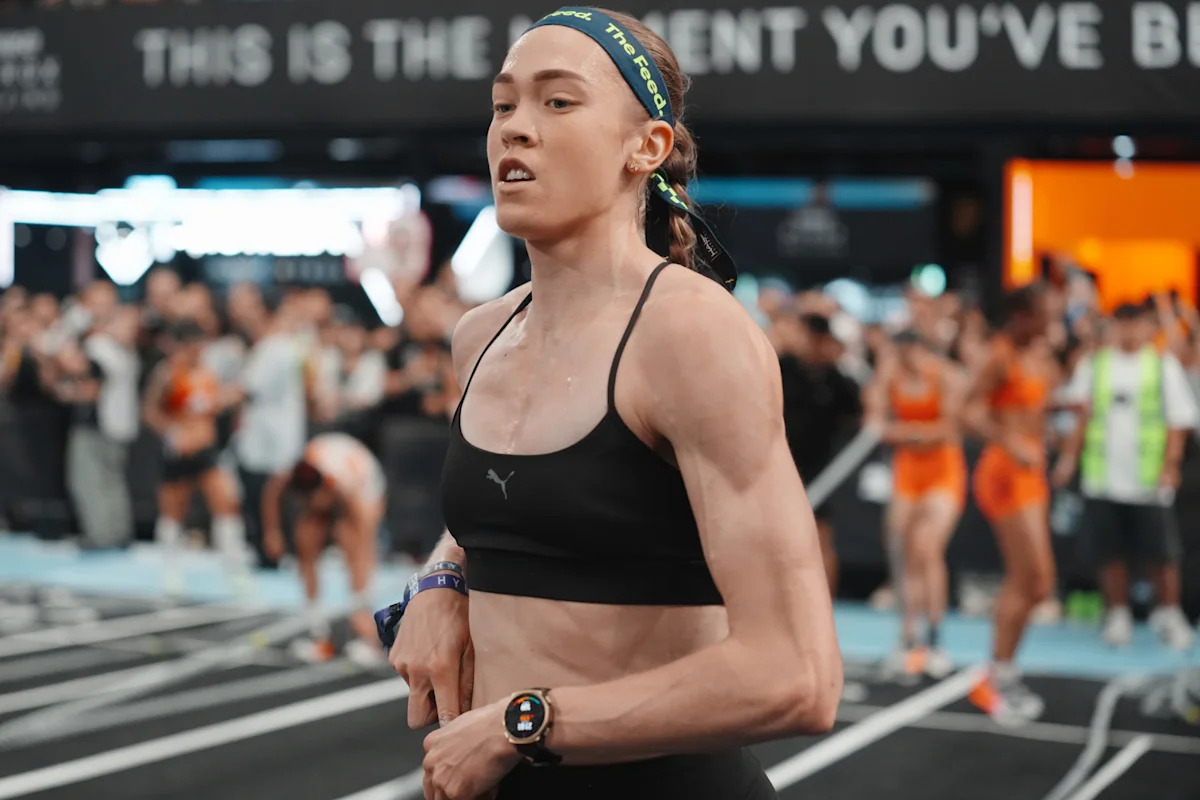
Hyrox China has proposed new competition rules after Australian athlete Joanna Wietrzyk was allowed to continue racing and win at Hyrox Beijing despite having bowel incontinence during the event.
Organizers have acknowledged gaps in the rulebook and admitted officials lacked clear guidance on how to handle the situation.
Newsweek reached out to Wietrzyk via Instagram and Hyrox via email on Monday for comment.

Hyrox China said Monday, per the South China Morning Post, that its current global rulebook contains no provision allowing officials to penalize an athlete in circumstances like those seen in Beijing.
Organizers admitted referees relied on experience from previous Elite 15 events and did not intervene during the race, describing the episode as evidence of “deficiencies in the establishment of competition rules.” They said proposals have already been submitted to Hyrox headquarters for new regulations governing track management, race intervention and result determination in cases involving “extreme physical distress and venue public health risks.”
The controversy stems from Saturday’s women’s elite race in Beijing, where Wietrzyk continued competing after suffering bowel incontinence during the event. She went on to win the race, but images and videos circulated widely online, sparking criticism from other competitors and spectators.
On Instagram, Hyrox praised athletes who push themselves to extreme physical limits, describing their “courage, resilience and refusal to give in” as qualities that make elite competitors extraordinary.
“In this instance, an unforeseen situation arose in which protocols designed for elite competition and mass participation became blurred, creating ambiguity in how they were applied and understood,” the statement continued.
Joe Ho, who participated at the Beijing event, argued that the discussion should not focus solely on the athlete and organizers.
“I was at Beijing and there is another group that deserves to be addressed here too, the paying participants who were affected,” he wrote underneath Hyrox’s Instagram statement.
Referencing Hyrox’s acknowledgment that there was ambiguity in how health and medical protocols were applied, Ho said some participants could face both “physical and psychological consequences” from being exposed to the situation. He added that the organization’s statements could become relevant if affected competitors later pursue legal action.
“I paid Hyrox to provide a professionally organised and safe event,” Ho said. “So while I understand the athlete perspective, ultimately my contract and expectation is with Hyrox. If the organisation accepts that something went wrong, why not offer affected participants refunds, credits, or some meaningful form of compensation?”
Ho argued that while athlete welfare remains important, rebuilding trust with the wider Hyrox community will require accountability from organizers when procedures fail.
“Protecting athletes is important, but showing the wider community that Hyrox takes responsibility when its own procedures fail is just as important,” he said. “That would do far more to rebuild trust than simply asking everyone to move forward together.”
Other Instagram users took to the comments section to criticize Hyrox and Wietrzyk.
Who Is Joanna Wietrzyk?
Wietrzyk is one of the leading athletes in Hyrox and currently holds the women’s world record in the discipline. The Australian competitor has emerged as one of the sport’s top names through a series of elite performances and major victories.
Before moving into hybrid fitness racing, she competed in related strength and endurance disciplines and now works as a fitness coach alongside her athletic career.
What Joanna Wietrzyk Said After Winning Hyrox China
Amid the backlash, Wietrzyk addressed the controversy in a now-deleted Instagram post.
Thanking supporters for their messages, she indicated she would return to competition soon and defended her decision to continue racing. In remarks widely circulated online, she wrote: “Go hard or go home … a win is a win.”
Other Athletes Who Have Soiled Themselves
Wietrzyk’s case is unusual, but it is not the first time elite sport has seen athletes continue competing after losing control of bodily functions during major events.
One of the most frequently cited examples is British marathon legend Paula Radcliffe, who stopped during the 2005 London Marathon with severe stomach problems and was photographed relieving herself roadside before continuing to finish the race.
Distance running has produced several similar incidents over the years, particularly in extreme endurance competitions where dehydration, gastrointestinal distress and physical exhaustion can overwhelm even the most experienced athletes.
What sets the Beijing episode apart is that it occurred during a fitness race using shared indoor equipment and competition lanes, turning a personal medical incident into a dispute over venue hygiene, participant safety and officiating standards. That distinction is largely why the debate has centered as much on event management as on the athlete herself.
What Happens Next
Hyrox China says it is working with the organization’s global competition team to develop clearer procedures before future events. Proposed changes would establish specific guidance for officials when health, safety or sanitation concerns arise during competition.
For now, Wietrzyk’s victory stands, but the incident has prompted a wider conversation about where perseverance ends and responsibility to fellow competitors begins.
Contact Newsweek editors for this story: Ben Kelly and Anthony Murray.
-

-

-

-