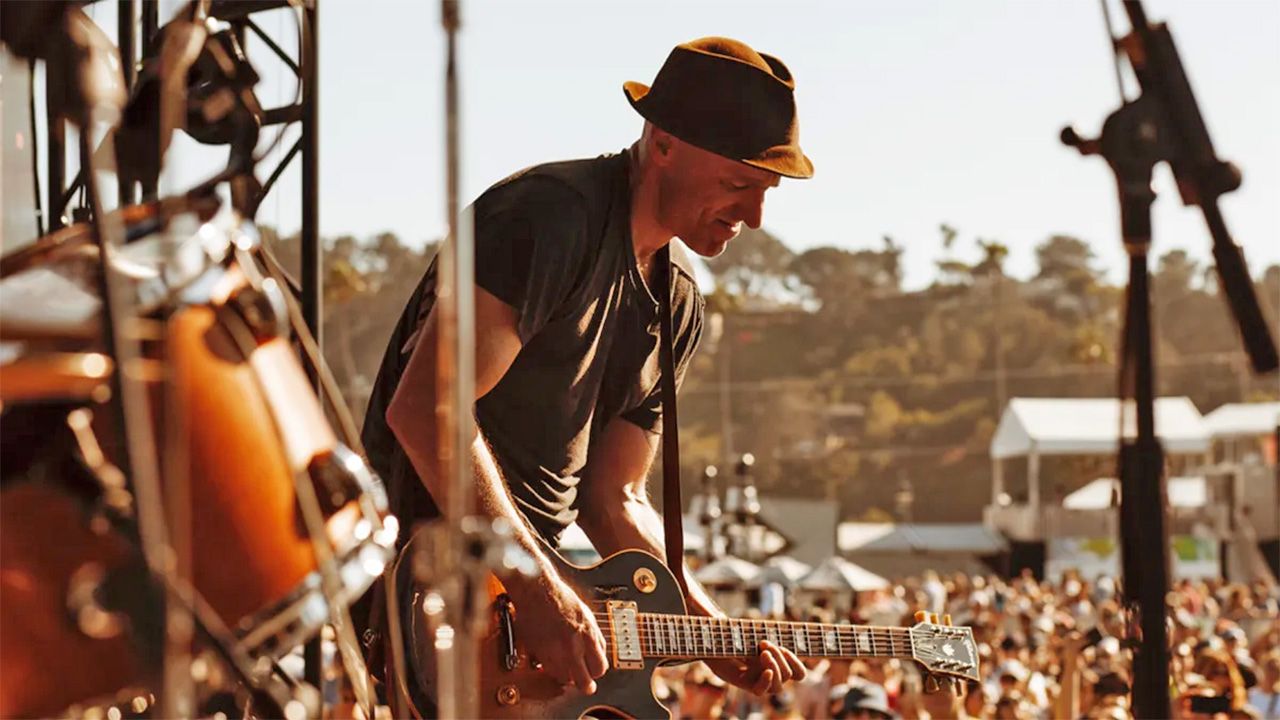
When Rogers Stevens recorded the guitars for Blind Melon’s 1992 hit No Rain he was 19 going on 20, and hardly prepared for what was to come. “I’d been playing seriously for about four years,” he tells Guitar World. “I was just starting to listen to other players in a way that was meaningful.”
No Rain originated before Blind Melon formed, when original bassist Brad Smith wrote and sang it while busking in Venice Beach with his girlfriend. When he brought it to his bandmates, the song became something bigger and better – but Stevens can’t single out what makes it technically great. “I don’t know anything about music theory,” he admits. “I don’t know the names of chords, necessarily.”
So when it came to recording, it was about feel above all else. “I do know I can find a major scale that’ll fit on any song, regardless of whether the song is in a minor key. I just move stuff around relative to that. That’s how I thought about it.”
With youthful exuberance to spare, and a kitschy music video that wouldn’t quit, No Rain peaked at number 3 on the US Billboard 200 chart in 1993, the year after its release.
“We didn’t really know what we were doing,” Stevens admits. “But we were lucky enough to have selected some good, loud, clean tube amps and cranked them up with good guitars.”
“We didn’t try to fuck with it too much. So it sounds like a very raw thing. It sounds right. I’m proud of it!”
I also remember we were listening to the Allman Brothers; and being from the South, I thought, ‘I could play in that style.’ Not as good as Dickey Betts – but that’s who I was kind of channeling.
Blind Melon – No Rain – YouTube
What gear were you working with at the time?
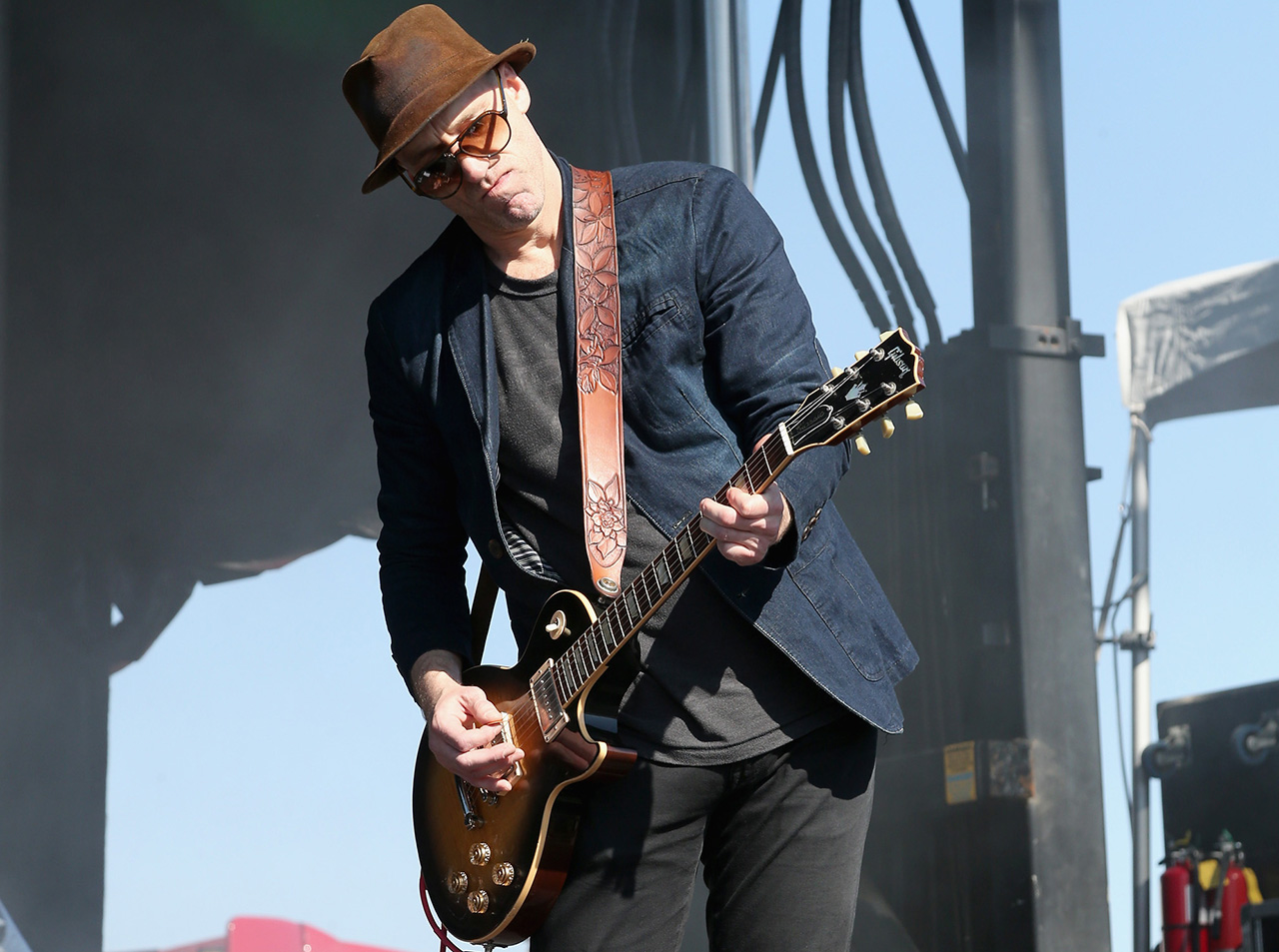
The gear on that song is different from what I was generally using at the time. I had a ’65 Fender Bassman that I used that on the entire first record, except for No Rain and Change.
The guitar I played was the yellow Strat you see in the music video for No Rain. I bought it the day we got our record deal. They gave us money and said, “You boys go buy some equipment,” and we took off down to Nadine’s Music on Santa Monica Boulevard. I’ll never forget that day – it was like a shopping spree at a music store!
If you didn’t use your Bassman, what amp did you use?
I used a ’65 Fender Champ that [rhythm guitarist] Christopher Thorn still owns. I used that amp on Change and No Rain. I also had one of those MXR delay pedals. It was green and had that sort of heavy metal box they used to make.
I did think No Rain was catchy – though we all thought Change was the more obvious hit
In which studio did you record No Rain, and how did it impact the tones you created?
We recorded at London Bridge Studios in Seattle with Rick Parashar. That room, with the same personnel, was where a bunch of records from that era were made, including Pearl Jam and Alice in Chains; and I think they did the Temple of the Dog record. We’d met all those guys right when they were starting.
A lot of people liked the way those records sounded. When we got our deal, Rick flew down to meet us in North Carolina, where we’d moved. We wrote the record there, then we flew up to Seattle.

It was all sight-unseen; and we just started recording the record in this space. But it had this great old Neve console there. We were fortunate that we had such a great room and a great desk.
No Rain’s solo has a song-within-a-song quality to it. Was that intentional?
Right – that was a thing I’d thought about. Our band was a little bit different than our peers because we were into Traffic, Cream and shit like that, where you kind of open it up.
In that situation we cut the whole record pretty much live, so there were two phases of it. One of them was that we got the amps in the room, and we’d open doors to get a little bleed-through and that kind of stuff.
But it was just that tiny little amp, which sounded great. It’s one of the greatest recording amps of all time. I had the Strat, and that’s what it sounds like – just the guitar straight into the amp. It’s very primitive.
Did you think No Rain was special the first time you heard it back?
At that age, you’re like, ‘Yeah, this is what we do!’ You think it’s great and you’re dumb enough to assume that other people will too. You get your heart broken over and over in the record business like that, you know?
Eventually you realize, ‘Oh, maybe that wasn’t so great’ – but with others, you think, ‘That one was really good!’ So, people reacted to No Rain for reasons unknown. I did think the song was catchy, though we all thought Change was the more obvious hit.
I saw a line of people wrapped way down the block. I thought maybe Bill Clinton was in town, but it was for our show
The music video with the “bee girl” character had a lot to do with No Rain’s success.
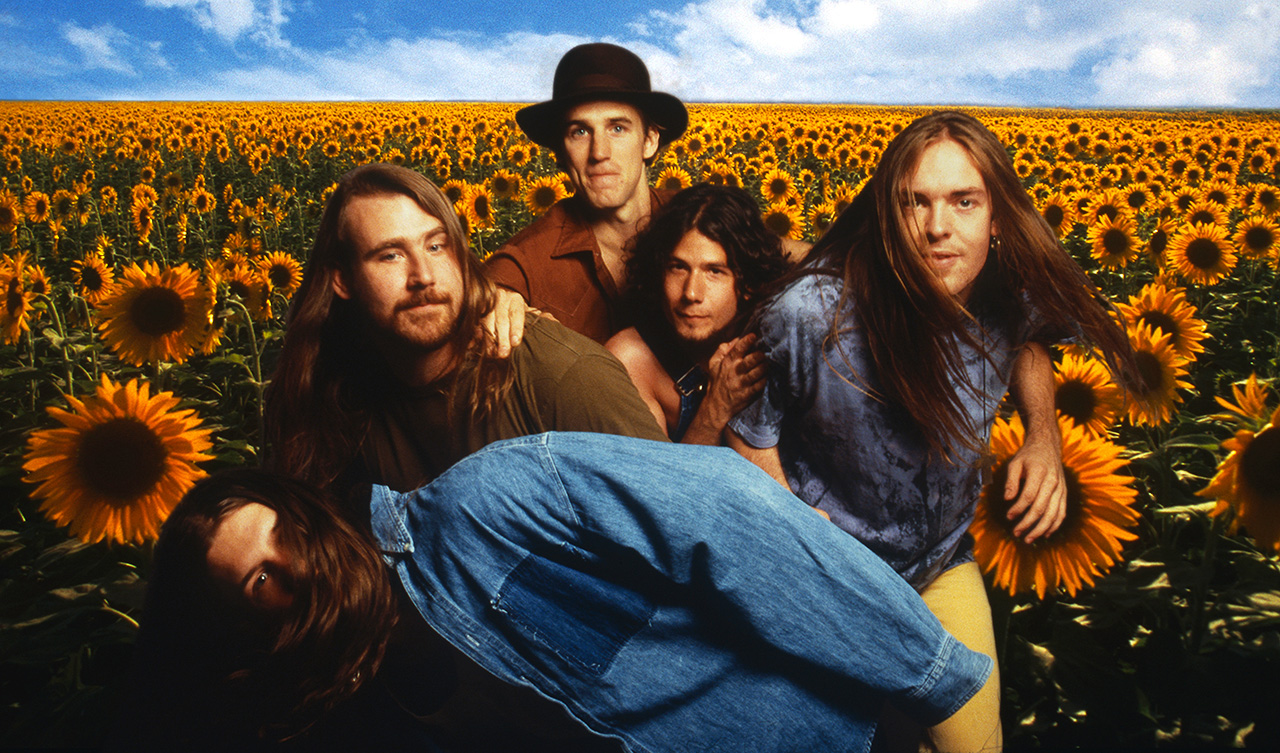
The video was a whole other thing. It was such a home run in terms of how it was presented. The only thing we told the director was, “Here’s our album cover – why don’t you use this image?” And that’s what he came up with. There’s something to be said for just ploughing forward with reckless abandon!
How did life change for you after No Rain became a hit?
Now I realize there hadn’t been much life yet, because I was just 20. We toured the record for a year before the song hit and wore ourselves out. But the label, to their credit, stuck with us; they were like, “We wanna try one more single. We really believe in the record.”

Capitol really did what they said they were going to do. We saw bands that didn’t get that level of commitment; but they let us make that video, and when I saw it, I knew it was gonna be a hit.
I’ll never forget being in the Midwest in the summer of ’93, seeing a line of people wrapped way down the block and around the building. I was like, “I wonder what’s going on? Maybe Bill Clinton or someone is in town?” But it was for our show! That was when I realized things had changed.
No Rain has stood the test of time. What does it mean to you now?
I look at it in the context of being a successful recording of a great song. It’s important to realize that the way these recordings were made is very different from what happens these days.
You hear what it sounded like in the room. It was not fucked with afterward. This is prior to autotune; it sounds real. I’m grateful we came along during a time before records went haywire. It’s recorded to tape, and for those reasons, it sounds right to me. And [late vocalist] Shannon Hoon – I mean, he was a superstar. Just one in a billion, basically.