Politics
What’s the point of a media smackdown if the cameras aren’t even rolling?
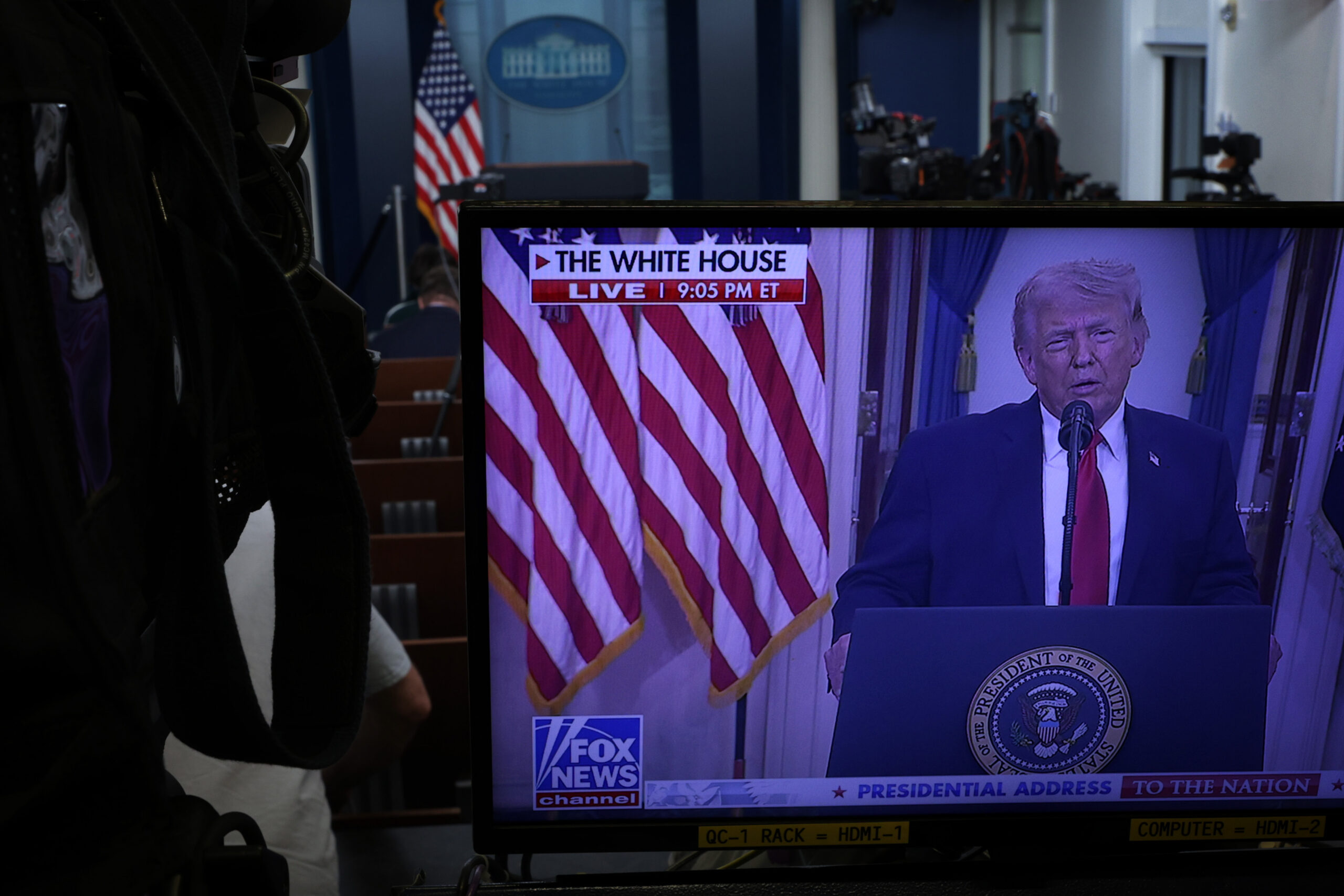
Photo by Alex Wong/Getty Images
More than a decade ago, it was a fashionable bit of media speculation that Donald Trump was really running for president to start something called Trump TV.
Instead of getting a media-company consolation prize after a loss, Trump was twice elected president and spent more than 10 years at the top of the Republican Party before we saw something actually debut under that name.
It’s an idea whose time has come as a result of Trump’s decision to pull the White House press credentials of three media outlets: POLITICO, CNN, and MSNOW (formerly MSNBC, when it was still under the umbrella of NBC).
The move triggered something approximating a cable news blackout of many of Trump’s official events, as the networks comprising the rotating White House television pool—Fox News, ABC News, CBS News, NBC News, and, of course, CNN—announced they were boycotting coverage in solidarity with their banned brethren.
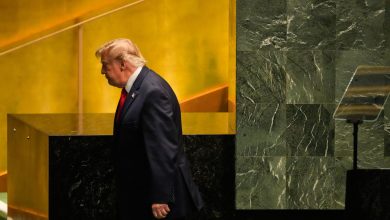
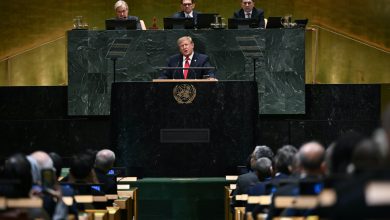
This in turn led to the bizarre spectacle of Trump appearing at a White House ribbon-cutting event before departing for the United Nations General Assembly in New York and being completely inaudible against the backdrop of an idling Marine One.
It was symbolic of the ways in which this so-called media ban is less than advertised, while still having some downsides for both the White House and the general public—downsides that are as predictable as, say, Iran closing the Strait of Hormuz.
Even if the scope of this move can be overstated, nobody in media of any stripe should want the government penalizing outlets for editorial judgments. Smaller, independent media outlets like the ones to which the Trump team has given unprecedented access have less ability to weather these kinds of restrictions than the larger corporate entities now targeted (as future, differently motivated administrations will surely note). The best way for the media to counteract these practices is for all outlets to stand together.
And the ban won’t do much to stop White House coverage Trump dislikes, or hamper the serious reporting done by POLITICO, CNN or MSNOW. Its main effect will be to impede these outlets’ coverage of White House events that serve to amplify Trump’s messaging. (This isn’t necessarily true of all such rules throughout the government.)
The White House can find other ways to get this content out to the general public (enter Trump TV) in a less filtered manner. But it’s not clear the reach will be as wide. It certainly won’t be exactly the same. The likeliest viewers of Trump TV will be the president’s diehard supporters, as well as a much smaller cohort of anti-Trump opposition researchers.
Trump has used wall-to-wall cable news coverage to his advantage. The same is true of testy exchanges with adversarial reporters (Vice President J.D. Vance has also made use of this). And Trump has been much more available to the press than his immediate predecessor, the former President Joe Biden.
Trump and the media have a weird love-hate symbiotic relationship. He has weaponized and boomeranged negative coverage against the press in a way that would have been unimaginable to Spiro Agnew in the early days of railing against the liberal media. He has been good for ratings and web traffic, even for the legacy media.
Whether that remains true all these years into Trump’s national omnipresence remains to be seen, which is why this might be an inopportune moment to pick this particular fight.
There is a broad public interest in Americans being able to easily see what the president is up to at the White House. Big press outlets might discover they don’t have as compelling an individual institutional interest in devoting so many resources to things that can be read, seen, or heard elsewhere compared to other forms of news-gathering (in which they have a greater competitive advantage).
When all is said and done, and the courts have had their say, this affair is unlikely to end much differently than Trump’s battle with CNN and its former anchor Jim Acosta during his first term.
Subscribe Today
Get daily emails in your inbox
And while many Americans may have little sympathy for the legacy media, this gambit probably joins the list of things that would play better if Trump didn’t have so many other political problems.
Under current conditions, this looks more like another example of the president having different priorities than the voters.
“I want my MTV!” was a popular marketing slogan for the premiere music video channel of the 1980s when it debuted. Will there be a similar battlecry for Trump TV?