- Women in conservation continue to face significant cultural and systemic challenges, despite efforts to address gender equality across the sector.
- Pressures can lead to burnout, stalled careers, and women leaving the industry, reducing the diverse perspectives experts say are essential to tackling global conservation challenges.
- Peer-support networks and woman-to-woman mentorship are increasingly providing women with safe spaces to share their experiences and advice, helping participants rise to leadership positions and build long-term careers.
- While these networks can fill existing sector-wide gaps, experts say broader institutional and societal changes are also required to create safe, inclusive and supportive working environments for all.
When Jessa Cabaay began working in marine conservation in the Philippines, she frequently found she was the only woman in the room. Her isolation meant she often felt anxious while presenting at stakeholder meetings, sensing her audience questioned her credibility.
“Most of the fishing communities I was working with were older and male,” Cabaay says, describing her experience of discussions on planning out marine protected areas (MPAs). “They didn’t listen the first few times I tried to talk to them.”
Cabaay says she observed that her male colleagues were rarely under the same pressure to prove their competence. Now the technical manager of Community Centered Conservation (C3), a Philippine-based nonprofit, she says the fishers’ skepticism likely reflected cultural beliefs held in many Philippine coastal communities that place women in domestic roles rather than professional ones.
“There are expectations that as a woman, you follow; you cannot lead,” she says. Lacking female colleagues to turn to for support and advice, Cabaay persevered largely alone through her early-career struggles.
Now, however, she finds strength and encouragement through a peer-support network that links female conservation professionals across Southeast Asia. Connecting with other women facing similar challenges has been a game changer, she says: “I realized I’m not struggling alone. We all feel the same.”
The initiative, the Network of Women (NOW), is led by the Asian Species Action Partnership (ASAP), a Singapore-based interagency coalition that focuses on critically endangered species of land and freshwater vertebrates. Launched in 2021, the program combines in-person leadership and well-being workshops with an online networking platform for its growing community of alumnae, all of whom work on ASAP-supported projects throughout the region.
Cabaay says being part of the alumnae network, known as the NOW Collective, has built her confidence in her own approaches to conservation work, which center around cooperation, listening and empathy. This has helped her earn the trust of the fishing communities she works with, she says. “I don’t need to change who I am in order to lead. Gentleness can be a powerful tool in conservation.”


Women among those most at risk of job-related distress
Cabaay’s experience of professional isolation isn’t an anomaly. Despite efforts to address gender equality across the conservation sector, research shows women remain underrepresented in leadership roles and continue to face significant cultural and systemic challenges.
A 2023 study that surveyed more than 2,300 conservation professionals across 122 countries found women were among those most at risk of psychological distress. Research also shows that 29% of women conservation workers said they had missed out on career advancement opportunities because of their gender.
Women in conservation are disproportionately impacted by multiple barriers. These include sexual harassment and fear of retaliation; inadequate safety in fieldwork; pay gaps; limited access to career progression; and insufficient support to balance irregular working hours with caregiving and family expectations.
Studies indicate that for many, these pressures can lead to burnout, stalled careers, and the decision to leave the industry altogether. Meanwhile, the perception of conservation as a male-dominated field across many parts of the world means many women don’t envision it as a realistic career option.
However, a growing body of evidence suggests solutions exist in peer-support networks and woman-to-woman mentorship like the NOW initiative Cabaay joined. By providing safe and empowering spaces for women professionals to share their experiences and advice, these cross-sector platforms can fill the support void many women currently experience, experts say.
“Finding a community allows women to share experiences, realize that others have faced similar situations, and build the support networks that are often missing institutionally,” says Marcela Márquez-García, a social scientist at the Austral University of Chile, who studies gender-based barriers in Latin America and isn’t involved with the NOW program. “In many cases, simply having a safe space to talk openly can reduce isolation and strengthen confidence to remain in the field.”
While such platforms are well established in other industries with low proportions of women, such as construction and technology, they’ve been largely absent from conservation until recently.
Participants in women-led networks and mentorship initiatives from Latin America to Southeast Asia report improvements in well-being and confidence and a deeper sense of belonging in the sector where they’d previously felt alone.


Women’s inclusion enhances conservation outcomes
Given the scale of the global biodiversity and climate challenges, Márquez-García says it’s critical for the conservation sector to draw on the broadest possible range of viewpoints to develop effective solutions to global biodiversity and climate challenges.
“Gender diversity provides a wider range of perspectives, which directly enhances collective creativity, innovation, and knowledge generation,” she says.
In Southeast Asia, one of the world’s most biodiverse regions, conservation already grapples with funding gaps, worsening ecological crises, and geopolitical instability. Experts say the sector’s failure to secure women’s participation can further undermine conservation efforts.
“Conservation can achieve better results when there’s diversity of thought and lived experiences,” says ASAP director Nerissa Chao. “If women aren’t being actively engaged, we’re losing a hugely important part of the workforce.”
Research shows the inclusion of women consistently boosts the success of conservation initiatives, driving positive outcomes for species conservation, habitat restoration, and more equitable sharing of benefits.
In South Africa, gender-balanced ranger teams have been shown to improve the relationships and trust between the rangers who enforce local laws and surrounding communities. In El Salvador, collaborative efforts by women-led protection programs have reduced turtle poaching and enhanced turtle reproductive success. And in Indonesia, a study found women farmers are nearly twice as effective as older men at convincing their peers to adopt new farming practices, spotlighting their critical role in implementing sustainable agriculture programs.


Women’s leadership in Southeast Asia
Boosting women’s influence in conservation decision-making across Southeast Asia is a major motivation behind the NOW initiative, Chao says. As a conservation funder, ASAP had observed the lack of support mechanisms for women in the conservation sector across the region, and noted that traditional gender expectations deeply rooted in local cultures limited many women’s agency to seek leadership opportunities.
“Women aren’t necessarily encouraged to speak out or push back against the systems in place,” Chao says. “So it’s about removing some of the barriers women face, supporting them to reach their full potential, and ensure we’re not losing talented people from the sector.”
So far, two cohorts of participants have received in-person leadership and communication skills training in Cambodia and Laos. Graduates then continue to receive long-term support and further skills development through the alumni network platform, the NOW Collective.
Akchousanh Rasphone, conservation director for WWF-Laos, is a member of the collective. “What makes a difference is having colleagues who believe in you and give you opportunities and show they believe you can do it,” she says, adding she’s been fortunate to have relatable women role models in leadership positions throughout her career working for international NGOs. However, many sectors in Laos, from the government to conservation, remain male-dominated spaces, she adds. Platforms like the NOW network are crucial for women working in such circumstances, she says.
For Mai Doan, chief operating officer for Conservation Vietnam and also a NOW Collective alumna, learning how to protect her energy and well-being has been a major boon. As a mother of two young children and the firstborn child in a Vietnamese family, she has hefty family care responsibilities that make balancing long and irregular fieldwork hours a challenge. While she says her family often sees her as “crazy” for trying to save the planet, she found solidarity with other women dealing with the same issues. “We’re all doing our duty, our responsibility for this planet.”
Mai Doan says she’s learnt through the network to delegate tasks to preserve her energy and to be fully present in each part of her life, whether it’s family time or work. “My children have even become more empowered,” she says. “They often tell me, ‘Mommy, you go save the animals, we’ve got this.’”
Through the network, other delegates have found ways of coping with the psychological toll of their work. Conservation work implicitly involves witnessing ecological destruction in real time. Whether it be observing forest encroachment, coral reef bleaching, or fewer birds returning to breed each year, the emotional burden can be tough to bear.
“In conservation, you take care of the environment, you take care of the species you’re working with, but you tend to neglect taking care of yourself,” Cabaay says. “I realized that first you have to take care of yourself in order to fully take care of what you’re fighting for.”


Broader changes also required
While peer networks, mentorship and leadership coaching can help women overcome some of the cultural and societal barriers they face, experts say broader institutional and societal changes are still needed to achieve true gender equality across the sector.
“Conservation organizations, governments, and academic institutions should have gender-aware policies and protocols to safeguard working environments that support individual’s self-identification, avoid harassment, and value men and women’s work equally,” Márquez-García says. This includes antiharassment policies, safe reporting mechanisms, and flexible work arrangements that allow for family and child care.
Improving fieldwork conditions for women is especially relevant in Southeast Asia, according to Sheherezade, co-executive director of the Indonesia-based Sulawesi Regional Ecological Conservation Initiative (PROGRES). It’s up to conservation organizations to ensure safety protocols that create diverse, inclusive, and equitable fieldwork conditions are properly implemented, she says. “Women can feel very vulnerable in the field. And of course, if they don’t feel safe, they want to leave.”
Experts also say conservation funders have a duty to ensure the organizations they support have policies in place to create supportive and inclusive working environments for all. “It shouldn’t just be up to women to change things,” Sheherezade says.
This is where men have a particular role to play as allies, by recognizing and addressing the barriers women face, ensuring workplace cultures are inclusive, and flagging instances where gender-equality policies are poorly implemented.
The NOW initiative itself also faces its challenges. While the program is part-funded by Mandai Nature, a Singapore-based conservation organization, its future depends on securing long-term funding to sustain and support its growing network.
For now, Márquez-García says each barrier challenged and overcome is an achievement in itself, and one that can enhance the likelihood of positive conservation outcomes.
“Ultimately, the future of conservation science and practice rests entirely on the ability to dismantle systemic barriers and provide more diverse, inclusive, and equitable spaces.”
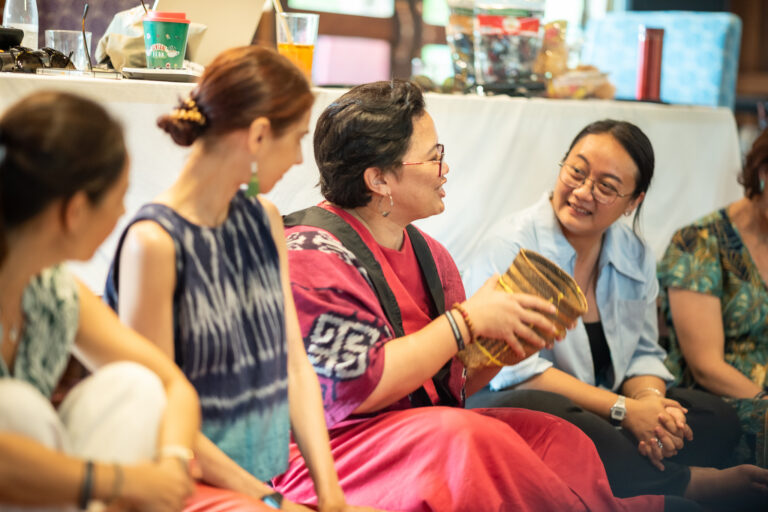
Banner image: Women conservationists sharing at a support network meeting in Southeast Asia. Image courtesy of ASAP.
Carolyn Cowan is a staff writer for Mongabay.
Citations:
James, R., Fisher, J. R., Carlos-Grotjahn, C., Boylan, M. S., Dembereldash, B., Demissie, M. Z., … Butt, N. (2023). Gender bias and inequity holds women back in their conservation careers. Frontiers in Environmental Science, 10. doi:10.3389/fenvs.2022.1056751
Sheherazade, Tsang, S. M., & Lanusi, A. A. (2022). The power of woman-to-woman mentorship in creating long-term changes in biodiversity conservation in Southeast Asia. Frontiers in Conservation Science, 3. doi:10.3389/fcosc.2022.1006437
Maas, B., Pakeman, R. J., Godet, L., Smith, L., Devictor, V., & Primack, R. (2021). Women and Global South strikingly underrepresented among top‐publishing ecologists. Conservation Letters, 14(4). doi:10.1111/conl.12797
Pienkowski, T., Keane, A., Castelló y Tickell, S., De Lange, E., Hazenbosch, M., Khanyari, M., … Milner‐Gulland, E. J. (2023). Supporting conservationists’ mental health through better working conditions. Conservation Biology, 37(5). doi:10.1111/cobi.14097
Márquez-García, M., Nuñez-Godoy, C., Eguren, A., Segovia-Salcedo, C., Carrasco-Rueda, F., Püschel, N., … Branch, L. C. (2024). Overcoming gender-related challenges and supporting women in conservation in Latin America. Biological Conservation, 294, 110625. doi:10.1016/j.biocon.2024.110625
Jones, M. S., & Solomon, J. (2019). Challenges and supports for women conservation leaders. Conservation Science and Practice, 1(6). doi:10.1111/csp2.36
Chapman, M., Turner, N. J., & Kark, S. (2026). Women’s local knowledge: An important factor in effective community-based wildlife management. Journal of Environmental Management, 400, 128559. doi:10.1016/j.jenvman.2026.128559
Massey, L. M., Camerden, P. M., Gaos, A. R., Liles, M. J., Seminoff, J. A., & Ahern, A. L. (2021). Challenging gender inequity in wildlife conservation: A women’s group leading sea turtle conservation efforts in El Salvador. Local Environment, 27(1), 1-15. doi:10.1080/13549839.2021.1997962
See related story:
Culture of harassment persists for women in Southeast Asia’s conservation space
FEEDBACK: Use this form to send a message to the author of this post. If you want to post a public comment, you can do that at the bottom of the page.
Cite this article
Carolyn Cowan (2026). In Southeast Asia, peer-support network boosts women’s well-being in conservation. Mongabay Conservation news. DOI: https://doi.org/10.66709/news-322529