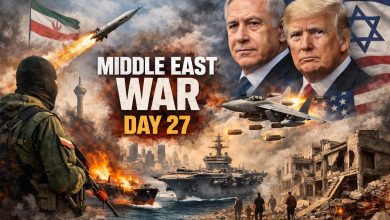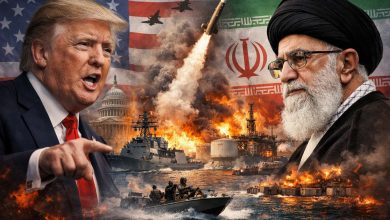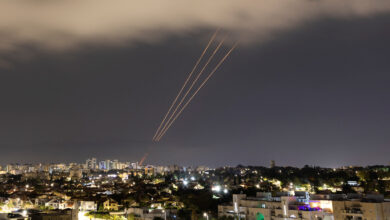
The current crisis involving Iran, Israel, and the United States is no longer just a tense regional standoff. It has turned into a wider conflict with military strikes, retaliation across the region, economic shock risks, and growing concern from Europe and Gulf states. According to the latest reporting and official statements, the war began on 28 February 2026 when the US and Israel launched strikes on Iran, targeting leadership, security forces, nuclear-related facilities, missile sites, and other military assets. Iran then responded with counter-strikes on Israel, US-linked targets, and locations in Gulf states hosting US forces.
For readers trying to understand it simply, the core issue is this: Israel says Iran is a growing military and nuclear threat; the US says Iran threatens its security and regional allies; Iran says it is defending itself against illegal attacks; Europe says the conflict must not spiral into a broader regional war.
Quick Answer: What Is Happening in Iran Right Now?
Right now, the conflict is in its second week, with continuing strikes, uncertainty over casualties, and no clear political endgame. Reuters reports that Iran and Israel are still trading attacks, while Iran has also tried to calm neighboring states by apologizing for strikes that hit Gulf civilian targets. At the same time, analysts say the US has not clearly explained what “victory” would look like if the war continues.
What Is Iran Fighting For?
From Iran’s stated position, it is fighting for regime survival, deterrence, and self-defence. Iranian officials have described the US-Israeli attacks as a breach of the UN Charter and say Iran will continue acting in self-defence for as long as the attacks continue. Iran has also warned that US and allied bases in the region could be targeted, and it has used strikes to raise the cost of the war for its opponents and their regional partners.
In practical terms, Iran’s main objectives appear to be:
1. To stop outside attacks and preserve the state
Iran’s leadership is trying to avoid collapse and show that it can still respond militarily despite heavy blows. Reuters notes that even after major losses, Iran has continued retaliatory attacks and tried to widen pressure on its enemies through the region.
2. To maintain deterrence
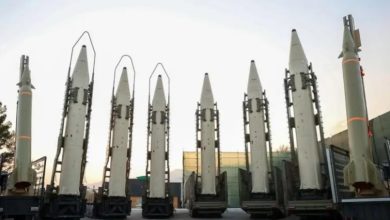
Iran wants rivals to believe that attacking it will trigger broader regional costs, including risks to shipping, oil flows, and neighboring states that host US assets. Official EU language also reflects concern about maritime security and the Strait of Hormuz, which shows how central deterrence and economic pressure are to the crisis.
3. To avoid total isolation
Iran’s apology to neighboring Gulf states suggests it understands the danger of driving more regional governments into open support for US-Israeli operations.
What Is Israel Fighting For?
Israel says it is fighting because it sees Iran as a direct and growing threat, especially in relation to nuclear development, ballistic missiles, and armed groups backed by Tehran across the region. In the UK Parliament research briefing, Israeli Defence Minister Israel Katz described the operation as a “pre-emptive attack”, while Prime Minister Benjamin Netanyahu said Iran was rebuilding its nuclear and missile capabilities and that operations would continue “as long as necessary.”
In simple terms, Israel’s aims appear to be:
1. To weaken Iran’s nuclear capability
Israel argues that Iran’s nuclear programme cannot be allowed to advance further. This is central to both Israeli and US public justification.
2. To reduce Iran’s missile threat
Iran’s missile capacity is treated by Israel as an immediate operational danger, not just a future risk.
3. To damage Iran’s regional influence
Israel also wants to weaken the network of armed groups and allied forces linked to Iran across the Middle East. The briefing and Reuters both reflect this wider strategic goal.
4. Possibly to push political change in Iran
Some of the rhetoric from both Washington and Israeli officials goes beyond military containment and edges toward regime change. That does not mean there is a settled, internationally agreed plan for what comes next, but it does suggest that some leaders see political transformation inside Iran as part of the desired outcome.
Why Is the USA Involved Too?
The United States says it is involved because Iran threatens core US national security interests, including regional bases, shipping routes, allies, and the possibility that Iran could become more dangerous militarily. The US position, as summarized in the Commons Library briefing and Reuters, is that Iran’s nuclear and ballistic missile programmes had to be checked after diplomacy failed in February.
The US has publicly framed its goals as:
- destroying Iran’s ballistic missile capability
- degrading or demolishing military infrastructure
- weakening Iran’s ability to arm proxy groups
- preventing Iran from obtaining a nuclear weapon
At the same time, Reuters reports that analysts see a problem: the White House has offered shifting messages on whether the real goal is simply military degradation, broader coercion, or regime change. That uncertainty matters because it affects how long the war could last and whether diplomacy is still realistic.
What About Other Countries?
Gulf Countries
Gulf states are in a difficult position. Many host US military assets, which makes them strategically important, but they also want to avoid becoming battlegrounds. Iran’s strikes on Gulf targets increased pressure on them to respond, while Iran’s later apology suggests Tehran wants to stop more Gulf states from fully aligning with Washington and Israel.
The UK
The UK has not taken part in the offensive strikes, according to the Commons Library briefing, but it has used military assets in a defensive role, including intercepting missiles and protecting bases. The UK, France and Germany have also called for diplomacy while maintaining their longstanding demand that Iran end its nuclear and ballistic missile escalation and stop backing armed groups abroad.
European Union
The EU position is more cautious than a war posture. Officially, the EU says:
- Iran must curb its nuclear programme
- Iran must curb its ballistic missile programme
- civilians must be protected
- international law must be respected
- maritime security must be preserved
- the conflict must be de-escalated
- the EU will continue sanctions and diplomatic efforts to stop Iran from acquiring a nuclear weapon
So Europe’s main desire is not open war. It is regional stability, civilian protection, controlled pressure on Iran, and avoidance of a wider collapse that would hurt Europe economically and strategically. Reuters reports that German Chancellor Friedrich Merz warned against the spread of war and stressed both stopping Iran’s military programmes and preserving Iran’s territorial integrity to avoid wider chaos.
What Do European Countries Mainly Want?
European countries do not all use identical language, but the broad line is clear:
1. No Iranian nuclear weapon
That is one of the few points on which Europe, the US, and Israel overlap in public language.
2. No regional collapse
Europe fears a prolonged war could disrupt trade, energy, migration patterns, and broader Middle East security. EU statements explicitly warn about economic fallout and disruption to key waterways such as the Strait of Hormuz.
3. No uncontrolled escalation involving Europe
Iran has warned that European countries joining US-Israeli attacks would become legitimate targets, which raises the stakes for any deeper direct European military role.
4. More diplomacy, even while keeping sanctions
Europe is combining condemnation, sanctions pressure, and calls for de-escalation rather than openly embracing a maximalist war objective.
What Is the Main Desire of Each Side?
A simple summary looks like this:
Iran’s main desire
To survive, stop outside attacks, preserve deterrence, and avoid internal collapse while still showing strength.
Israel’s main desire
To break Iran’s ability to threaten Israel through nuclear progress, missiles, and regional armed networks.
USA’s main desire
To weaken Iran militarily, prevent a nuclear breakthrough, protect US regional interests, and force a strategic outcome favorable to Washington, though the final political end-state remains unclear.
Europe’s main desire
To prevent Iran from becoming more dangerous militarily while also avoiding a drawn-out regional war that damages Europe’s security and economy.
Gulf states’ main desire
To stay safe, avoid being dragged deeper into the war, and protect infrastructure, trade, and domestic stability.
What Is the Current Result So Far?
At the moment, the result is not a clear victory for anyone. The most accurate summary is:
- the war has moved into a second week
- Iran has taken severe losses but continues to retaliate
- Israel and the US have inflicted major military damage but have not produced a stable political outcome
- Gulf states and Europe are trying to limit spillover
- energy and shipping risks have increased sharply
- diplomacy is not fully dead, but it is not yet back in control
Reuters also reports that tanker traffic through the Strait of Hormuz has halted, raising the risk of wider economic consequences if disruption continues. Analysts cited by Reuters say the conflict could become prolonged and that Washington still lacks a clearly articulated endgame.
Why This Matters to the Rest of the World
This crisis matters globally because it affects:
- oil and gas prices
- shipping routes
- air travel and trade
- regional security
- Western domestic politics
- global inflation risk
That is why countries outside the immediate battlefield are reacting so strongly. Even governments that are not directly fighting have a lot to lose if this becomes a wider regional war.
The current Iran crisis is not just one country fighting another. It is a conflict about security, deterrence, power, regional influence, political survival, and the future balance of the Middle East. Iran wants to survive and resist. Israel wants to neutralize what it sees as an existential threat. The US wants to shape the outcome while protecting its strategic interests. Europe wants restraint, security, and de-escalation before the costs become even bigger. As of now, the military campaign is active, the political result is unresolved, and the danger of wider escalation remains high.
FAQ
Why are Iran and Israel fighting?
Israel says Iran’s nuclear ambitions, missile capability, and support for armed groups make it a direct threat. Iran says it is defending itself against illegal attacks and foreign aggression.
Why is the USA involved in the Iran conflict?
The US says Iran threatens its security interests and regional allies and that diplomacy failed to stop Iran’s nuclear and ballistic missile progress.
What does Europe want in the Iran crisis?
Europe wants de-escalation, protection of civilians, continued pressure on Iran’s nuclear and missile programmes, and avoidance of a wider regional war.
Are other countries involved too?
Yes. Gulf states have been affected because some host US forces, the UK is involved defensively, and EU countries are responding diplomatically and through sanctions.
Has anyone won yet?
No clear side has achieved a settled political victory. The war is continuing, and the end result remains uncertain.
Could this become a bigger regional war?
Yes. That is one of the main fears expressed by European leaders, Gulf states, and analysts because of the risk to trade, shipping, civilian safety, and regional stability.