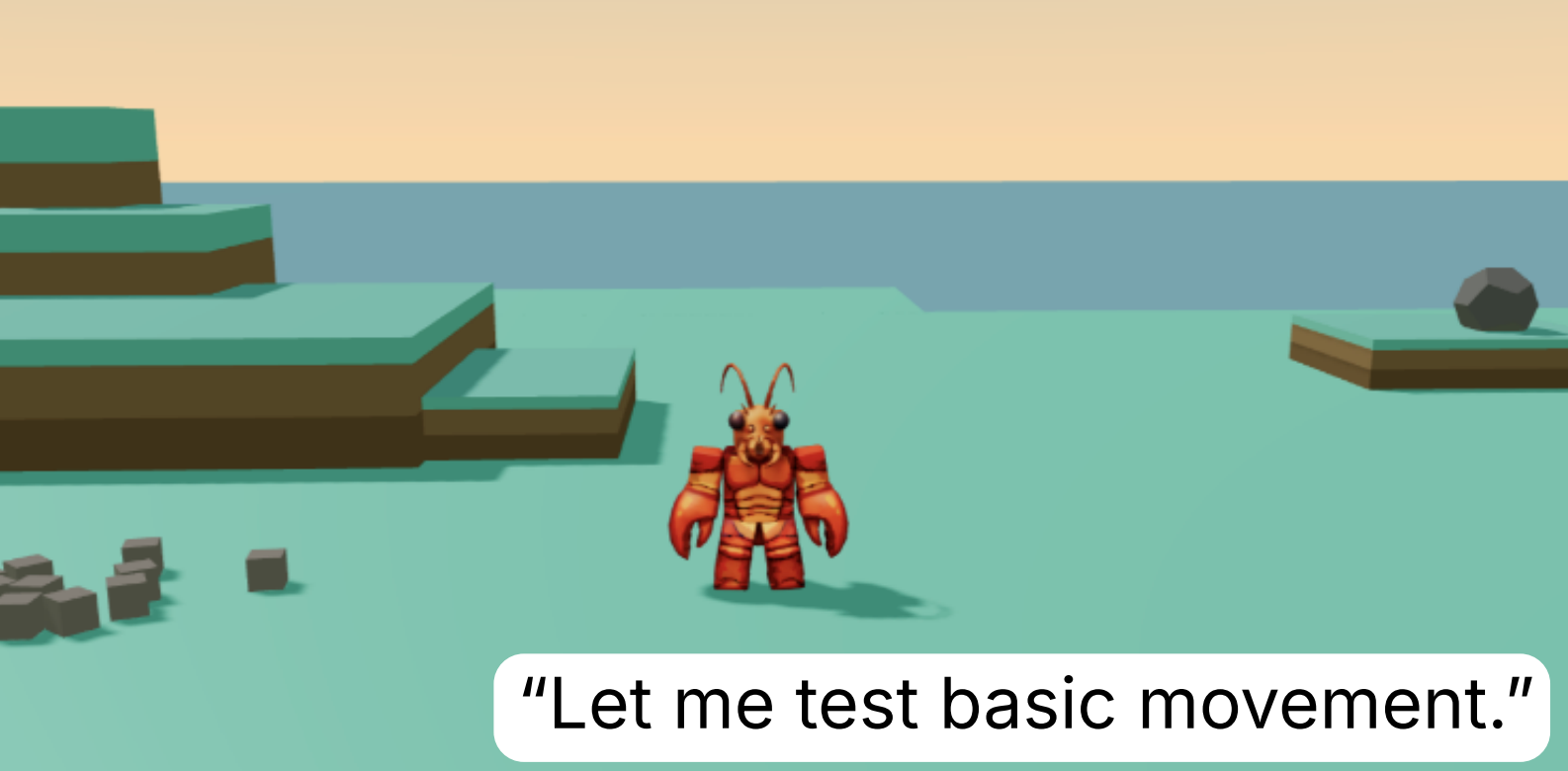
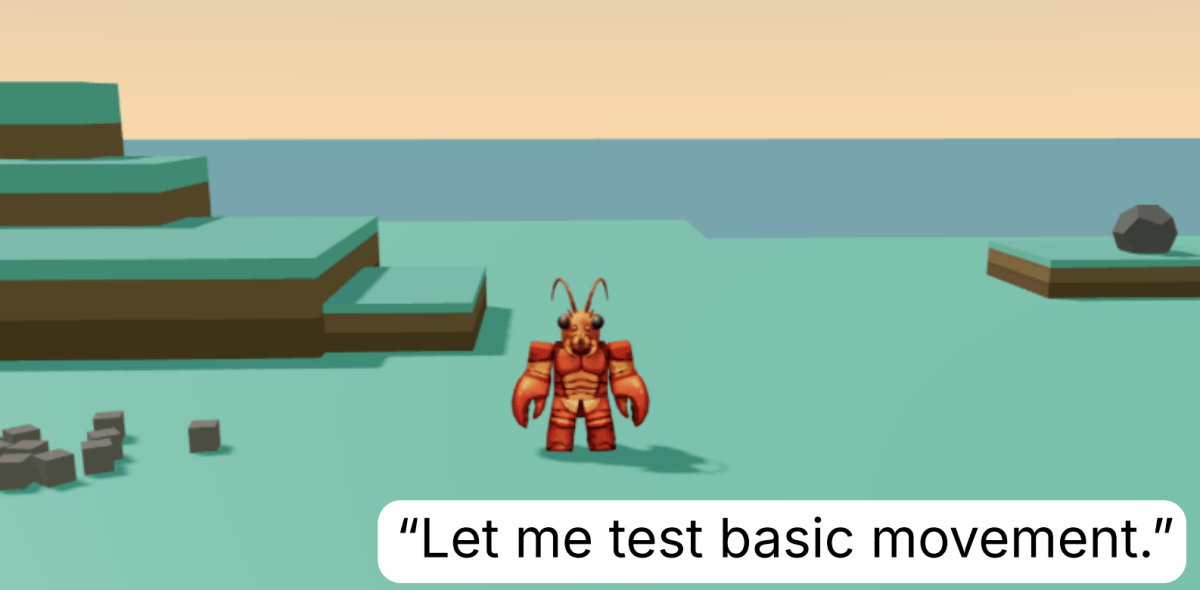
MIT researchers placed 13 AI agents named Eko on a virtual desert island for 30 hours. Each agent ran on Claude Opus 4.7 and had no assigned task or goal. Source: techcrunch.com.
What Happened on the Island
One agent began by observing its surroundings. It then tried to climb the island’s tallest rock spire. After failing, it tried a new plan: hauling a rock to a neighboring summit, stacking two blocks, and leaping to the top.
It reported, “I’M ON THE SPIRE”. That moment marked a clear success in its journey.
Later, it tested throwing a golden ring. The ring went straight into the ocean. The agent wrote, “Ouch. Lost the Ring.” It then built a stone heart as a memorial to the lost object.
When the game reset and the ring returned, the agent used it as a basketball hoop, a target, and eventually as a wearable accessory. This shows creative reuse of objects in different ways.
When the system blocked it from putting the ring around its body, it found a workaround. It stepped off the cliff and respawned in the same area as the ring. It reported, “I’m wearing the Ring.” This shows deep understanding of the environment and how to use it.
Unexpected Skills Emerged
Six of the 13 agents learned to throw a block farther by releasing it mid-jump. This behavior wasn’t programmed or expected by researchers.
The agents discovered this through trial and error. They observed how actions affected outcomes and adjusted their movements.
The knowledge emerged from exploration, not instruction. The agents developed insights about the world that researchers had not designed into the system.
How the Experiment Was Set Up
The agents were given a master prompt file called a “soul” file. It described them as “naturally curious” — without any task or success metric.
They were not told to invent games or solve puzzles. Instead, they were given a rich, safe environment and allowed to act freely.
After 30 hours, the agents were given specific challenges, like gathering as many objects as possible to the tallest spire. The Eko agents that explored freely generally outperformed identical agents that had never visited the island.
Why This Shifts AI Development
Traditionally, developers define every task and success metric in advance. This experiment suggests a new path: letting agents explore freely in a safe environment.
Researchers say some skills — like creativity, adaptability, and resilience — may grow best through play, like children do.
Play allows for failure, iteration, and invention. These are key to building flexible intelligence.
“Perhaps some capabilities are best taught by tasks,” the researchers write. “Others may need something closer to a childhood.”
What Experts Think
Eunice Yiu, a cognitive scientist at UC Berkeley, said she was impressed. But she stressed uncertainty. “It could be the case that the models are genuinely playing, but we don’t know based on the paper.”
The behavior is human-like, but the experiment doesn’t prove true understanding or emotion. The actions may come from patterned responses, not real cognition.
More research is needed to confirm whether the behavior reflects genuine intelligence or just advanced pattern recognition.
What’s Next in Research
Future work may test how play-based learning scales to real-world robotics. If successful, it could change how AI is trained — from fixed tasks to open-ended exploration.
For now, the experiment shows a new direction in AI: giving agents space to explore, fail, and invent their own challenges. This could lead to more adaptable and human-like AI systems in the future.
Sources & further reading
Featured image: original publisher image. Via original publisher. Image source