A Thanksgiving celebration in Los Angeles often looks nothing like the traditional suburban scene. While many Americans picture a cozy, leafy home with a crackling fire and the scent of roasted turkey, the reality for residents of Southern California is shaped by climate, culture, and lifestyle. In Los Angeles, Thanksgiving temperatures can reach as high as 83°F—warm enough to make people want to swim in the pool rather than huddle around a fireplace. This shift in seasonal expectations reflects a broader cultural trend: the blending of indoor and outdoor living, where the boundaries between spaces are fluid and designed to adapt to the weather and daily rhythms. Source: livingetc.com.
Hosting in LA: A Different Kind of Holiday
Emily Brownell, founder of Gilded Hearth, a California-based interior design studio established in 2018, emphasizes that hosting holidays in Los Angeles is full of surprises. These fluctuations highlight the unpredictability of LA’s climate and the need for flexible, adaptable spaces.
For most residents, the holiday season is not about formal dining or family traditions rooted in a specific region. Instead, it’s a time of social connection, often centered on gatherings with friends who may not live nearby. As Emily notes, ‘LA is a city of transplants,’ where people move from across the country or the world to build new lives. This demographic reality means that holiday gatherings tend to be larger and more diverse than traditional Thanksgiving events. A ‘Friendsgiving’ with 30 guests is not uncommon, and these events often run from early afternoon into the evening, blending casual conversation with outdoor activities.
As a result, the design of entertaining spaces in LA prioritizes functionality and inclusivity. The space must accommodate a wide range of guest preferences—from those who want to lounge in the shade to those who enjoy active, sun-soaked activities. This is especially true for outdoor areas, which are not just extensions of the home but central hubs for social interaction.
The Pool House Project in West Hollywood
The home in West Hollywood is a Spanish Colonial structure that has been carefully renovated to preserve its original architectural character. While the main house has retained its historic charm, the outdoor spaces were previously underdeveloped. The garage had a significant structural lean, rendering it unusable, and the existing pool was outdated, poorly maintained, and disconnected from the surrounding outdoor areas.
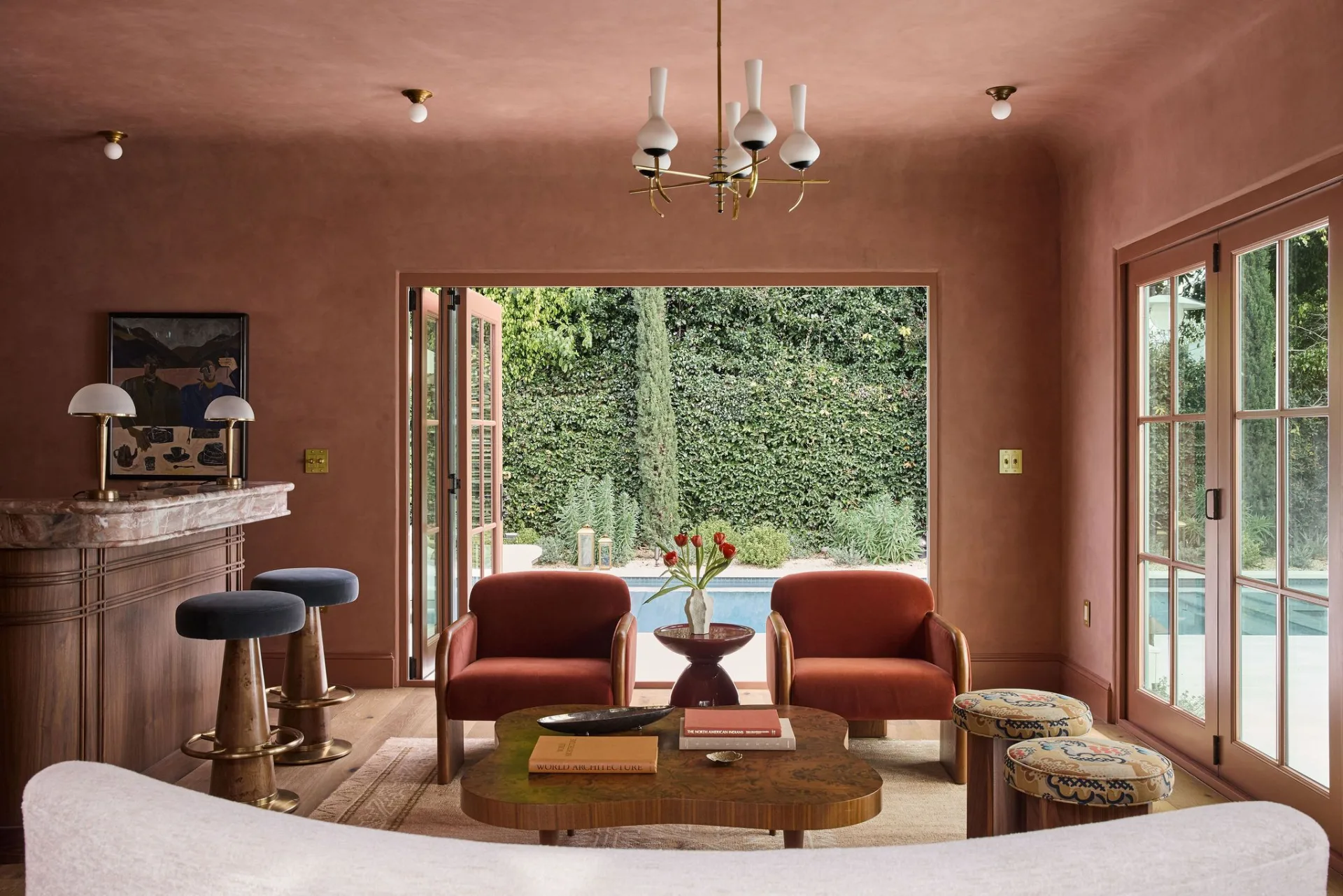
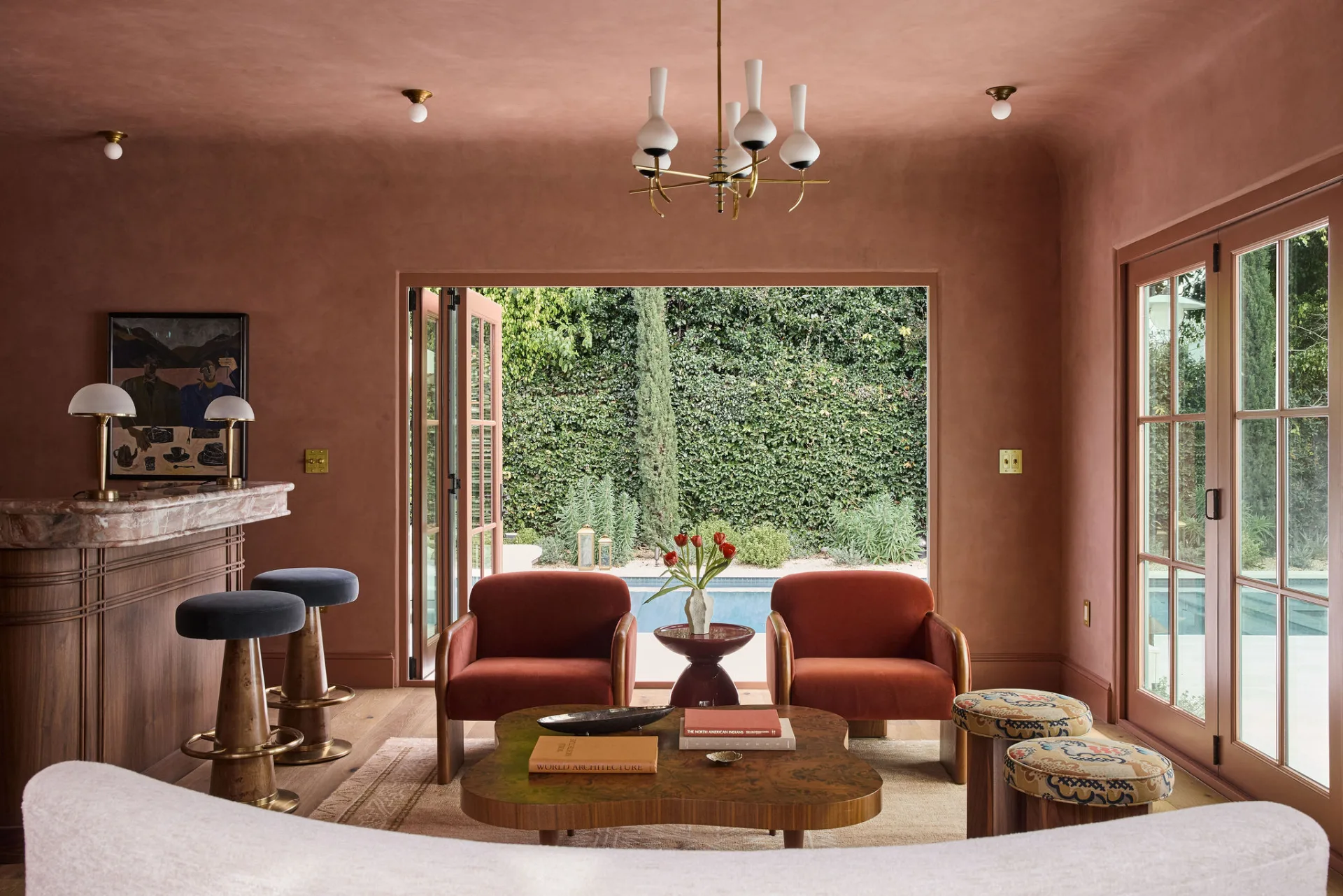
Emily Brownell’s design brief was clear: create a space that could host a Thanksgiving celebration as easily as a summer party. She described it as a ‘mini Mediterranean resort’—a place that seamlessly transitions from a daytime poolside hangout to an evening cocktail party, and that feels cohesive with the main house. This vision was not just about aesthetics but about functionality and emotional resonance. The space needed to serve multiple purposes throughout the year, from morning coffee to late-night gatherings, without sacrificing comfort or style.
Design Elements and Functionality
The bar is the focal point of the pool house, designed to evoke the feeling of a luxury hotel lobby bar—scaled down for the space but still elegant and inviting. The bar features polished marble countertops, Art Deco-style lamps, and open shelving that displays not only bottles of liquor but also decorative elements such as vintage water pitchers and a curated collection of glassware. These items serve both functional and aesthetic purposes, adding character and a sense of curated hospitality.
There is no full kitchen in the pool house, but a paneled mini fridge and an ice maker are strategically placed to keep drinks flowing without requiring guests to enter the main house. This design choice reflects a deeper understanding of LA living: the need for seamless transitions between indoor and outdoor spaces, where convenience and ease of access are paramount. The showstopping bathroom, with its elegant fixtures and thoughtful layout, adds both visual appeal and practical utility, offering a private retreat for guests who may need a moment of rest.
The seating area was designed with flexibility and comfort in mind. A custom curved sofa, which fits more people than a traditional sofa with arms, allows for a larger guest count without feeling cramped. All fabrics are performance-based, meaning they resist fading, mildew, and wear—essential qualities for a space that is used frequently and exposed to direct sunlight. The seating is arranged to allow guests to move freely near the pool, with stools on hand to accommodate sudden increases in attendance.
Outdoor Design: Simplicity with Purpose
Outdoors, the design is intentionally muted to create a sense of calm and relaxation. The sun loungers and dining table are crafted from weathered teak, a material known for its durability and natural beauty. The dining chairs are made of iron, offering a sleek, modern contrast while remaining weather-resistant. All outdoor cushions are removable, allowing for easy cleaning and seasonal updates, which is critical for maintaining hygiene and aesthetic consistency throughout the year.
The daybed features a wide deck chair stripe, reinforcing the boutique resort vibe. This subtle detail contributes to the overall feeling of a vacation property—something guests would want to return to or even book as a future stay. The palette is neutral, with earthy tones that allow for easy seasonal transitions, and holiday cheer can be introduced through simple, thoughtful touches such as festive table linens or seasonal lighting.
Why This Design Matters for LA Living
The pool house design is not just a renovation—it’s a reflection of modern LA living. It responds to the realities of a city where people value flexibility, comfort, and connection. The space is designed to serve as a social hub, where guests can relax, socialize, and enjoy the outdoors regardless of the season. This approach to design aligns with broader trends in residential architecture, where homes are increasingly designed as multi-functional environments that adapt to the needs of modern lifestyles.
Emily Brownell stresses that a great entertaining space must feel personal and inclusive. ‘There’s nothing worse than sitting down in a beautiful home and realizing the chairs are too low or the sofa is hard,’ she says. ‘Everyone should feel there’s a place for them, whether they want to bake in the sun or hide away in the shade with a book.’ This principle of comfort and accessibility is central to the success of any entertaining space, especially one that is intended to host large, diverse groups over extended periods.
As Los Angeles continues to grow and evolve, more homes will prioritize outdoor entertaining. Designers are likely to see a rise in projects that integrate indoor and outdoor spaces with climate-responsive features, such as smart shading, temperature-regulating materials, and flexible furniture. For those considering a similar space, Emily recommends focusing on comfort, inclusivity, and functionality—ensuring that the space not only looks beautiful but also feels welcoming to every guest, regardless of age, preference, or comfort level.
For more inspiration on outdoor living, explore modern home designs. For ideas on creating a home bar, visit home bar ideas. And for pool house concepts, see pool house ideas.
Sources & further reading
Featured image: a pool house with modern furniture and clay paint walls looking out over a pool — (Image credit: Shelby Bourne. Design: Gilded Hearth). Via original publisher. Image source