The London Museum opens in a new location this Saturday, 28 November. This marks a major shift in how London’s cultural history is presented. The museum is no longer tucked away in the City of London. It now stands in West Smithfield, just a short walk from Farringdon Station. Source: independent.co.uk.
What to Expect at the New London Museum
The museum has moved from its former Barbican site. After four years of planning and renovation, it is now open to the public. Admission is free. Walk-ins are welcome. But visitors are encouraged to book a free ticket to avoid long waits during opening weeks.
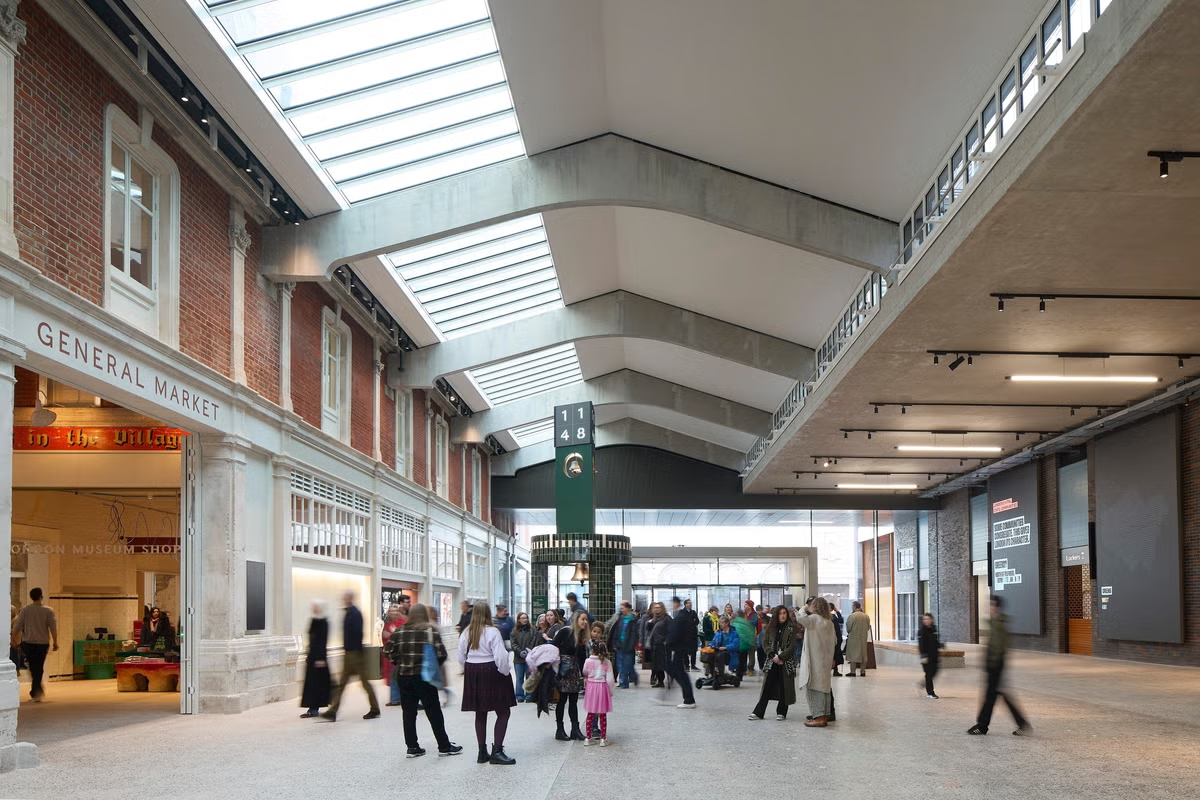
The site includes two former market buildings. The Victorian General Market is now the main museum. A 1960s poultry market building will open in 2028 as a learning centre. It will host temporary exhibitions and community events.
Three Spaces: Past Time, Real Time, Our Time
The museum is divided into three areas. Each offers a different experience. The spaces are designed to appeal to diverse audiences.
- Real Time: Giant screens show real-time data—like how many buses ran that day. A cafe is open daily. It stays open 24 hours from Thursday to Sunday. The Temperance Cocoa Rooms, once a 19th-century alternative to pubs, now offers a cultural space.
- Our Time: This hub celebrates London’s living culture. It includes a restaurant, shop, and event space. The exhibition London Tastes explores food culture. It is guest-edited by Ruby Tandoh and Jonathan Nunn. It highlights places like Brixton Market and Beigel Bake.
- Past Time: Located on Roman-street level, this gallery holds most of the museum’s artefacts. It traces London’s story from prehistory to today. Key events include the Great Fire, the Blitz, and the 2012 Olympics. Interactive displays let visitors explore history in a personal way.
Visitors start in Real Time. The space feels dynamic. It connects to daily life. The Temperance Cocoa Rooms reflects how social movements shaped public life.
Underground Vaults and Hidden History
During 2019 renovations, workers found an 800-square-metre network of Victorian vaults. These were once storage spaces. They are now used for rotating exhibitions and events. The vaults were designed by architect Horace Jones. They feature preserved ironwork and stonemasonry.
The first exhibition in the vaults is Londinium: the making of a Roman city. It opens in spring 2027. It features never-before-seen Roman artefacts from the Bloomberg Collection. These include wax writing tablets, an infant’s feeding bottle, and Britain’s earliest known Eurasian cockroach eggs from a Roman bakery oven.
These objects, combined with projections and soundscapes, show how a rural area became a thriving city. One unique feature is a window in the old salt store. Visitors can watch trains pass by. Passengers peer in. This connects the museum to modern London.
Why This Move Matters
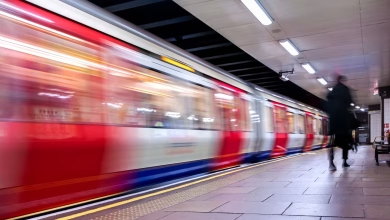
The old location near the Barbican was hard to find. The new site at Farringdon is central. It connects to major transport lines: the London Overground, Central Line, and Elizabeth Line.
Sharon Ament, director of London Museum, said the move was intentional. She praised repurposing market buildings into a museum. ‘It’s remarkable to be turning a market into a museum,’ she said. ‘People would just want to hang out here.’
The museum aims to be inclusive. It offers extended hours. It covers topics like fashion, music, poverty, and the British Empire. Ament said London is not just any city. ‘We can talk about fashion. We can talk about food. We can talk about music. We can talk about poverty. We can talk about the British Empire. We can talk about the Romans. London is not just any city, is it? It’s a global city.’
Key Facts and Timeline
- She noted the museum’s lack of public visibility.
- 2019: Renovations uncovered an 800-square-metre network of Victorian vaults.
- 2027: The exhibition Londinium: the making of a Roman city opens in the underground vaults.
- 2028: The 1960s poultry market building opens as a learning centre.
The museum’s new location is accessible. But the underground vaults are not open yet. The exhibition will launch in 2027. Visitors won’t see all the collection immediately.
The focus on food and pop culture is engaging. But some may find it less comprehensive. Whether the museum truly reaches underrepresented groups remains to be seen.
Still, the move shows a shift in museums. They are no longer just display spaces. They are now places for dialogue, identity, and community. From Morley’s chicken shop sign to Roman-era artefacts, the museum offers a full view of London’s evolution.
Sources & further reading
Featured image: original publisher image. Via original publisher. Image source