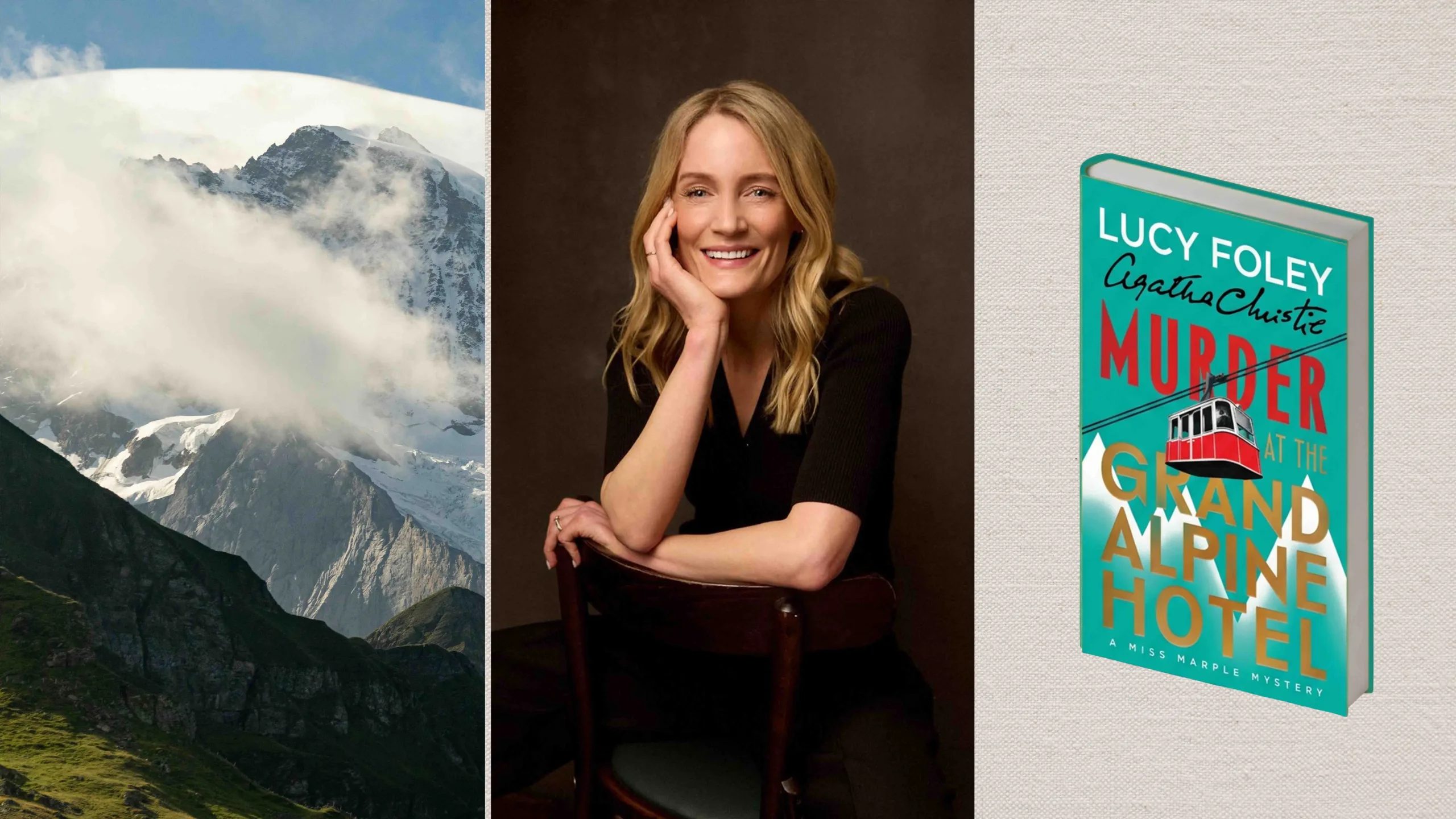
Lucy Foley has written the first Miss Marple mystery in five decades, relocating the beloved amateur detective from her English village to the Swiss Alps. This novel, Murder at the Grand Alpine Hotel, marks a significant departure from Agatha Christie’s original settings. Instead of St. Mary Mead, Miss Marple now finds herself in a luxury ski chalet nestled in the heart of the Swiss Alps, a location that not only offers breathtaking natural beauty but also carries deep historical and cultural resonance. Source: cntraveler.com.
Why the Swiss Alps?
The choice of the Swiss Alps was intentional. It emerged from a desire to honor Agatha Christie’s legacy while reimagining Miss Marple in a new cultural and geographical context. Foley aimed to create something authentic to the original canon—respectful of Christie’s tone and structure, without copying it mechanically.
She was inspired by 1950s masculine action thrillers—books by authors like Ian Fleming and Eric Ambler—set in rugged, isolated places. These stories emphasized danger, tension, and the psychological strain of isolation. They were written by men and for men, reflecting a worldview centered on physical risk and authority.
Foley found it compelling to invert that dynamic. By placing two women—Miss Marple and her friend Mrs. Bantry—at the center of a masculine landscape, the novel explores how gender and power shift. The women become active interpreters of tension, not just observers. This shift deepens the story beyond a crime plot, revealing social and psychological undercurrents of postwar Europe.
Research in the Alps
Foley conducted extensive research across the French and Swiss Alps. Her journey began in Chamonix and extended to Zermatt, Saint Moritz, and Le Corbier. She drove through the Mont Blanc tunnel, gaining firsthand experience of the region’s geography, climate, and atmosphere.
Before the Romantic era, mountains were seen as terrifying—filled with dragons, spirits, and death. The Romantic movement reframed them as symbols of beauty, freedom, and spiritual transcendence. This duality still shapes how people see the Alps—both as awe-inspiring and dangerous.
One key discovery was the hotel in the novel—Refuge du Montenvers, above Chamonix. Foley found it by chance. A red train ascends the mountain. After the last train departs, it’s just her and the mountains. The silence and scale of the landscape deeply shaped the novel’s mood. The hotel becomes a symbol of luxury and vulnerability—a place where the outside world fades and inner lives come into focus.
Hidden Details and Hospitality Traditions
Foley discovered a rare tradition: ice-skating waiters at historic Swiss hotels. These men wore full black ties and performed on the ice with trays of Champagne, serving drinks and doing tricks in elegant fashion. This practice, common in the early to mid-20th century, faded by the 1970s.
Such a detail adds texture and humor. It reflects a hospitality culture that valued performance and social ritual. These traditions become part of the characters’ behaviors and the story’s atmosphere. One character’s casual mention of an ice-skating waiter becomes a clue to a hidden past event.
These traditions also show how social customs evolved in the Alps. In the 1950s, such performances were more than entertainment—they were tools for building connections in a setting that could otherwise feel cold. The hotel becomes a space where people perform, interact, and reveal themselves through actions, not just words.
Postwar Europe and the Hotel’s Role
The novel opens with a train ride bringing together British, French, Italian, American, and German guests. It is only five years after WWII. The characters are still adjusting to coexistence with former enemies. The atmosphere is tense, full of suspicion.
Foley notes that Britain still had rationing in the 1950s. People were undernourished, thin, and tired. A character, Diana Glass, observes that Italians have the best luggage, French guests have the finest furs, and British guests look ‘hungry and gray.’ This detail reflects how different nations experienced the war, and how those differences still shape personal identities.
Geographically, the Swiss Alps near the France-Italy border were less fortified. This made mountain passes more porous during WWII. People could move freely, even in wartime. This reality informs several characters’ backstories. Some have returned recently—not for nostalgia, but to protect themselves or advance personal agendas. These stories reflect real historical patterns: people often rewrote their wartime histories to survive or gain advantage.
Why a Hotel Works as a Mystery Setting
Hotels offer a unique environment for suspense. They are ecosystems of human interaction—filled with hidden spaces, private rooms, and layered corridors. In this novel, the hotel includes hidden areas, like a secret bar modeled after the Kulm Hotel in St. Moritz. These spaces are accessible only to certain guests, based on status or privilege. This creates a sense of exclusivity and secrecy, essential for building tension.


Foley draws on Christie’s work, like At Bertram’s Hotel, where anonymity allows people to hide behind false identities. In a hotel, guests can check in under different names. This anonymity creates unpredictability. It enables deception, secrets, and hidden motives—all essential to a good mystery. The hotel becomes a place where people are not who they seem, and where truth is buried beneath performance.
What Makes Miss Marple a Great Traveler?
Miss Marple’s strength is her observational skill. She reads people through gestures, tone, and habits. Unlike Poirot, who is often captivated by young women and assumes innocence, Marple sees people as they truly are. She recognizes danger in ordinary behavior and is not easily fooled.
She often references St. Mary Mead, treating it as a microcosm of human behavior. This allows her to spot patterns in any setting. Whether in a village or a mountain chalet, she applies the same principles of human nature—what she calls the ‘truth of people.’ This consistency makes her a reliable and enduring character.
She is enigmatic—sometimes calm, other times showing flashes of anger or power. In A Pocket Full of Rye, she is driven by anger to solve a murder. In Nemesis, she becomes a figure of resistance, shifting roles to meet a moment’s need. She adapts to the situation, becoming what the story requires—like a spy or guardian—while remaining fundamentally herself.
Where Might Miss Marple Go Next?
Foley hasn’t revealed the next destination. But she offers a clue: in her youth, Miss Marple lived in a different country. That place might be the next setting. This challenges the idea of her as a lifelong resident of St. Mary Mead. It suggests her journey has always been one of movement and discovery—of people and experiences.
She emphasizes this is a one-time project. The novel is not part of a planned series. The idea of taking Miss Marple abroad is rare and deliberate. It reflects a broader trend in literature: reimagining classic characters in new cultural and geographic contexts. This allows readers to see familiar figures through fresh eyes and experience timeless mystery through the lens of place and history.
The novel offers more than a plot. It provides a window into postwar Europe, the evolution of mountain culture, and the power of observation in human relationships. It shows how a mystery story can be both timeless and deeply rooted in specific historical and geographical realities. The story does not just entertain—it educates, reflects, and invites readers to consider how place, history, and human behavior shape the stories we tell about ourselves and others.
Sources & further reading
Featured image: original publisher image. Via original publisher. Image source